
Baltix — Baltic-focused GNU/Linux distribution
Baltix is a Debian/Ubuntu-based Linux distribution tailored for Lithuanian, Latvian and neighboring users, provided as a localized, installable Live CD with GNOME and regional language support.
Overview
Baltix is a community-oriented GNU/Linux distribution created to serve users in the Baltic region, with particular attention to Lithuanian speakers. It is built on established Debian-family technology and offered as an installable Live CD so that users can run the system without immediate installation. For an official entry point, see the project page: Baltix project.
Image gallery
1 Image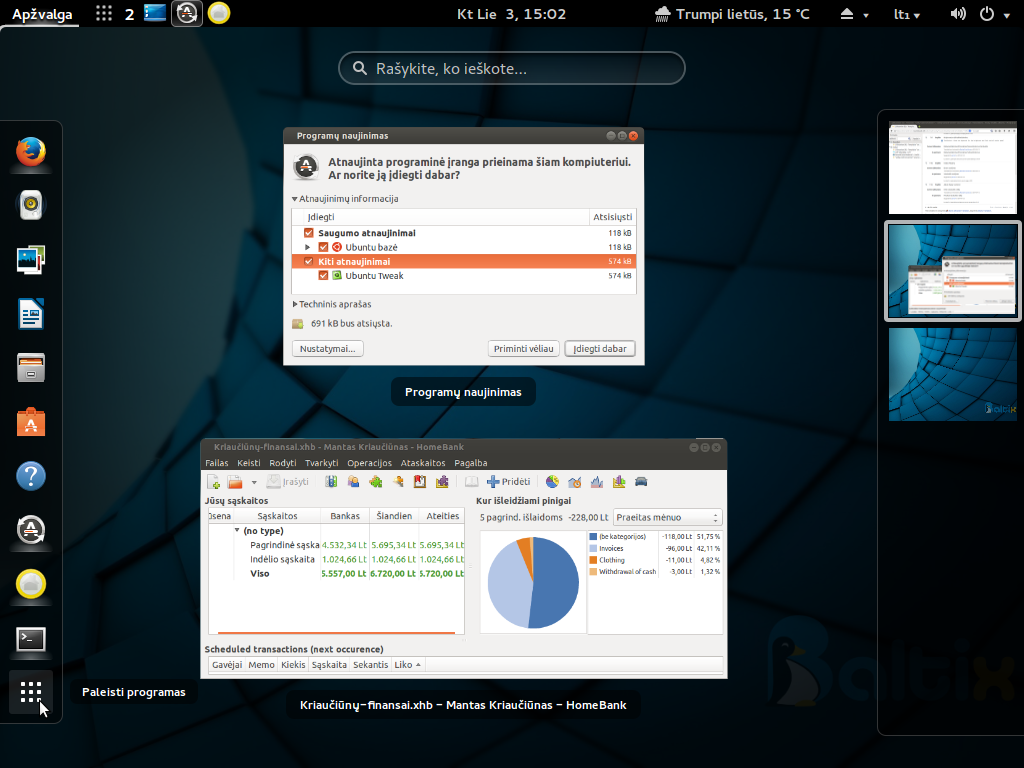
Characteristics and components
Baltix typically uses the GNOME desktop environment and relies on the standard Debian package system and tools for software management. It bundles localized interfaces, keyboard layouts, fonts and documentation for Baltic languages and other nearby languages such as Estonian, Russian and English. Key components include the underlying Debian/Ubuntu base (Debian/Ubuntu), graphical desktop session, and the live environment media: installable Live CD.
Languages and localization
The distribution emphasizes regional accessibility. The default or primary language of the project has been Lithuanian (Lithuanian), but it also offers translations, support and preconfigured layouts for Latvian, Estonian, Russian, English, Norwegian and other languages used in and around the Baltic states. This localization reduces setup work for users who need localized menus, help files and input methods.
History and development
Baltix originated in the early 2000s. The first public releases date from 2003 and began as a Knoppix-based live distribution that combined Knoppix live technology with Debian packages; the project later adapted to work with Ubuntu and Debian package streams. Early roots in Knoppix are often noted: Knoppix, while later releases aligned more closely with Debian/Ubuntu workflows (Debian/Ubuntu).
Uses, audience and community
Baltix aims at general desktop users, educational settings and those seeking a ready-to-use, regionally adapted Linux system. Typical uses include desktop computing, classroom installations and rescue or demonstration environments provided by the live medium. The distribution is maintained by volunteers and contributors from the region; users are encouraged to participate in localization, testing and packaging.
Distinctive facts and considerations
- Live environment: The installable Live CD lets people try the system without changing their hard drive configuration: Live CD details.
- Regional focus: Preinstalled fonts, layouts and translations reduce setup time for Baltic languages.
- Debian-family base: Packages and updates typically follow Debian/Ubuntu mechanisms (Debian/Ubuntu).
- Origins: The project traces back to Knoppix-based beginnings (Knoppix) and evolved into a localized distribution for Baltic communities.
For further information on downloads, community involvement or technical details consult the project resources and community pages: project site and associated documentation, or search for Baltix-related materials via regional Linux communities and mirrors (language resources).
Questions and answers
Q: What is Baltix GNU/Linux?
A: Baltix GNU/Linux is a Linux distribution that is an operating system for Lithuanian and Latvian people, based on Debian and Ubuntu.
Q: What is the purpose of Baltix GNU/Linux?
A: The purpose of Baltix GNU/Linux is to be a complete and user-friendly operating system for the people of Lithuania and Latvia.
Q: What languages are supported by Baltix GNU/Linux?
A: Baltix GNU/Linux supports Lithuanian, Latvian, Estonian, Russian, English, Norwegian and others near and around the Baltic region. The main language is Lithuanian.
Q: What desktop environment is used by Baltix GNU/Linux?
A: Baltix GNU/Linux uses the GNOME desktop environment.
Q: How is Baltix GNU/Linux distributed?
A: Baltix GNU/Linux is distributed as an installable Live CD.
Q: When were the first public versions of Baltix GNU/Linux released?
A: The first public versions of Baltix GNU/Linux were released in 2003 and were based on Knoppix Live CD and Debian software packages, and later, on the Ubuntu operating system.
Q: What operating systems form the basis of Baltix GNU/Linux?
A: Baltix GNU/Linux is based on both Debian and Ubuntu.
Related articles
Author
AlegsaOnline.com Baltix — Baltic-focused GNU/Linux distribution Leandro Alegsa
URL: https://en.alegsaonline.com/art/8612
Sources
- lists.akl.lt : Announce of Baltix-Knoppix
- baltix.akl.lt : About Baltix GNU/Linux
- wiki.ubuntu.com : Baltix Goals (Ubuntu wiki)
- launchpad.net : Baltix Goals (in Lithuanian language)