
Saint Joseph's Day
A Christian feast observed on March 19 honoring Joseph, spouse of Mary and foster father of Jesus; marked by liturgy, popular devotions, cultural customs and, in some countries, Father's Day.
Overview
Saint Joseph's Day is a Christian observance that honors Saint Joseph, traditionally identified as the husband of Mary and the foster father of Jesus. In the Western liturgical calendar the feast falls each year on March 19. It is principally a Roman Catholic celebration, often underlined by a special Mass and prayers, but various other churches remember Joseph with their own rites and dates. The feast highlights Joseph's role in the Holy Family, his humility, and his exemplariness in work and fatherhood.
Image gallery
4 Images

Origins and historical development
The commemoration of Joseph developed over centuries. Early Christian references to Joseph are limited, but devotion grew in the medieval period and expanded during the Renaissance and Baroque eras. By the modern era the church formalized liturgical texts and popular devotions associated with the feast. In the 19th century Joseph was increasingly promoted as a model for Christian fathers and workers, and he was named patron of the universal church by papal decree in the late 1800s, which strengthened his liturgical prominence.
Common customs and regional practices
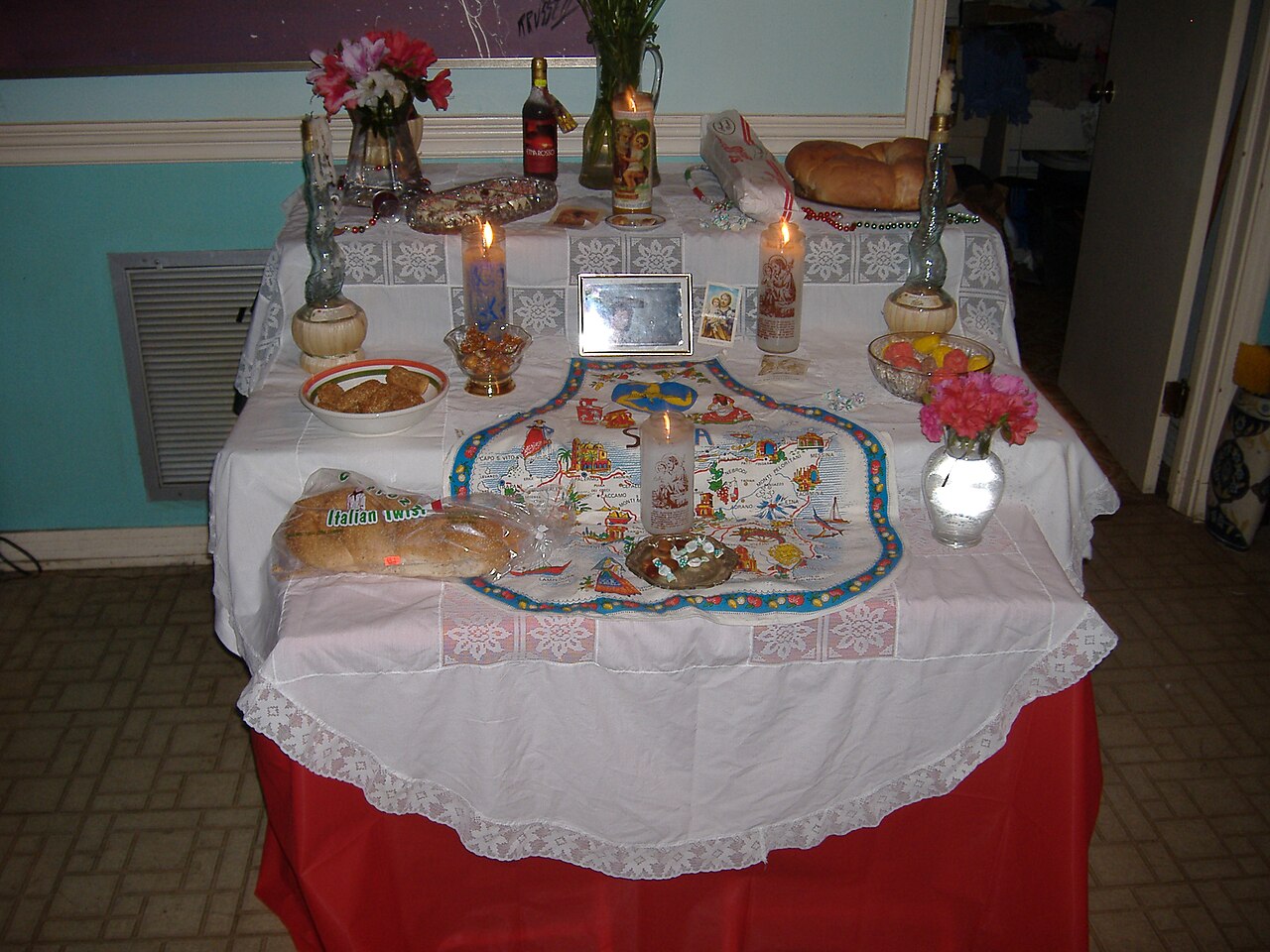
Practices for Saint Joseph's Day vary widely by culture. In parts of Italy and among Italian diaspora communities people create "Saint Joseph's tables" laden with breads, pastries and meatless foods to give as alms. In Spanish- and Portuguese-speaking areas similar foods and processions appear. Traditional confections such as zeppole, sfinge, or other fried doughs are associated with the day in different regions. Other customs include blessing of fathers, special charitable meals, and the erection of devotional altars in homes and churches.
Civil observance and Father's Day
The feast also functions as a cultural Father's Day in several countries. For example, communities in Spain, Portugal and Italy traditionally celebrate fathers on March 19, linking paternal appreciation to Joseph's example. In many places the tone is familial and informal rather than a public holiday, though local parades, gifts and family meals are common.
Liturgical and ecumenical notes
Within liturgical calendars, the emphasis placed on Joseph can differ: some rites give him his own feast day, others combine his remembrance with related celebrations of the Holy Family or of saints closely associated with Jesus' infancy. Ecumenical interest in Joseph has grown in recent decades, as his life offers themes of protection, labor, and quiet service that resonate across Christian traditions.
Significance today
Saint Joseph's Day continues to be observed as a religious feast, a focal point for family devotion, and a cultural marker in many societies. Its customs — from special liturgies to regional foods and charitable tables — reflect a blend of theological meaning and popular piety that keeps the day alive in parish life and family practice.
Further reading: See devotional guides, local parish resources and cultural histories for more detail on regional observances and recipes for traditional Saint Joseph's Day foods (Catholic festival resources).
Related articles
Author
AlegsaOnline.com Saint Joseph's Day Leandro Alegsa
URL: https://en.alegsaonline.com/art/85755