
Sahelanthropus tchadensis (Toumaï): an early hominin candidate
Sahelanthropus tchadensis is an early fossil hominid from the Sahel region of Chad, dated to about 7 million years ago. Its anatomy and age make it central to debates about the human–chimpanzee split.
Overview
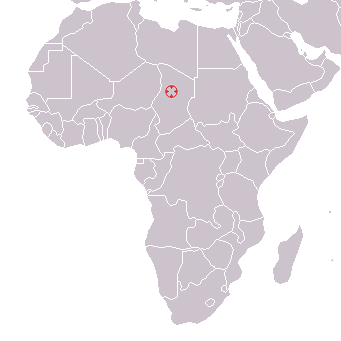
Sahelanthropus tchadensis is a fossil primate species described from remains recovered in the Djurab Desert of northern Chad. Known best by the partial skull nicknamed "Toumaï," it is usually dated to close to 7 million years ago, placing it near the time of the proposed divergence between the human and chimpanzee lineages. Because it combines a mix of primitive and derived traits, researchers regard Sahelanthropus as a candidate for an early hominin (a member of the group that leads to humans) but its precise position in the human family tree remains debated.
Image gallery
9 Images




Anatomy and age
The preserved remains are fragmentary but informative. The skull shows a small cranial capacity roughly similar in size to modern chimpanzees, a relatively flat face with reduced snout projection compared with many apes, and small canines compared with nonhuman apes. One of the features drawing attention is the position of the foramen magnum (the hole where the spinal cord meets the skull), which some investigators argue is shifted forward in a way consistent with occasional upright posture. Geological and biochronological evidence from the site has produced an age estimate of about 7 million years, within the late Miocene epoch.
Discovery and name
The species was announced in the early 2000s following excavations in Chad. The nickname "Toumaï" comes from a local language term meaning "hope of life" or similar local expressions of value. The scientific name combines Sahel (referring to the Sahelian region of Africa) with anthropus (a Latinized Greek root meaning "human"), and tchadensis denotes origin from Chad. Additional fragmentary specimens attributed to the species have helped characterize teeth and jaw features, but complete skeletons are lacking.
Significance and the scientific debate
Sahelanthropus is important because its age and mix of traits bear directly on questions about where and when the earliest hominins evolved. If it is a true hominin, it implies some features associated with upright posture and reduced canine size were present at or before the human–chimpanzee divergence. Skeptics point out that cranial and dental traits can be homoplastic (shared for reasons other than direct ancestry) and that the fragmentary nature of the fossils makes confident assignment difficult. In particular, interpretations of locomotion from skull anatomy are indirect; without associated limb bones, claims about habitual bipedalism remain provisional.
Context, environment, and broader importance
The discovery expanded the geographic window for early hominin evolution beyond the East African rift system into central Sahelian Africa, indicating that the distribution of late Miocene apes and early hominins was broader than previously appreciated. The paleoenvironment at the site is reconstructed as a mosaic of woodland and gallery forests near lakes or rivers rather than open desert, which informs hypotheses about habitat preferences of late Miocene primates. Regardless of its precise phylogenetic placement, Sahelanthropus has become a focal point in debates about the timing, geography, and early anatomy of the human lineage.
Key characteristics and outstanding questions
- Age: roughly 7 million years (late Miocene).
- Cranial traits: small braincase, reduced prognathism, small canines.
- Posture: foramen magnum placement interpreted by some as indicating upright posture; limb evidence lacking.
- Geography: found in the Sahel region of Chad, extending the known range of early hominin candidates.
- Debate: whether it is on the human lineage, an extinct side branch of apes, or a mix of primitive conditions remains contested.
Related topics and further reading
- Hominin timeline
- Ardipithecus
- Australopithecus
- Homo habilis
- Homo erectus
- Homo sapiens
- Neanderthals
- Denisovans
- Earlier apes
- Gorilla split
- Chimpanzee split
- Earliest bipedal evidence
- Earliest stone tools
- Dispersal beyond Africa
- Earliest fire evidence
- Cooking and control of fire
- Earliest clothing hypotheses
- Pleistocene
- Pliocene
- Miocene
- Hominids
- Fossil evidence and methods
- Hominid definitions
- Chad (paleontological context)
- Africa (biogeography)
- Sahel region
- Genetic estimates of divergence
Because new field work and analytical techniques continue to refine our picture of the late Miocene, interpretations of Sahelanthropus may change as additional specimens or data are found. For now, it remains one of the most discussed fossils at the base of the human evolutionary story.
Questions and answers
Q: What is the Hominin timelineview?
A: The Hominin timelineview is a chart that shows the estimated dates of various hominid species and their evolutionary split from apes.
Q: When did Sahelanthropus tchadensis live?
A: Sahelanthropus tchadensis lived approximately 7 million years ago.
Q: When did the human-chimpanzee divergence occur?
A: The human-chimpanzee divergence likely occurred between 6.3 and 5.4 million years ago, as suggested by genetic data.
Q: What is Toumaï?
A: Toumaï is the name given to the first fossil found of Sahelanthropus tchadensis.
Q: How old are hominids estimated to be?
A: Hominids are estimated to have existed millions of years ago, with some estimates ranging back as far as 7 million years ago for certain species such as Sahelanthropus tchadensis.
Q: What evidence suggests that humans and chimpanzees diverged at some point in time?
A: Genetic data suggests that humans and chimpanzees diverged at some point in time, with estimates ranging from 6.3 to 5.4 million years ago for this event.
Q: How has modern technology helped us learn more about hominids?
A: Modern technology has allowed us to analyze genetic data which can help us understand more about when different species diverged from one another, providing insight into our evolutionary history and helping us learn more about hominids who lived millions of years ago.
Related articles
Author
AlegsaOnline.com Sahelanthropus tchadensis (Toumaï): an early hominin candidate Leandro Alegsa
URL: https://en.alegsaonline.com/art/85276
Sources
- news.bbc.co.uk : "Evolution's human and chimp twist"
- pnas.org : pnas.org/content/102/52/18836.full
- pnas.org : PDF fulltext
- pnas.org : Supporting Tables
- paleoanthro.org : an Ape or the Ape : is the Toumaï cranium TM 266 a Hominid?
- nature.com : New material of the earliest hominid from the Upper Miocene of Chad.
- doi.org : 10.1007/PL00006431
- pubmed.ncbi.nlm.nih.gov : 9847414
- nature.com : nature.com/articles/nature00879?error=cookies_not_supported&code=810ff58d-4160-4ae5-bc10-…