
Ryōgoku Bridge (Ryōgoku-bashi)
Historical bridge across Tokyo's Sumida River that linked Musashi and Shimōsa in the Edo period; an enduring landmark in art, transport, and urban development of Edo/Tokyo.
Overview
The Ryōgoku Bridge (Japanese: 両国橋, Ryōgoku-bashi; literally "two provinces bridge") was a principal crossing of the Sumida River in what is now Tokyo. It originally marked a major passage between the provinces of Musashi and Shimōsa during the Tokugawa era. Contemporary references to its site often include geographic coordinates (coordinates) and situate the bridge on the course of the Sumida River. The name reflects its function as a link between two administrative regions, and it long served both practical transport needs and a prominent place in urban life.
Image gallery
10 Images

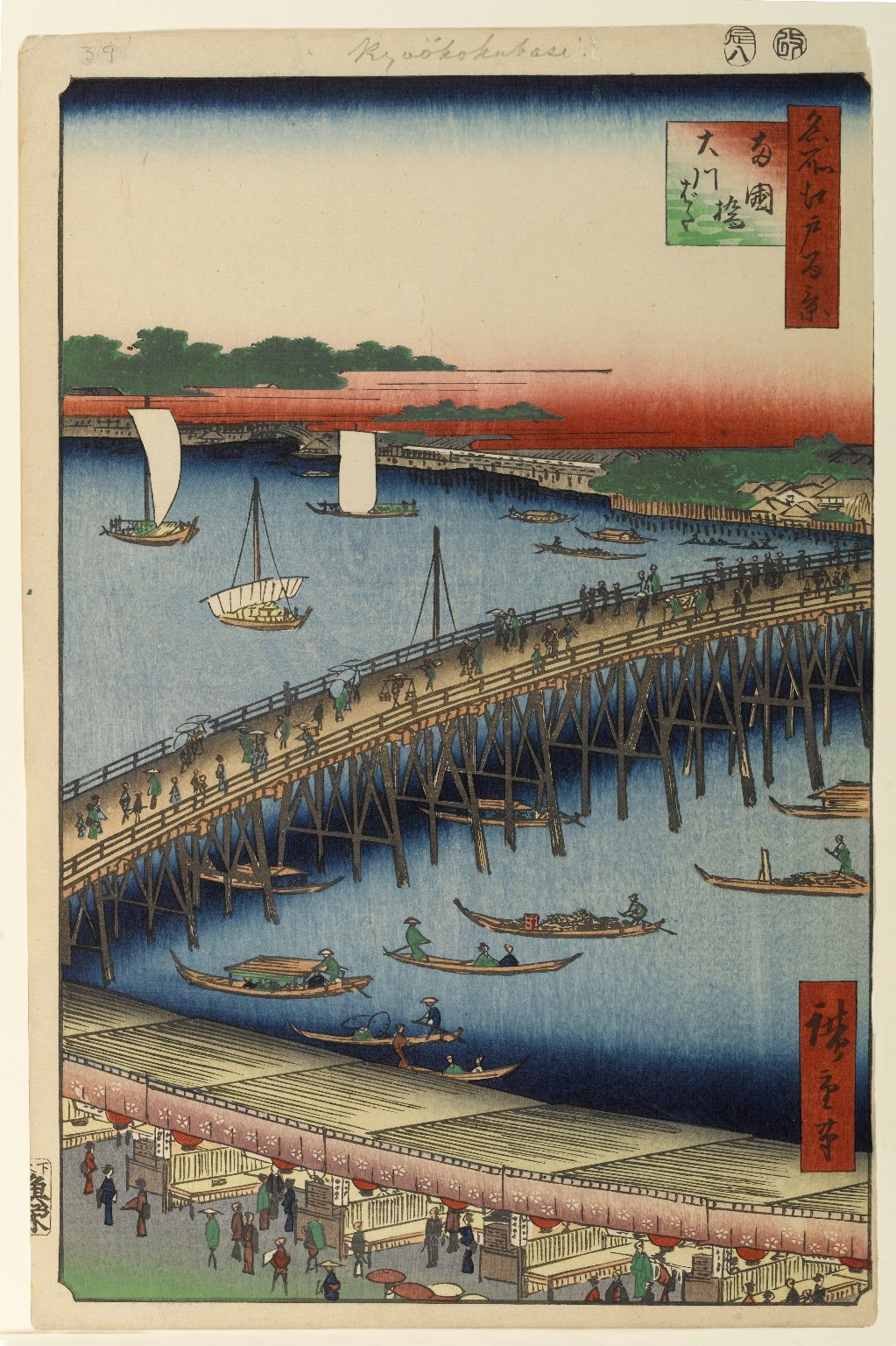


Design, location, and functions
As an urban river crossing, Ryōgoku Bridge combined utility and civic identity. Early versions were wooden and designed to accommodate foot traffic, pack animals and the carts used in Edo. Its location connected the inner city with suburbs and riverine routes, making it a node for commerce, pilgrimages, processions, and seasonal festivities. Over time the bridge was repaired and rebuilt to accommodate changing transportation needs and flood-control measures.
Historical development and cultural role
Constructed and maintained during the Edo period (Edo period), the bridge became one of Edo's most frequently depicted landmarks. It appears repeatedly in ukiyo-e and illustrated travel guides, especially works by artists who recorded daily life along the Sumida. The bridge's banks hosted markets, boat moorings and popular viewing spots for river events, so it featured in both routine commerce and seasonal spectacles.
Modern legacy and context
While the original wooden structure no longer survives, successive replacements preserved the crossing at nearly the same site and shaped the surrounding Ryōgoku neighborhood. The area is now associated with cultural institutions, riverfront promenades and sporting venues that attract residents and visitors. Modern bridges at the same crossing reflect industrial materials and engineering standards but retain the historic place-name and symbolic associations.
Notable aspects and distinctions
- Name meaning: "Ryōgoku" refers to the pair of provinces connected by the bridge.
- Cultural presence: A recurring subject in Edo-period prints and travel literature, symbolizing urban life on the Sumida.
- Continuity: The crossing point has remained important from the Edo period into contemporary Tokyo, though the physical structure has been renewed multiple times.
For more formal geographic references and historic maps, see linked resources for the bridge's location and the broader Sumida riverine system (map/coordinates, Sumida River). Additional background on the provinces and era is available through links to Musashi, Shimōsa and the Edo period.
Related articles
Author
AlegsaOnline.com Ryōgoku Bridge (Ryōgoku-bashi) Leandro Alegsa
URL: https://en.alegsaonline.com/art/84966
Sources
- us-japan.org : Ryōgoku
- books.google.com : Annales des empereurs du japon, p. 413.
- books.google.com : An Administrative Perspective of Tokyo, Vol. 1937, p.85