
S-train (Copenhagen S-tog): suburban rapid transit of Copenhagen
The S-train (S-tog) is Copenhagen’s suburban rapid transit network, linking the city centre to surrounding municipalities with frequent electric trains on a dedicated 170 km network.
Overview
The S-train, known in Danish as S-tog and comparable to the German S-Bahn type systems, is Copenhagen's primary suburban rail network. It serves Copenhagen and the wider metropolitan area in Denmark, providing frequent, electric commuter services that connect the urban core with outlying neighbourhoods and satellite towns. The network runs on what is often called the S-banen or S-track and is operated by the national railway company.
Image gallery
2 Images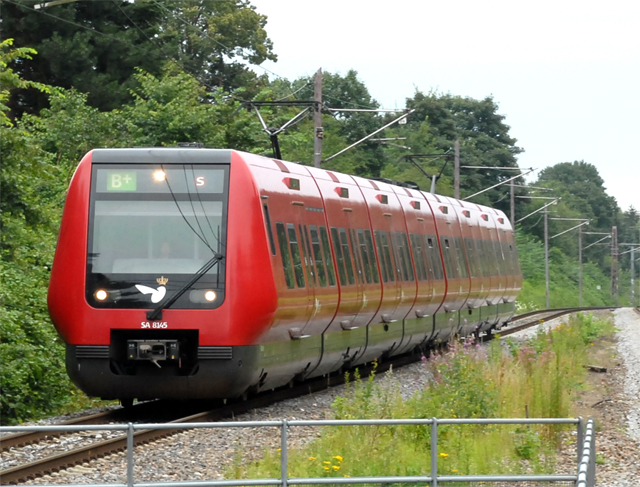

Network and services
The S-train network covers roughly 170 kilometres and includes approximately 84 stations, with around 32 stations concentrated in the central part of the city. Services are organized into several numbered lines that share tracks through the central corridor, creating very short headways in the core and regular service on branch lines. On weekdays most stations are served every 10 minutes or better until evening, and through the city centre departures can occur as often as every two minutes because multiple lines overlap on the same stretch of track. Sunday frequencies are reduced, commonly with intervals doubled compared with weekdays.
- Lines: the system runs six principal lines plus at least one additional peak-hour support service that increases capacity when demand is highest.
- Station pattern: inner-city stations receive the highest frequency; suburban branches are served at regular, slightly lower intervals.
- Typical headways: 2 minutes through the core, 5 minutes on many suburban branches during peak periods, and longer at off-peak times or Sundays.
Rolling stock and operations
Trains on the S-train are electric multiple units configured for high-capacity commuter use. Most regular trains consist of eight cars, and the fleet includes about 120 such 8-car sets, with the ability to lengthen consists for special events or exceptionally busy periods. Trains are designed for fast boarding and alighting, with multiple wide doors and a mix of longitudinal and transverse seating to maximize standing space during peak hours. The operator concentrates services so that overlapping lines through the centre provide very frequent departures, while branch services maintain reliable intervals for suburban passengers.
History and development
The S-train concept in Copenhagen developed in the 20th century as electrified suburban rail to replace slower steam services and to support the growth of commuter suburbs. Electrification and the introduction of dedicated suburban services began in the early to mid-20th century, and the system has been continually modernized with infrastructure upgrades, new rolling stock, and signalling improvements to increase capacity and reliability. Expansion and timetable refinement have followed urban growth patterns, integrating with other transport modes in the region.
Importance, uses and notable features
The S-train is central to daily mobility in the Copenhagen area, linking residential zones, employment centres and interchange hubs. It supports high-frequency, car-independent commuting and is integrated with local buses, metro lines and regional rail. Notable operational features include the dense overlapping of services in the centre that yields very short intervals, and a standardized fleet optimized for quick turnaround and heavy peak loads. For more about the operator and system timetables see references to the operator and the weekday timetable.
Further information and distinctions
The Copenhagen S-train differs from the city's metro systems by serving longer suburban corridors with fewer underground sections and by providing regional-style stops with short station spacing in the urban core. For language-specific names and local terminology, see Danish references such as the system name S-tog, the operator's native title, and international comparisons like S-Bahn systems elsewhere. Practical details such as maps, fares and service notices are typically published by transport authorities and the operator; local guides and official pages linked from municipal sites give the most current operational information for riders and visitors interested in city centre access, trips to the suburbs, or broader travel around Copenhagen.
Related articles
Author
AlegsaOnline.com S-train (Copenhagen S-tog): suburban rapid transit of Copenhagen Leandro Alegsa
URL: https://en.alegsaonline.com/art/85015
Sources
- eurail.com : "Denmark by train"
- w3.siemens.dk : "Metro System – S-Train, Copenhagen, Denmark"