
Rumpelstiltskin: origins, plot, themes, and cultural influence
Concise encyclopedia article on the Brothers Grimm fairy tale Rumpelstiltskin: summary, origins and variants, themes, and its influence in literature and popular culture.
Overview
Rumpelstiltskin is a well‑known European fairy tale collected by the Brothers Grimm and first printed in their 1812 anthology Children's and Household Tales. In German the creature is often called Rumpelstilzchen. The story belongs to the family of traditional narratives in which a human bargains with a supernatural helper and later must discover that helper's true name—an episode that appears in multiple folk traditions and retellings. Scholars typically treat it as a cautionary tale about promises, power, and cunning.
Image gallery
7 Images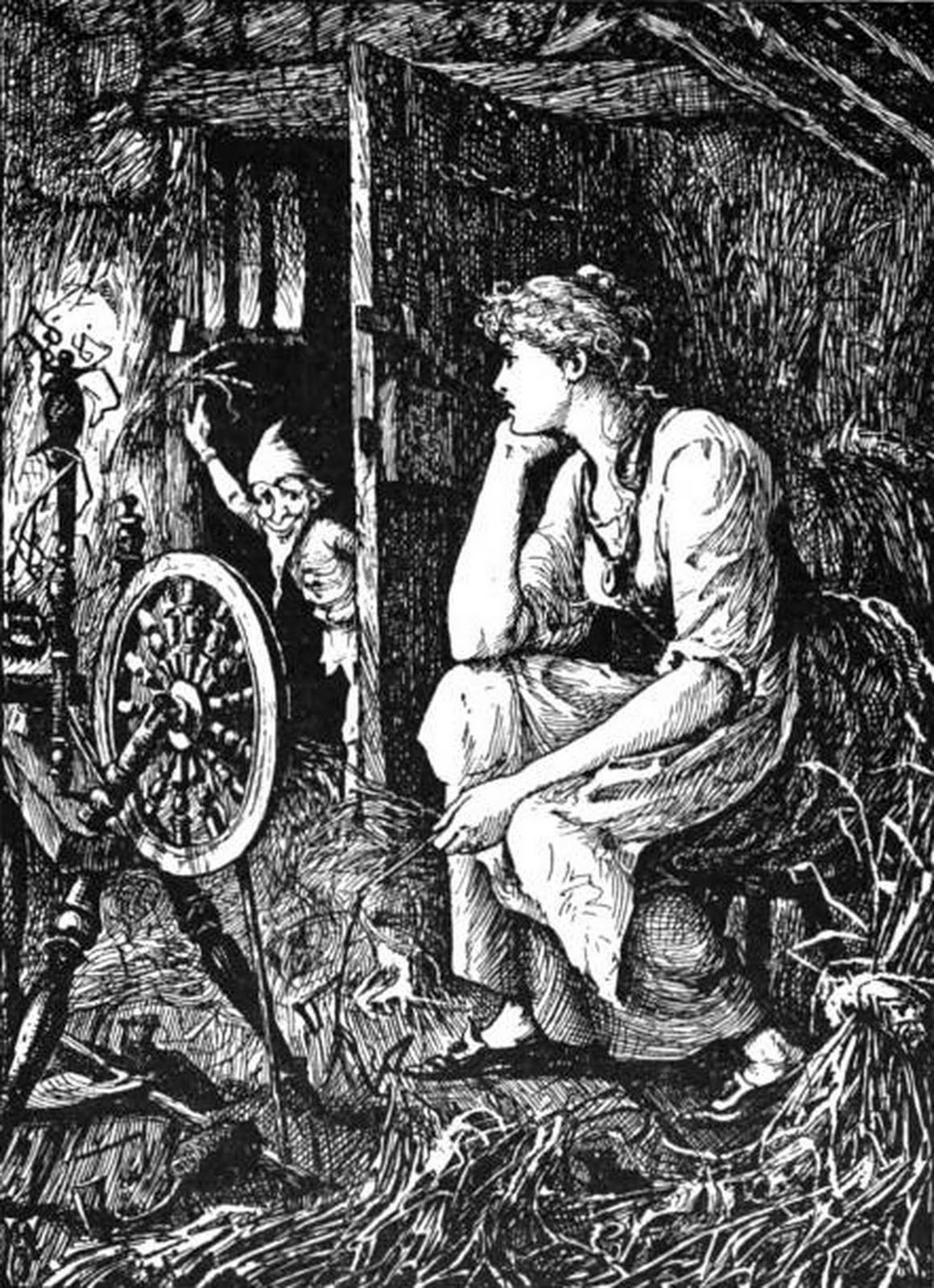


Plot summary
The basic plot concerns a miller who boasts that his daughter can spin straw into gold. The ruler demands that the girl accomplish the impossible or suffer death. A strange little man appears and performs the task in exchange for increasingly valuable payments: first trinkets, then the girl's necklace, and finally her promise to give him her firstborn child. When the girl becomes queen and later gives birth, the creature returns to claim the child. He offers a last chance: if she can learn his name within three days, she may keep the baby. By overhearing the being reveal his name, she succeeds and the creature departs in rage or shame.
Motifs and variations
The tale includes several repeated motifs:
- Impossible task: spinning straw into gold as a test of worth or deception.
- Supernatural helper: a mysterious figure who bargains for payment.
- Name as power: knowing the helper's name breaks the bargain.
Variants of the story exist across Europe and beyond; related tales such as "Tom‑Tit‑Tot" share similar structures and challenges. Collectors and folklorists have documented many regional differences in how the helper is portrayed and how the heroine learns the name.
History and interpretation
The tale's recorded form reflects early 19th‑century folk collecting rather than a single authored source. Commentators note the story's mixture of social anxieties—about inheritance, female agency, and deceit—and folkloric magic. Scholar Maria Tatar and others have argued that the narrative centers on greed, bargaining, and cleverness, and that its moral lessons can be ambiguous: the heroine survives by trickery but also benefits from luck and overheard knowledge.
Cultural impact and adaptations
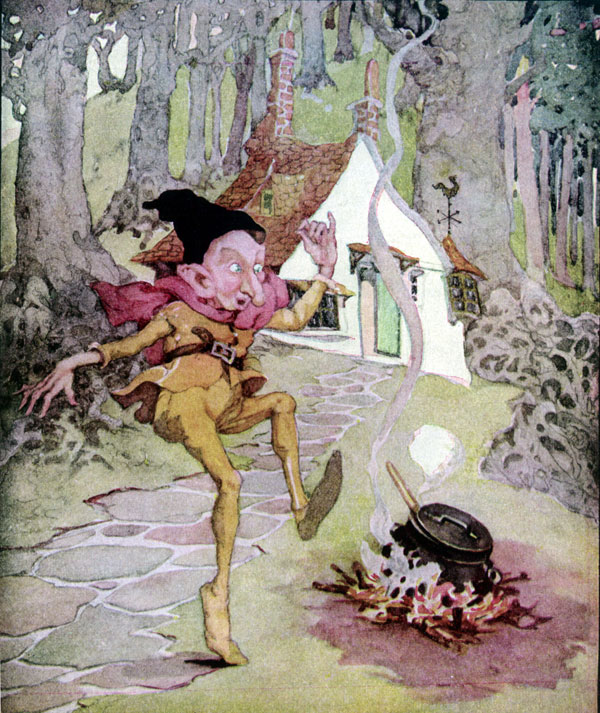
Rumpelstiltskin has inspired generations of adaptations for stage, screen, and books aimed at both children and adults. It appears in picture‑books, operas, films, television episodes, and modern retellings that reimagine the helper's motives or explore the heroine's perspective in greater depth. Its striking image—the small, secretive man whose name can undo him—remains a vivid element in popular culture.
Notable facts and distinctions
The story is often used in discussions of power and language—how naming confers control—and in comparative folklore studies that examine how motifs travel and transform. For readers and performers alike, the tale continues to function as both an entertaining narrative and a prompt for reflection on promises, identity, and clever solutions to impossible problems. For further general information see a short entry on the fairy tale tradition and the original Grimms' collection at the references above.
Questions and answers
Q: What is "Rumpelstiltskin"?
A: "Rumpelstiltskin" is a fairy tale first published by the Brothers Grimm in their Children's and Household Tales of 1812.
Q: Who wrote "Rumpelstiltskin"?
A: "Rumpelstiltskin" was written by the Brothers Grimm.
Q: When was "Rumpelstiltskin" published?
A: "Rumpelstiltskin" was first published in 1812 by the Brothers Grimm.
Q: Are there any similar tales to "Rumpelstiltskin"?
A: Yes, there are many similar tales to "Rumpelstiltskin", such as "Tom-Tit-Tot".
Q: What is the plot of "Rumpelstiltskin" according to Maria Tatar?
A: According to Maria Tatar, the plot of "Rumpelstiltskin" hinges on greed and deception.
Q: Does "Rumpelstiltskin" have any moral value for children according to Maria Tatar?
A: No, according to Maria Tatar, "Rumpelstiltskin" has little moral value for children.
Q: What does the Rumpelstiltskin plot revolve around?
A: The Rumpelstiltskin plot revolves around greed and deception.
Related articles
Author
AlegsaOnline.com Rumpelstiltskin: origins, plot, themes, and cultural influence Leandro Alegsa
URL: https://en.alegsaonline.com/art/84724