
Brothers Grimm: Collectors of Folktales and Pioneers of German Philology
Jakob and Wilhelm Grimm were 19th‑century German scholars who compiled influential folktale collections and made foundational contributions to historical linguistics and German philology.
The Brothers Grimm were the German siblings Jakob and Wilhelm Grimm, whose work in the early nineteenth century left a lasting mark on literature, folklore studies and historical linguistics. Known in German as Die Brüder Grimm, they combined the roles of field collectors, editors and comparative scholars. Their best known popular work is their collected anthology of folk and fairy tales, while their academic projects helped to establish systematic study of the German language.
Image gallery
10 Images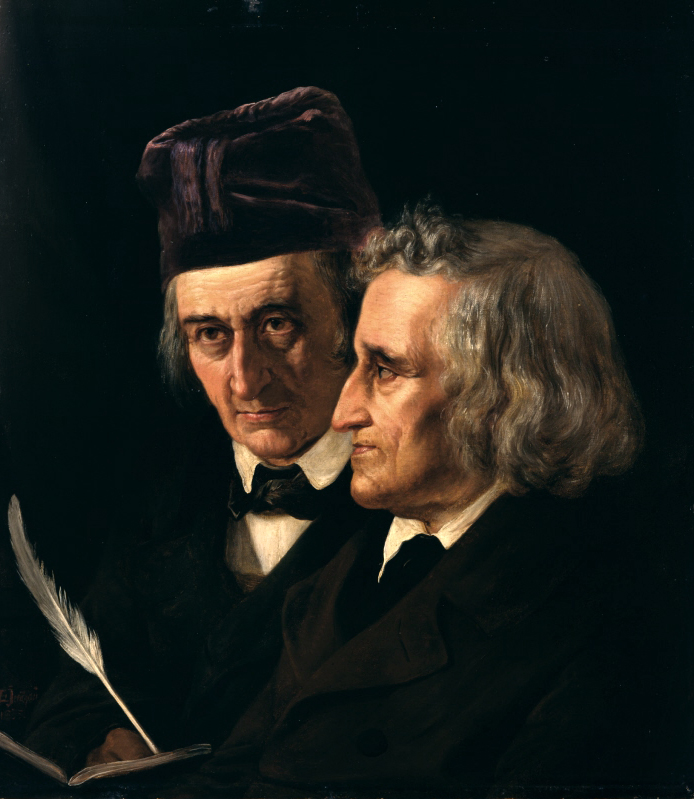




Biographical outline and careers
Jakob (born 1785) and Wilhelm (born 1786) Grimm grew up in Hesse and studied at German universities before embarking on academic careers. They taught, researched and published in various positions and engaged with contemporary intellectual movements that emphasized national cultural heritage. Over decades they produced both popular writings and detailed scholarly work; their names became linked with efforts to document oral tradition and to trace the historical development of German and other Indo‑European languages.
Collections of tales: goals and editorial practice
The brothers gathered stories from a range of informants—villagers, storytellers, friends and written sources—and published them in a collection commonly known in English as Grimms' Fairy Tales (originally Kinder‑ und Hausmärchen). First volumes appeared in the 1810s and were revised in later editions. Wilhelm took a leading role in shaping narrative style and preparing texts for a general readership, while Jakob contributed comparative notes and scholarly apparatus. Across successive editions they altered language, tone and some content to suit changing audiences and moral expectations; this editorial shaping has been the subject of much later scholarly discussion.
Contributions to linguistics and philology
Both brothers were deeply involved in language study. Jakob Grimm in particular formulated important ideas about regular sound correspondences known collectively as Grimm’s Law, which became a pillar of historical‑comparative linguistics. Together they undertook ambitious reference projects including grammars and a comprehensive dictionary. Their lexicographical work, begun as the Deutsches Wörterbuch, and their writings on grammar helped establish the field of German philology and influenced later lexicographers and linguists.
Methodology and influence
The Grimms combined fieldwork with comparative study. They attempted to preserve the phrasing and motifs of oral tales while also situating narratives in broader linguistic and cultural contexts. Their publications brought rural and popular traditions to wider attention, inspired collectors and scholars elsewhere, and contributed to the development of folklore as a discipline. At the same time, modern scholars note that the brothers’ editorial interventions, their cultural and political assumptions, and the romantic nationalism of their era shaped the form in which many tales reached later readers.
Legacy and critical perspectives
- Enduring popularity: Their tale collection remains widely read and adapted for stage, film and children’s literature.
- Academic impact: Their work is foundational in linguistics and in the study of German language history; see also their contributions to German philology.
- Scholarly projects: They produced early systematic treatments of grammar (early German grammar) and initiated large lexicographical undertakings.
- Critical readings: Researchers examine how editing, moralizing and national perspectives influenced the final texts and their reception.
Today the Brothers Grimm are remembered both as preservers of vernacular culture and as rigorous scholars who helped create methods for the study of language and folklore. Their story illustrates the interplay between popular tradition and scholarly interpretation, and their publications continue to be studied by literary historians, folklorists and linguists.
Related articles
Author
AlegsaOnline.com Brothers Grimm: Collectors of Folktales and Pioneers of German Philology Leandro Alegsa
URL: https://en.alegsaonline.com/art/14759