
Omura's whale (Balaenoptera omurai)
Omura's whale (Balaenoptera omurai) is a small rorqual from tropical and subtropical Indo-Pacific waters. It is little known, related to the Bryde's whale complex, and the subject of ongoing study.
Overview
Balaenoptera omurai, commonly called Omura's whale or the dwarf fin whale, is a small rorqual found mainly in tropical and subtropical waters of the Indo-Pacific. As a baleen whale, it filters plankton and small fish through plates in its mouth. The species remained unrecognized for many years because it closely resembles other members of the Bryde's whale group and because it is infrequently encountered.
Image gallery
10 Images




Identification and physical characteristics
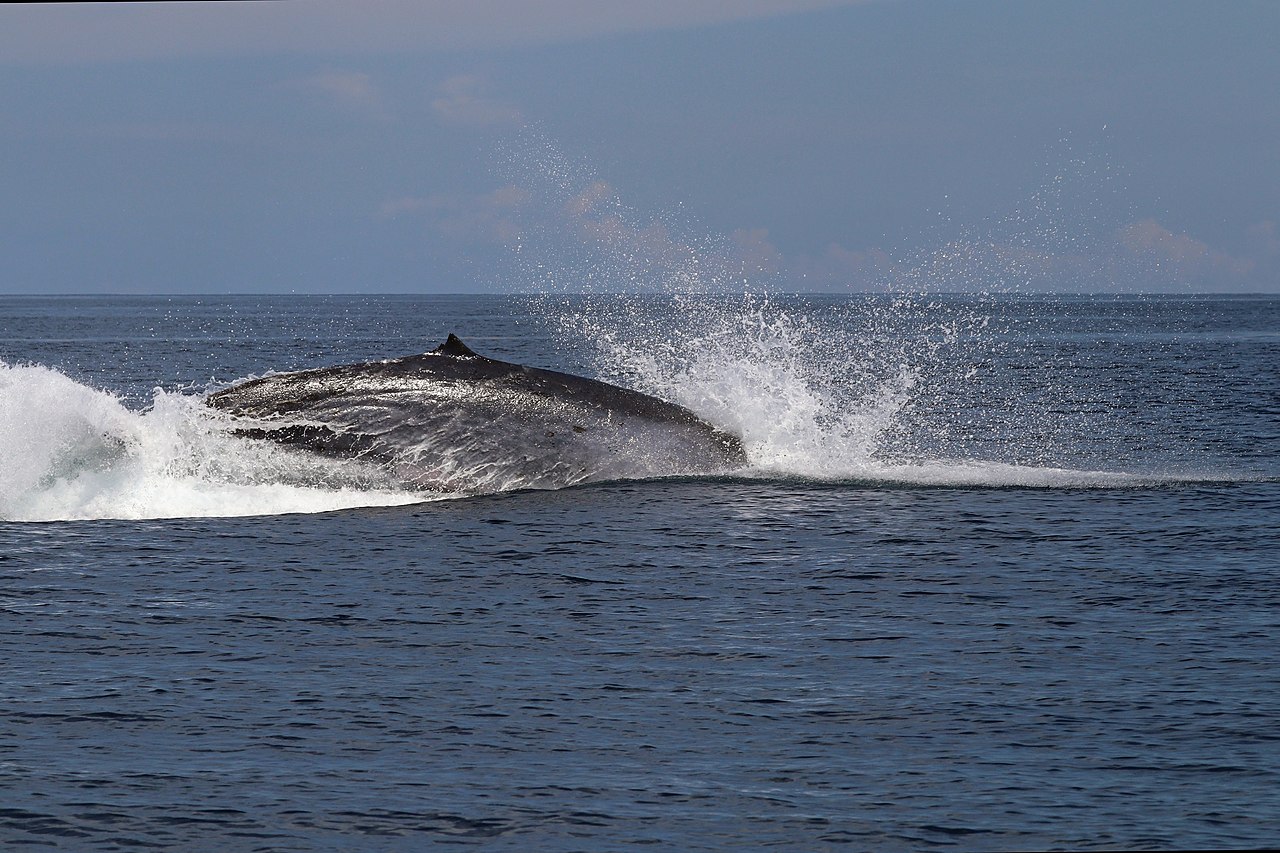
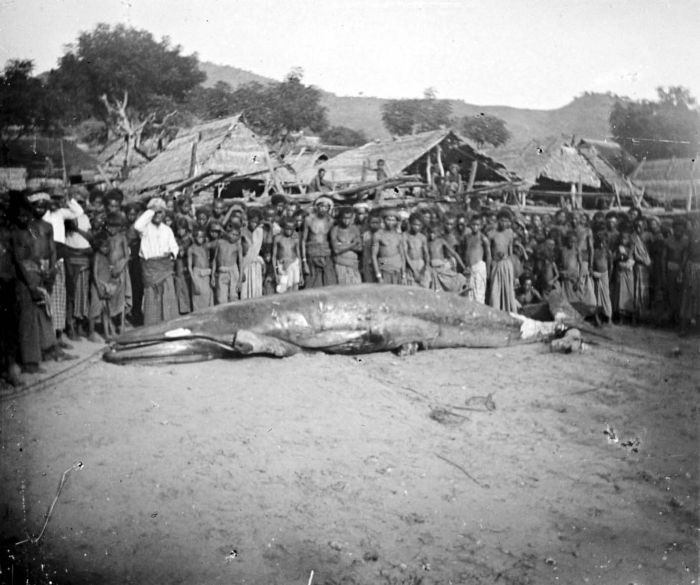
Omura's whale is smaller than many other rorquals, reaching lengths of roughly up to 11.5 meters. It shows a slender body, a relatively low dorsal fin placed well back on the body, and a gently arched rostrum. Coloration can include subtle asymmetry on the head and jaw, a trait it shares with some larger rorquals. Observations indicate a generally slow-swimming, surface-skimming behaviour when feeding.
Key features
- Size: relatively small for a rorqual, often under 12 meters.
- Body shape: slender profile, low dorsal fin, narrow flippers.
- Feeding: baleen filter feeding on small schooling fish and zooplankton.
- Behavior: typically seen alone or in small aggregations rather than large pods.
Taxonomy and discovery
Long confused with Bryde's whales, Omura's whale was recognized as a distinct species only in recent decades following anatomical and genetic studies. It is considered part of the Bryde's whale complex — a group of closely related, similar-looking species — and genetic work has been important in clarifying its identity. For discussion of related forms see Bryde's whales.
Distribution, ecology and behavior
Records of Omura's whale come from shallow to offshore waters across parts of the Indo-Pacific, including areas off Southeast Asia, the western Pacific and around Madagascar. Its ecology is not yet well documented, but available observations indicate coastal and shelf associations, opportunistic feeding on small prey, and occasional vocalizations that researchers are beginning to characterize.
Conservation and research needs
Because sightings and strandings are relatively rare and the species was recognized recently, its conservation status remains uncertain. Potential threats include ship strikes, entanglement in fishing gear, habitat disturbance and noise. Continued field surveys, genetic sampling, and careful documentation of strandings are essential to determine population size, range, and trends so appropriate conservation measures can be developed.
Related articles
Author
AlegsaOnline.com Omura's whale (Balaenoptera omurai) Leandro Alegsa
URL: https://en.alegsaonline.com/art/8435