
Balaur — an unusual Late Cretaceous theropod from Hațeg Island
Balaur was a stocky Late Cretaceous theropod from Hațeg Island, notable for two sickle claws per foot, reduced forelimb digits and debated placement among dromaeosaurids or avialans.
Overview
Balaur is the name given to a distinctive small theropod first described from Late Cretaceous deposits in what is now southern Europe. It is usually treated as a genus of non-avian dromaeosaurid dinosaur, though its precise affinities have been debated. The fossils come from rocks of the Upper Cretaceous and were recovered from sediments associated with the paleo-island environment known as Hațeg Island.
Image gallery
3 Images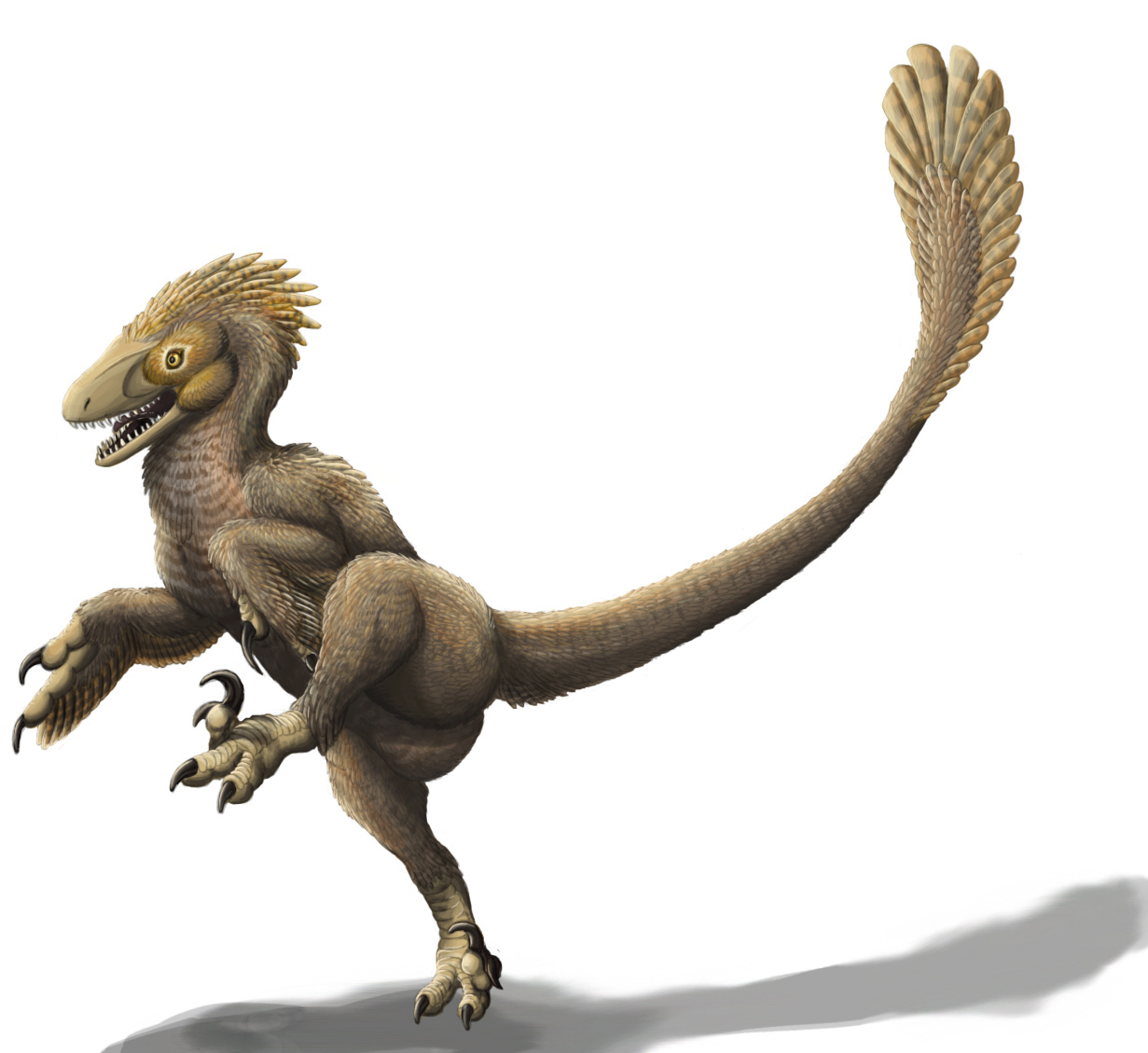


Anatomy and distinctive features
Balaur is notable for an unusual combination of traits not commonly seen in other dromaeosaurs. The most striking feature is the presence of two large, blade-like or "sickle" claws on each foot, rather than the single enlarged second pedal claw typical of the group. The forelimbs are shortened and the third manual finger is greatly reduced, composed of only a rudimentary phalanx in the known material. Overall, the animal appears to have been relatively robust and stocky compared with more gracile relatives.
- Two enlarged sickle-like claws on each hind foot.
- Reduced third finger; shortened forelimbs.
- Compact, heavy build consistent with a non-gracile lifestyle.
Discovery and paleoenvironment
The type material was described in 2010 from sediments that record the fauna of a Late Cretaceous island system. During this time Europe formed an archipelago of islands, and Hațeg represented a large island with a distinctive endemic fauna. Isolation on an island can drive unusual evolutionary trends; Balaur's small size and modified anatomy have been interpreted in the context of island dwarfism and other insular adaptations. The known remains represent a single described species, commonly cited as single described species within the genus.
Classification and relationships
Initial analyses placed Balaur close to the Asian Asian dromaeosaurid Velociraptor and within velociraptorine dromaeosaurs, emphasizing similarities in the pelvic and hindlimb anatomy. Subsequent studies have produced alternate results: some phylogenetic analyses recover Balaur within the dromaeosaurid lineage, while others suggest affinities nearer to basal avialans (early relatives of birds). Because different datasets and methods yield different placements, Balaur is often discussed as an example of how island endemism and unusual morphologies complicate classification.
Significance and scientific debate
Balaur is important for several reasons. Its unique foot anatomy challenges simple assumptions about dromaeosaur locomotion and predatory behavior, and it highlights how isolated ecosystems can produce marked anatomical divergence. The taxon figures prominently in debates over the boundary between non-avian theropods and early birds, and it illustrates that traits associated with flightlessness, robust limbs, or cursorial change can evolve repeatedly in island settings. Continued discoveries and reanalysis of existing fossils will be needed to resolve some open questions about its life habits and precise evolutionary position.
Notable facts
- Balaur is known from a limited number of specimens recovered from Hațeg sediments.
- Its combination of two sickle claws per foot and reduced forelimb digits is unique among well-known theropods.
- The taxon's study informs broader topics: island biogeography, convergent evolution, and the diversity of Late Cretaceous European faunas.
For further overview material and updates, consult specialist literature on Late Cretaceous European theropods and reviews of insular vertebrate evolution.
Questions and answers
Q: What is Balaur?
A: Balaur is a genus of dromaeosaurid theropod dinosaur.
Q: When and where did Balaur live?
A: Balaur lived in southern Europe during the Upper Cretaceous, about 70 million years ago.
Q: What is unique about Balaur compared to other dromaeosaurs?
A: Unlike most other dromaeosaurs, Balaur had two sickle claws on each foot, not just one. It also had a reduced and presumably nonfunctional third finger, consisting of only one rudimentary phalanx.
Q: Where was Balaur discovered?
A: The specimen was discovered in 2010 on a large prehistoric island called Hateg Island.
Q: Why did Balaur develop unique features?
A: Possibly because it was relatively isolated from other dinosaurs on the island, Balaur developed unique features.
Q: What is island dwarfism?
A: Balaur was a small dinosaur, 1.8–2.1 metres (5.9–6.9 ft), which is an example of island dwarfism.
Q: What is Balaur's closest relative?
A: Studies have shown that Balaur is most closely related to the famous Asian dromaeosaurid Velociraptor.
Related articles
Author
AlegsaOnline.com Balaur — an unusual Late Cretaceous theropod from Hațeg Island Leandro Alegsa
URL: https://en.alegsaonline.com/art/8452
Sources
- ncbi.nlm.nih.gov : "An aberrant island-dwelling theropod dinosaur from the late Cretaceous of Romania"
- doi.org : 10.1073/pnas.1006970107
- pubmed.ncbi.nlm.nih.gov : 20805514
- ncbi.nlm.nih.gov : "Small body size and extreme cortical bone remodeling indicate phyletic dwarfism in Magyarosaurus dacus (Sauropoda: Titanosauria)"
- doi.org : 10.1073/pnas.1000781107
- pubmed.ncbi.nlm.nih.gov : 20435913