
Balaenoptera: rorqual whales of the Balaenopteridae genus
Balaenoptera is the largest genus of rorqual whales, including the blue, fin, sei, minke, Bryde’s and Omura’s whales. Overview of traits, species, feeding, history, and conservation.
Overview
Balaenoptera is a genus of large baleen whales in the rorqual family (Balaenopteridae). Members of this genus are among the biggest animals on Earth and share a set of adaptations for bulk filter feeding. Most authorities recognize a group of species commonly placed in Balaenoptera, and one recently described form was recognized in the early 21st century as distinct from its relatives. For discussion of the broader rorqual group see rorqual.
Image gallery
10 Images


Key characteristics
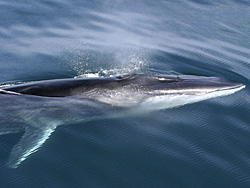
Species in Balaenoptera have streamlined bodies, paired throat pleats (ventral grooves) that expand during engulfment feeding, baleen plates instead of teeth, and relatively small dorsal fins. They perform lunge or gulp feeding: accelerating toward a dense patch of prey, opening a capacious mouth, and taking in huge volumes of water and food, then forcing water out through the baleen to retain krill and small schooling fish. Size varies widely across the genus, from the enormous blue whale to the much smaller minke and Omura’s whales.
Commonly recognized species
- Balaenoptera musculus — blue whale
- Balaenoptera physalus — fin whale
- Balaenoptera borealis — sei whale
- Balaenoptera acutorostrata and Balaenoptera bonaerensis — minke whales (different populations)
- Balaenoptera edeni / Bryde’s-type whales — taxonomically complex
- Balaenoptera omurai — Omura’s whale, described as distinct in 2003 (see Omura’s whale)
Evolution, history and distinctions
Balaenoptera species belong to the rorqual lineage, which diverged from other baleen whales millions of years ago. The humpback whale is also a rorqual but is classified in a separate genus, Megaptera, notable for its unusually long pectoral fins and different flukewise markings. Taxonomy within Balaenoptera remains active; molecular studies have clarified some relationships but also revealed cryptic diversity, especially among Bryde’s- and minke-type forms.
Ecology, human interactions and conservation
These whales feed primarily on krill and small schooling fish and occupy oceanic and coastal habitats worldwide. Historically, intensive commercial whaling reduced many populations dramatically; protection measures and international moratoria have allowed some recovery, though threats remain. Contemporary pressures include ship strikes, entanglement in fishing gear, noise disturbance, prey shifts related to climate change, and habitat degradation. Balaenoptera species are frequent subjects of marine research, acoustic monitoring, and whale-watching, and they remain important indicators of ocean ecosystem health.
Related articles
Author
AlegsaOnline.com Balaenoptera: rorqual whales of the Balaenopteridae genus Leandro Alegsa
URL: https://en.alegsaonline.com/art/8436