
Ronald Reagan’s 1980 presidential campaign
Comprehensive overview of Ronald Reagan's 1980 presidential campaign: announcement, themes, primary fight, organization, running mate choice, election results and political legacy.

The 1980 presidential campaign of Ronald Reagan began with his formal announcement in the autumn of 1979 and culminated in a decisive victory over the incumbent, Jimmy Carter. Reagan, then the former actor and the one-time Governor of California, framed his run as a bid to restore national confidence and economic vitality after a decade of domestic and international challenges.
Image gallery
9 Images


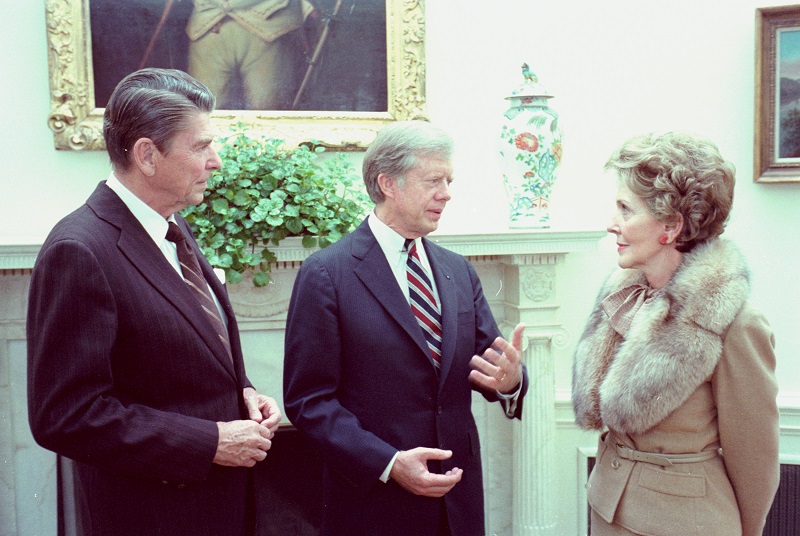


Announcement and early strategy
Reagan announced his candidacy for the presidency in New York on November 13, 1979; the formal event and public rollout emphasized clear themes of economic renewal and national strength. The campaign presentation highlighted his conservative philosophy and proposed policies intended to address high inflation, unemployment and perceived declines in American influence. The announcement in New York City set the tone for a media-driven strategy that relied heavily on televised speeches, advertising and carefully staged appearances.
Primary campaign and nomination
During the Republican primaries Reagan faced both ideological rivals and establishment figures. He prevailed through a mix of grassroots organization, effective messaging and appeals to conservative and moderate voters. The campaign formally secured the Republican nomination at the party convention on July 17, 1980, with a team that managed fundraising, communications and voter outreach across a broad geographic range.
Organization, staff and management
Campaign operations were led by experienced political operatives who emphasized disciplined messaging and targeted media buys. William J. Casey served as campaign manager and coordinated strategy, while advisers and field operatives built state-level organizations and coordinated volunteers. The campaign balanced national advertising with local efforts to mobilize supporters and register sympathetic voters.
Core messages and slogans
Reagan's campaign distilled complex policy proposals into memorable lines that voters could recall and repeat. Two phrases became central: the economic comparison question "Are you better off than you were four years ago?" and a broader theme of national renewal sometimes summarized as "Make America Great Again". These themes connected economic concerns with cultural appeals and helped attract a coalition that included conservatives, working-class voters and independents.
Debates and public image
Debates and televised appearances were pivotal. Reagan's communication style—confident, concise and often humorous—helped him contrast with his opponents and reassure voters. Memorable debate moments and soundbites enhanced his reputation as a persuasive public speaker and contributed to a perception of strong leadership capability among many voters.
Selection of running mate
After securing the nomination Reagan chose former rival George H. W. Bush as his running mate. The selection aimed to unify the party by balancing conservative and more moderate factions, and to broaden appeal on foreign policy and establishment Republican constituencies.
Opponents and the general election
In the general election Reagan faced incumbent President Jimmy Carter and a notable independent candidacy by Representative John B. Anderson. Economic concerns, international incidents such as the Iran hostage crisis, and perceptions of domestic decline shaped voter preferences and turnout. The campaign contested key states with targeted messages about taxes, government size and national security.
Election results and formalities
On Election Day Reagan won a large electoral majority, carrying 44 states and securing a substantial electoral vote total. President Carter carried a small number of states plus Washington, D.C.. The Electoral College met in December to cast official votes, and those votes were counted by Congress in January, after which Reagan's victory led to the transition and his inauguration.
Significance and legacy
The 1980 campaign is widely regarded as a turning point in modern American politics. It consolidated a conservative coalition that influenced public policy debates on taxes, regulation and defense for decades. The campaign's disciplined use of media, focused slogans and coalition-building techniques became models for future presidential efforts. Historians and political analysts continue to study the 1980 campaign for its strategic innovations and its long-term impact on American political alignments.
For primary documents, campaign speeches and archival materials, consult dedicated political archives and contemporary records detailing the run-up to the election, the convention, and the transition that followed.
References in this article link to primary topics and further reading: Reagan, California governorship, presidential candidacy, announcement venue, Republican convention, campaign theme, vice-presidential selection, major opponent, district results, third-party contender and inaugural event.
Related articles
Author
AlegsaOnline.com Ronald Reagan’s 1980 presidential campaign Leandro Alegsa
URL: https://en.alegsaonline.com/art/83992
Sources
- pbs.org : "Time to Recapture our Destiny"
- ropercenter.uconn.edu : "1980 Presidential Election"
- news.google.com : "Electoral College chooses Reagan today"
- pqasb.pqarchiver.com : "Congress Makes It Official—Reagan's the Winner"