
Romulus and Remus: Legendary Founders of Rome
Twin brothers of Roman legend credited with founding Rome. Their myth includes divine parentage, abandonment and rescue, a she-wolf, fratricide, and a lasting cultural legacy.
Overview
Romulus and Remus are the central figures of the traditional origin story told about the founders of Rome. In Roman storytelling they appear as twin brothers born to the vestal Rhea Silvia and the war-god Mars, a tale that blends divine ancestry, human struggle and civic foundation. The narrative explains how a small settlement on the Tiber evolved — in myth — into a city with a distinct identity and institutions.
Image gallery
10 Images


Legend and main episodes
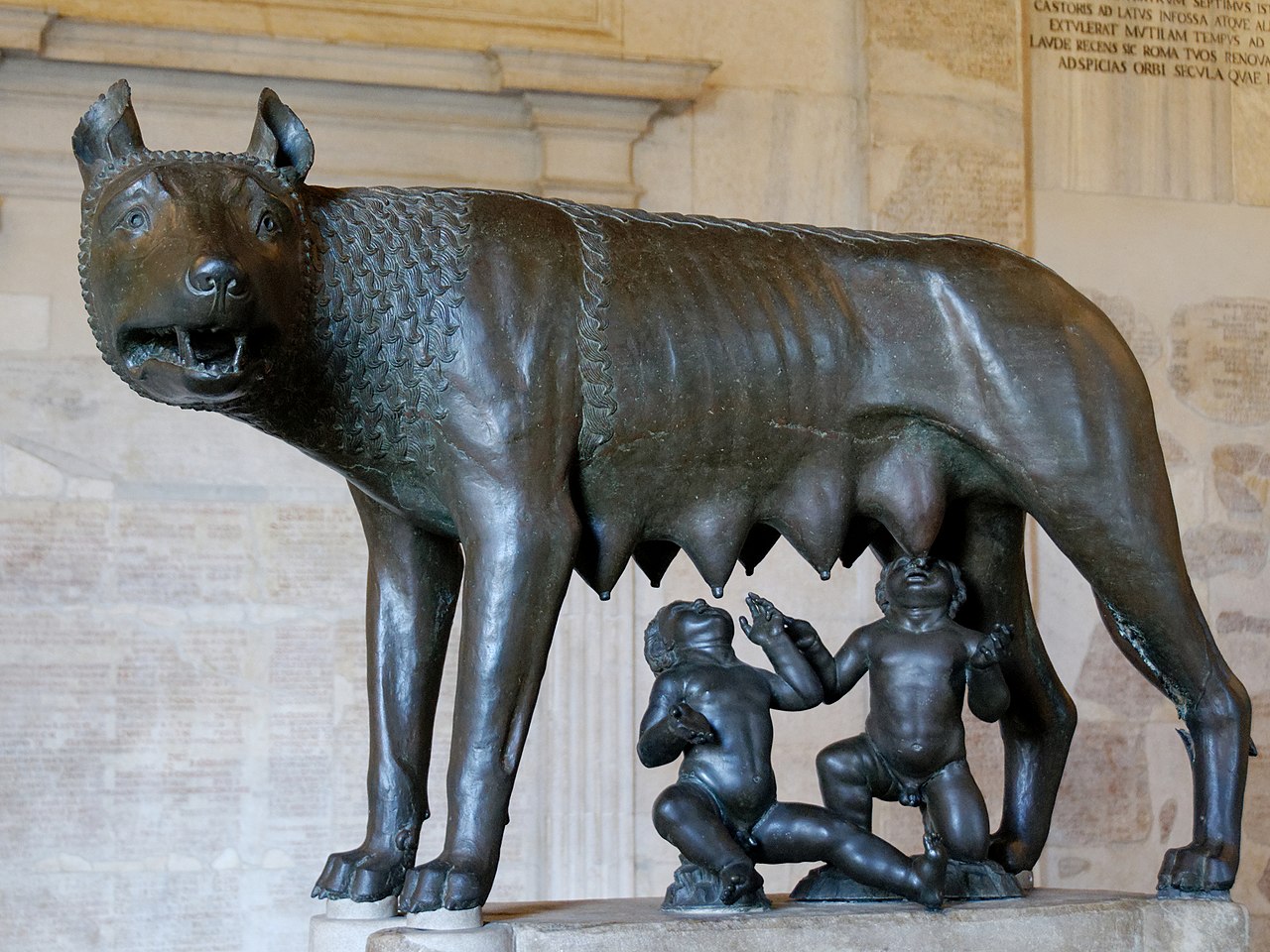
According to the common version, Rhea Silvia was forced into chastity as a Vestal Virgin but became pregnant by Mars. Fearing political danger, the twins were abandoned on the river and left to die. They were rescued and suckled by a she-wolf, then raised by a shepherd. This sequence, often cited in sources on Roman mythology, gives the story its most enduring images: the wolf and the pastoral upbringing that connects the founders to both nature and ordinary people.
Tension between the brothers grew as they decided where to establish a city. After a quarrel — variously told as an argument over omens, boundaries or honor — Romulus killed Remus and became the sole ruler, naming the new settlement after himself. Roman tradition later fixed a foundation date (commonly given as 753 BC) and described Romulus as the city's first king.
Sources and variants
Classical writers such as Livy, Plutarch and Ovid recount different details and emphases, and local legends produced multiple versions. Some tellings stress the divine paternity, others the social and legal acts by which Romulus organized the populace. The twins themselves belong to a wider pattern of Indo-European twin-hero motifs, and some elements may have symbolic rather than literal meaning.
Legacy and interpretation
The story shaped Roman self-identity, political ritual and art. Statues and reliefs of the she-wolf nursing the infants became iconic; Romulus was later identified with the deity Quirinus and given cult honors. Modern historians and archaeologists treat the tale cautiously: archaeological evidence indicates Rome arose from a fusion of settlements on the hills by the Tiber, but there is no direct proof for the literal events in the legend. Debates continue over which parts are mythic invention and which reflect distant memories of early Rome.
Notable aspects
- Rhea Silvia's status as a Vestal Virgin is key to the story's political resonance and moral tension; see Rhea Silvia.
- The motif of twins is central and can be compared to other heroic pairs; compare descriptions of twins in myth and folklore.
- The myth remains a symbol of Roman origins and has informed literature, visual arts and national narratives across centuries.
For more detailed treatments and primary accounts, consult classical histories and modern syntheses of early Roman religion and urban development. Important scholarly and popular sources collect variant texts and archaeological studies that illuminate how myth and material culture interacted in Rome's formation. See also traditions cataloged under founders and depictions preserved in museums and literature (Rome, Roman mythology).
Related articles
Author
AlegsaOnline.com Romulus and Remus: Legendary Founders of Rome Leandro Alegsa
URL: https://en.alegsaonline.com/art/83951