
Robert Ripley — creator of Ripley’s Believe It or Not!
American cartoonist and entrepreneur who popularized curiosity and oddities through the syndicated panel 'Ripley’s Believe It or Not!', live shows, books and museum exhibits.
LeRoy Robert Ripley, better known as Robert Ripley, was an American cartoonist, collector and media entrepreneur who built a global curiosity franchise centered on unusual, surprising and often little-known facts. He is best known as the creator of the syndicated panel and brand Ripley’s Believe It or Not!, a short, illustrated item that presented bizarre facts and oddities from around the world. Ripley’s work combined simple line drawings, concise captions and showmanlike storytelling to turn marginal curiosities into mainstream entertainment. Cartoonist and entertainer are two of the labels most often applied to him.
Image gallery
3 Images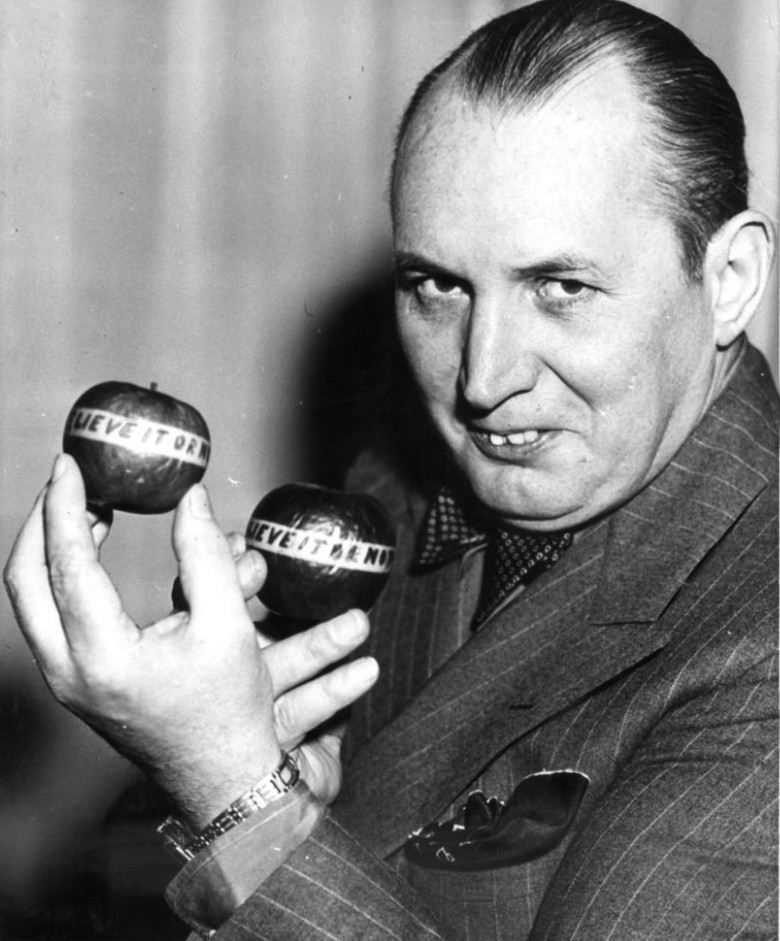


Career and the newspaper feature
Ripley began his career drawing sports cartoons and freelance illustrations for newspapers and periodicals. By the 1910s he had introduced a recurring page of odd items that readers found particularly appealing because of their brevity and novelty. The panel's format — a compact drawing accompanied by a short, punchy caption — made it easy to syndicate and to reprint in many papers. That commercial success helped Ripley expand from a single page into a recognizable brand. He described himself as an amateur collector and observer, rather than a formally trained scholar, and he used his newspaper exposure to encourage public curiosity about distant lands and unusual human achievements. See contemporary profiles of his work and methods via entrepreneurship and anthropology sources.
Expansion into other media and collections
Ripley extended his brand beyond the printed page into a variety of formats that reached new audiences. Radio programs, short film features and a later television series carried the same mix of concise storytelling and sensational items. He published collections of his panels and travel accounts in book form, and he organized public exhibitions of the objects and curiosities he had assembled during his travels. Those exhibitions were precursors to the permanent "Odditorium" museums that later became associated with the Ripley franchise. The multi-format reach of the property — print, audio, moving image and museum display — was a significant factor in its long-term cultural visibility. Contemporary references to his life and work can be found in regional histories such as those for Santa Rosa and city profiles like New York, Los Angeles and Chicago.
Approach, reception and legacy
Ripley styled himself as an accessible purveyor of the odd. His items mixed verifiable curiosities with reports whose accuracy sometimes proved difficult to confirm. Critics and later researchers have pointed out that a handful of entries relied on hearsay or uncertain sources, but his overall influence lies in popularizing worldwide curiosity and making unusual cultural, natural and human phenomena part of everyday conversation. The Ripley franchise outlived its founder: his name remains attached to museums, television series and a long-running syndicated feature. For more on how his approach has been assessed over time, consult retrospective discussions and collections at Miami regional histories and cultural commentaries such as those catalogued under Bedford and similar local archives.
Personal life and notable facts
Ripley was born in Santa Rosa, California, and during his life he lived and worked in several American cities while traveling abroad to gather material. He married Beatrice Roberts in 1919; the marriage ended in divorce in the 1920s. Ripley described himself as an enthusiastic amateur collector rather than a professional scientist, and that self-description informed both his public persona and the way he organized exhibits and books. He died in New York in 1949; accounts of his later years and death are discussed in biographical notes and archival materials. See biographical and regional entries for additional detail at Santa Rosa and primary source collections tagged cause of death.
- Formats associated with Ripley: newspaper panel, books, radio, film and television.
- Public venues: traveling exhibitions and museum-style "Odditoriums" that displayed artifacts and curiosities to the public.
- Enduring impact: a franchise that kept the Ripley name alive in popular culture and in museums worldwide.
Related articles
Author
AlegsaOnline.com Robert Ripley — creator of Ripley’s Believe It or Not! Leandro Alegsa
URL: https://en.alegsaonline.com/art/83382
Sources
- nndb.com : NNDB biography of Robert L. Ripley