
Robert Remak (1815–1865) — embryologist, neurologist and physiologist
German physician Robert Remak made key 19th-century observations in embryology, nerve anatomy and cell division; his name is associated with unmyelinated nerve fibers and cardiac ganglia.
Robert Remak (26 July 1815 – 29 August 1865) was a Prussian physician whose careful microscopic studies advanced embryology, neuroanatomy and the modern understanding of how cells arise. Trained in Berlin, he combined clinical practice with systematic observations of embryos and nerves, producing findings that later became central to cell theory and to the anatomy of the peripheral nervous system. His work is remembered both for specific anatomical eponyms and for its influence on later nineteenth‑century biology.
Image gallery
2 Images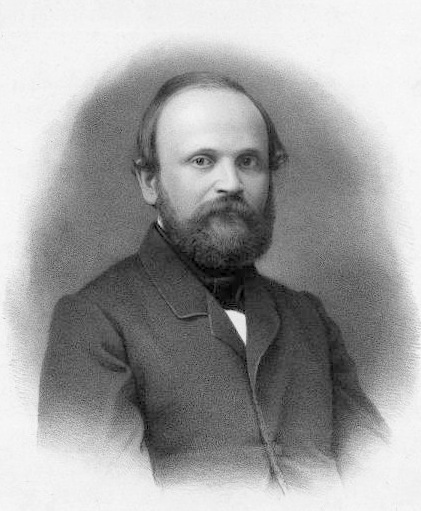
Education and early career
Born in Posen (now Poznań), Remak received his medical degree from Friedrich Wilhelm University in Berlin in 1838 and worked under the prominent physiologist Johannes Müller. During his early career he balanced hospital and private practice with laboratory research, using microscopy to examine developing embryos and the fine structure of nerves. His publications from this period attracted attention for their precision of observation and their challenge to established ideas about development.
Scientific contributions
Remak made several distinct contributions that have endured in medical terminology and in scientific thought. He described a population of unmyelinated nerve fibers that are important components of autonomic and sensory pathways; these are commonly referred to as "Remak fibers." He also identified small collections of nerve cells associated with the heart, sometimes called "Remak's ganglia," that form part of the intrinsic cardiac nervous system. Using systematic microscopic study of embryos and developing tissues, Remak concluded that new cells arise by the division of pre‑existing cells — a finding that anticipated and informed later formulations of cell theory.
- Unmyelinated nerve fibers: fine axons lacking myelin sheaths, prominent in autonomic nerves.
- Cardiac ganglia: local nerve cell clusters contributing to heart innervation.
- Cell division: empirical observations showing cleavage and mitotic origin of cells.
Methods and context
Remak’s work relied on careful dissection and light‑microscope observation at a time when improvements in lenses and staining were expanding what could be seen. He compared embryos at successive stages and traced the formation of tissues from proliferating progenitor cells. His conclusions about cellular origin reinforced an emerging scientific consensus that replaced older ideas of spontaneous generation and separate creation of cells.
Reception and legacy
Although his discoveries were influential, Remak faced professional and social barriers: because of his Jewish background he was denied full academic recognition for much of his life and received formal honors only late in his career, without some customary benefits. Despite these obstacles, his name persists in anatomy and pathology, and his experimental approach helped pave the way for later cell biologists and neurologists. His observations were part of the foundation on which later scientists, including Rudolf Virchow and others, built a more complete cell theory.
Further reading and related topics
For introductions to the subjects Remak studied see entries on embryology, the history of Posen and nineteenth‑century German medicine. His academic training is tied to the medical faculty of Friedrich Wilhelm University in Berlin. Overviews of the development of cell theory and embryological methods reference the kind of work he published; see summaries at embryology resources and discussions of the origin of cells via division of pre‑existing cells.
Related articles
Author
AlegsaOnline.com Robert Remak (1815–1865) — embryologist, neurologist and physiologist Leandro Alegsa
URL: https://en.alegsaonline.com/art/83381
Sources
- pubmedcentral.nih.gov : "Virchow, the heroic model in medicine: health policy by accolade"
- pubmed.ncbi.nlm.nih.gov : 3538915