
Right whale (Eubalaena) — overview, traits, history and conservation
Large baleen whales of the genus Eubalaena, identifiable by massive heads, unique callosities and skim-feeding; three species were heavily hunted and today face serious conservation threats.
The right whales are large baleen whales of the genus Eubalaena, commonly called "right whales" or "black whales." They are slow-moving, coastal filter-feeders characterized by an unusually large head that may make up about one quarter of the animal's body length. Three widely recognized species occur in northern and southern oceans: the North Atlantic, the North Pacific, and the Southern right whale. Historically they were a principal target of commercial whaling and remain a focus of conservation efforts.
Image gallery
10 Images




Physical characteristics
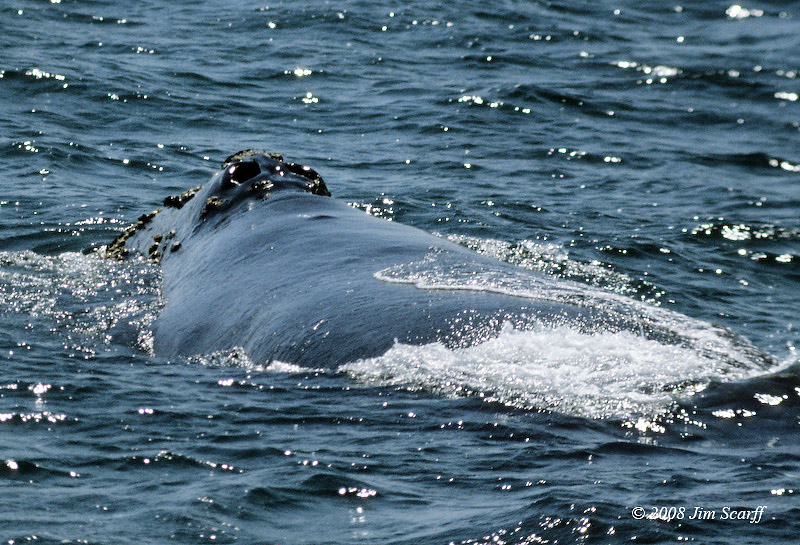
Right whales have a robust, rotund body and no dorsal fin. Their upper jaw bears long baleen plates used to strain small crustaceans and plankton from seawater while swimming with an open mouth. The head is often covered with rough, pale patches called callosities; these hardened skin formations are inhabited by small crustaceans (whale lice) and create distinctive patterns that are stable over an individual's lifetime. Fine, stiff hairs stud the rostrum and lips and serve a sensory role. When they exhale, right whales produce a tall, V-shaped blow visible at the surface.
Feeding, behavior and life history
Right whales are skim feeders: they move slowly with the mouth open to filter dense concentrations of copepods and other zooplankton. They prefer shallow coastal waters and continental shelf habitats where prey aggregate. Reproduction is slow: females produce a single calf after a lengthy gestation and invest heavily in parental care, which contributes to a low intrinsic population growth rate. Calving typically occurs in warmer, sheltered bays or nearshore waters.
History and conservation status
Because they floated when killed and yielded large quantities of oil and baleen, right whales were heavily hunted from the 17th through 19th centuries and were driven to low numbers in many regions. Protection in the 20th century has allowed partial recoveries in some areas, but several populations remain very small and are considered extremely vulnerable. North Atlantic and North Pacific populations are widely regarded as critically depleted, while Southern right whales have shown stronger regional recoveries following protection, though they remain protected and monitored.
Threats and protection measures
Modern threats include collisions with vessels (ship strikes), entanglement in fishing gear, habitat disturbance from noise and development, and changing prey distributions linked to ocean conditions. Conservation measures used by governments and managers include regulated vessel speeds in important habitats, modification of fishing gear to reduce entanglement risk, seasonal area closures, and systematic aerial or acoustic monitoring to detect whale presence.
Identification and scientific importance
Researchers use callosity patterns, photographic catalogs and genetic sampling to identify individuals and track survivorship and movement. As long-lived, slow-reproducing mammals with coastal habits, right whales act as indicator species for the health of temperate and subpolar marine ecosystems and are often central in policy debates over shipping, fisheries, and marine protected areas. For additional summaries and management resources, see more information.
- Distinctive traits: large head, callosities, no dorsal fin, baleen plates
- Diet: plankton and small crustaceans (skim feeding)
- Main threats: ship strikes and gear entanglement
Related articles
Author
AlegsaOnline.com Right whale (Eubalaena) — overview, traits, history and conservation Leandro Alegsa
URL: https://en.alegsaonline.com/art/82905