
Riodinidae (metalmarks): an overview of the butterfly family
Riodinidae, commonly called metalmarks, are a diverse family of mostly Neotropical butterflies noted for metallic wing markings, ant associations in larvae, complex taxonomy, and about 2,000 species worldwide.
Overview
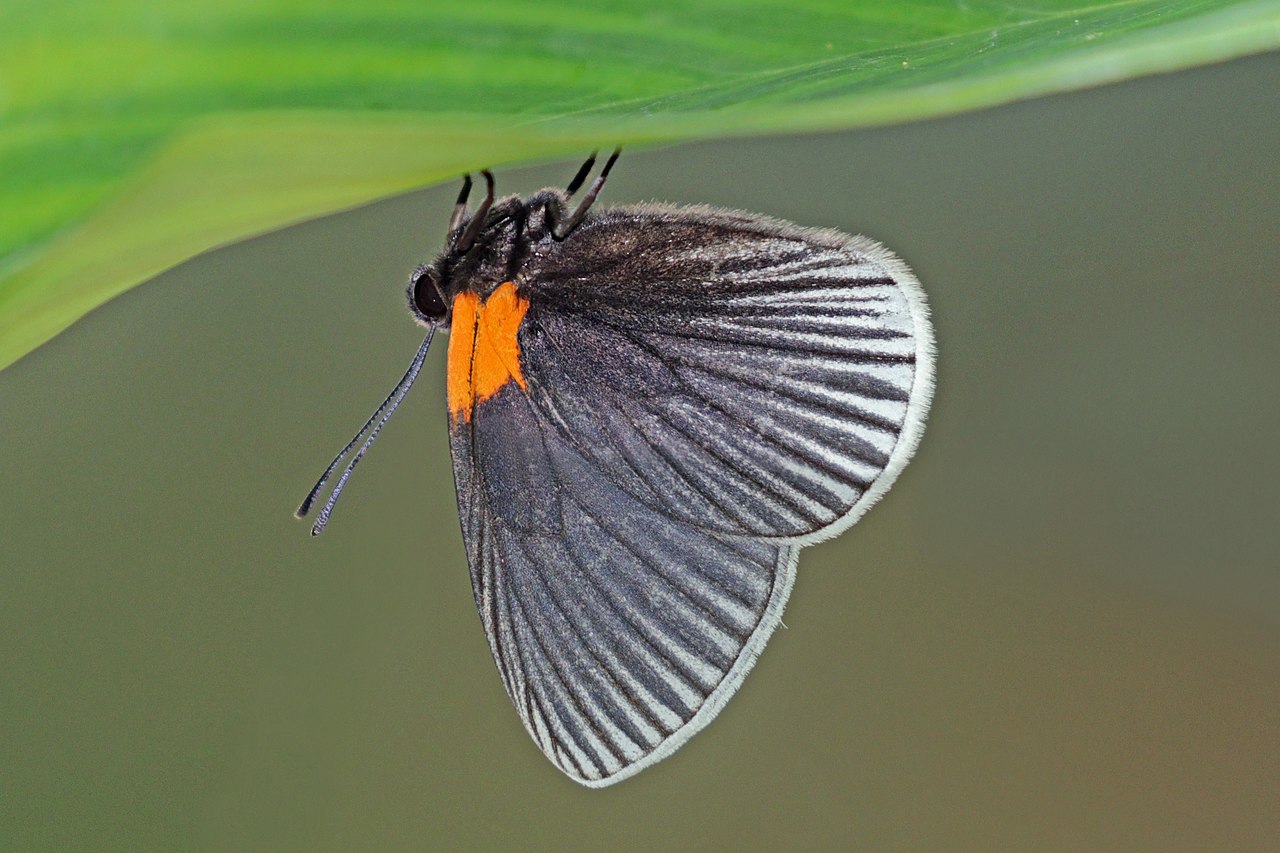
Riodinidae is a family of butterflies commonly known as riodinids or metalmarks. The name "metalmark" refers to the small, often reflective, metallic-looking spots or streaks on the wings of many species. The family contains roughly two thousand described species, most of them small to medium-sized; adult wingspans commonly range from about 20 mm to 65 mm. Although the greatest diversity occurs in the Neotropical region, representatives are found in several other biogeographic regions.
Image gallery
8 Images



Physical characteristics
Metalmarks show great diversity in wing shape, patterning and color. Many species have bright, contrasting patterns while others depend on cryptic coloration. The characteristic metallic markings are produced by specialized scales that reflect light and may appear gold, silver, or iridescent. Sexual dimorphism is present in some species, with males and females differing in size, color or wing markings. Field identification often depends on wing pattern, venation and behavior rather than size alone. See general identification resources: field guides and keys.
Ecology and behavior
Riodinid caterpillars feed on a variety of host plants across many families. A notable ecological trait is myrmecophily: many larvae have secretory organs and are tended or protected by ants in return for nutrient-rich secretions. Adults visit flowers, sap flows, and moist ground for nutrients, and some species participate in mimicry complexes with other butterflies and insects. For more about wing patterns and signaling, consult: wing pattern studies.
Taxonomy and history
The group has undergone several reclassifications. Older literature sometimes treated them under names such as Erycinidae or Nemeobiidae, and they were at times placed as a subfamily of the Lycaenidae. Modern taxonomic and molecular studies support Riodinidae as a distinct family, though relationships to other butterfly families have been refined over recent decades. Historical taxonomy notes and references: taxonomic review.
Distribution, diversity and notable facts
Most species are Neotropical, where rainforests and diverse habitats support the highest species richness, but riodinids also occur in the Nearctic, Palearctic, Afrotropical, Indomalayan and Australasian regions. The family's diversity and often intricate interactions with ants and host plants make it important for studies of ecology, evolution and mimicry. General resources on regional diversity: regional faunas.
Importance and conservation
Riodinidae are of interest to ecologists and lepidopterists because of their specialized life histories and visually striking wing patterns. As with many insects, habitat loss and fragmentation threaten some species, particularly those with narrow ranges or specialized host-plant or ant associations. Conservation efforts benefit from habitat protection and biological study. For conservation guidance and citizen science opportunities see: conservation resources.
- Identification tips: check metallic markings, wing pattern symmetry, and habitat.
- Life cycle: egg → larva (often ant-associated) → pupa → adult.
- Research value: model group for mimicry, ant interactions, and tropical diversity studies.
Related articles
Author
AlegsaOnline.com Riodinidae (metalmarks): an overview of the butterfly family Leandro Alegsa
URL: https://en.alegsaonline.com/art/83015
Sources
- commons.wikimedia.org : Riodinidae
- species.wikimedia.org : Riodinidae