
Risso's dolphin (Grampus griseus)
A widely distributed oceanic dolphin, distinctive for its blunt head and extensive white scarring; the only living species in the genus Grampus and a specialist predator of squid.
The Risso's dolphin (Grampus griseus) is a medium to large oceanic cetacean noted for its stocky build, rounded head and a skin pattern marked by heavy scarring. Named after the naturalist Antoine Risso, it is the sole living species placed in the genus Grampus. For taxonomic context see Delphinidae, general dolphin information at dolphin overview, and specific genus details at Grampus.
Image gallery
9 Images




Description
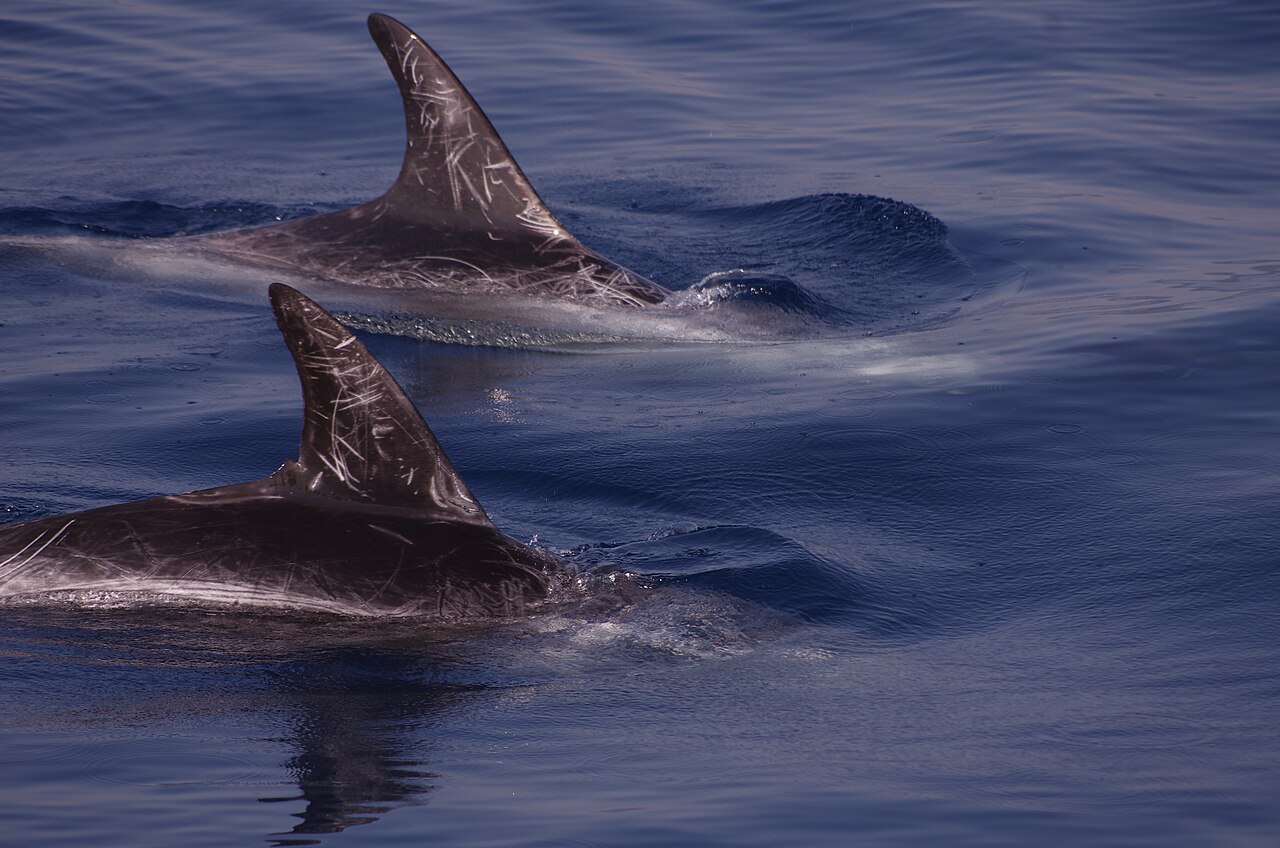
Adults have a robust body with a tall, slightly hooked dorsal fin. Unlike many dolphins they lack a pronounced beak, giving the head a blunt appearance. Coloration changes with age: young animals are generally darker, while mature individuals often appear mottled or pale because of extensive white or light scars. These scars come from social interactions and encounters with prey such as squid. Teeth are conical and primarily used for grasping rather than chewing.
Distribution and habitat
Risso's dolphins inhabit temperate and tropical seas around the world, preferring continental slopes and deep offshore waters where their main prey are abundant. They are commonly seen in the eastern and western Atlantic, the Mediterranean, and across the Pacific, often following oceanographic features that concentrate squid and other cephalopods.
Behavior and ecology
These dolphins are social animals that form groups ranging from small pods to larger aggregations. They are capable deep divers that typically feed on squid, using echolocation clicks to locate prey. Vocal behavior includes a variety of clicks and whistles used for navigation, foraging and social contact. Risso's dolphins sometimes associate with other cetacean species and are energetic at the surface, showing behaviors such as leaping and tail slapping.
Life history and human interactions
Reproductive biology is similar to other mid-sized dolphins: females bear a single calf after a lengthy gestation and invest extended parental care. Lifespans extend into decades under natural conditions. Human pressures include bycatch in fisheries, injury from boat strikes, disturbance from vessel traffic and the broader impacts of pollution and underwater noise. While the global conservation status is not currently critical, local populations can face significant threats.
Identification and notable facts
- Key field marks: blunt head, tall dorsal fin, heavily scarred and pale appearance in adults.
- Dietary preference: primarily squid, with some fish and octopus as supplements.
- Taxonomic note: the only extant species in its genus, which helps distinguish it from superficially similar dolphins.
- Research and ecotourism: frequently studied for diving physiology, social behavior and predator–prey dynamics; encounters are popular with wildlife watchers.
Risso's dolphins play a distinct ecological role as mid- to deep-water predators and remain an important species for studies of marine mammal biology and the health of pelagic ecosystems.
Related articles
Author
AlegsaOnline.com Risso's dolphin (Grampus griseus) Leandro Alegsa
URL: https://en.alegsaonline.com/art/83059