
Remedios Loza — Bolivian artisan, television presenter and politician
Remedios Loza (1949–2018) was an Aymara artisan and media personality who became a pioneering indigenous politician in Bolivia, noted for bringing indigenous issues into national politics.
Francisca Remedios Loza Alvarado (21 August 1949 – 14 December 2018) was a Bolivian artisan, television presenter and politician. Born in La Paz, she came from an Aymara background and rose to national prominence by combining cultural work, broadcasting and public service. Her life and career are widely remembered for advancing indigenous visibility in Bolivian public life.
Image gallery
1 Image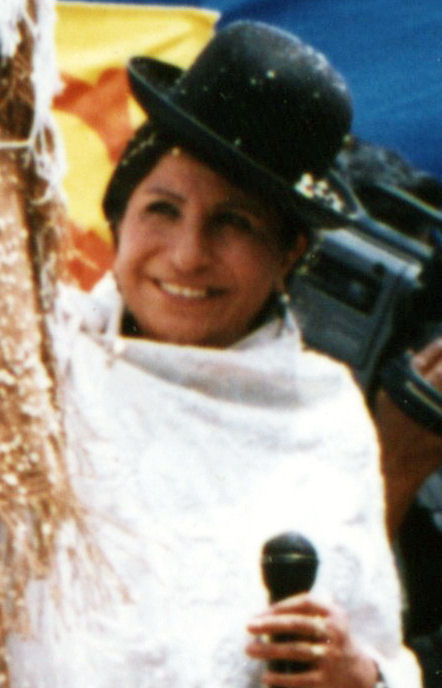
Early life and cultural work
Loza trained and worked as an artisan, creating textiles and crafts rooted in Andean traditions. Her skills in traditional arts connected her to community networks and to broader efforts to preserve indigenous cultural expressions at a time when such practices had limited recognition in national institutions.
Media career
Loza became known as a television presenter and collaborator with popular, grassroots media initiatives. Through television and radio work she reached urban and rural audiences, using mass media to elevate issues affecting indigenous peoples and to introduce indigenous customs and language to wider Bolivian audiences.
Political career and advocacy
Entering politics from a background in culture and media, Loza is widely regarded as one of the first indigenous women to win election to Bolivia's national legislature. She served multiple terms in national office and appeared on national tickets, affiliating with a populist movement that emphasized the needs of the urban poor and indigenous communities. Her platform emphasized bilingual education, social welfare, recognition of indigenous identity and greater political inclusion.
- Notable roles: artisan, broadcaster, national legislator, and political candidate.
- Key themes: indigenous rights, cultural recognition, social policy and grassroots representation.
Loza's public presence helped normalize indigenous participation in formal politics and inspired subsequent generations of indigenous leaders. Her death in December 2018 prompted tributes from civil society groups, cultural organizations and political figures who credited her with opening space for indigenous voices in Bolivia's contemporary political landscape.
Related articles
Author
AlegsaOnline.com Remedios Loza — Bolivian artisan, television presenter and politician Leandro Alegsa
URL: https://en.alegsaonline.com/art/82059
Sources
- la-razon.com : "Muere Remedios Loza, la primera mujer de pollera que llegó al Parlamento"
- eldeber.com.bo : "Remedios Loza fallece un mes después de recibir un homenaje"
- elcomercio.pe : "Bolivia: Muere Remedios Loza, la primera mujer aymara en llegar al Congreso"
- eldeber.com.bo : "Velan restos de Remedios Loza en el Legislativo"