
Red wolf (Canis rufus)
The red wolf (Canis rufus) is an endangered North American canid native to the eastern United States. Smaller than the gray wolf and larger than the coyote, it faces threats from habitat loss, hybridization, and human conflict.
The red wolf (Canis rufus) is a threatened North American canid historically native to forests and coastal plains of eastern North America. Often described as a subspecies or distinct species within the broader wolf group, it is recognized for its reddish-brown coat and intermediate size. Its historic range extended across much of the southeastern and mid-Atlantic United States, a region commonly referred to as Eastern North America.
Image gallery
10 Images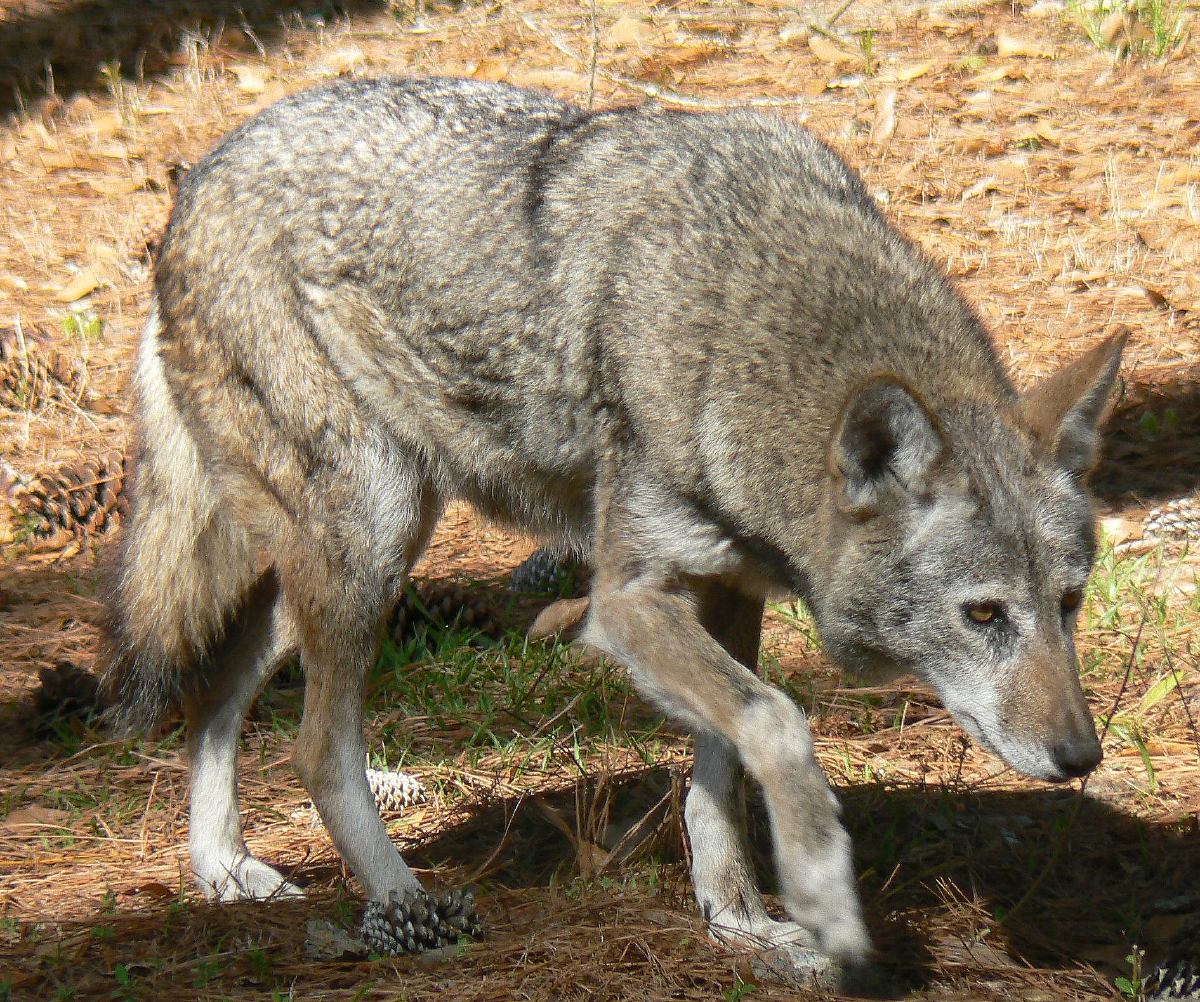


Description
The red wolf is physically intermediate between the larger gray wolf and the smaller coyote. It tends to be more slender and long-legged than the coyote, with a narrow muzzle and erect ears. Coat coloration varies from tawny and reddish to grayish tones, often with buff markings. In the wild it hunts a variety of prey, from small mammals and rodents to larger ungulates such as the white-tailed deer, taking animals appropriate to local availability.
Behavior and ecology
Red wolves are social carnivores that commonly form family groups or packs centered on a breeding pair. They defend territories and use vocalizations, scent marking and visual cues in communication. Their diet and hunting strategies are adaptable: they can hunt alone, in pairs, or cooperatively depending on prey size. Reproduction follows a seasonal pattern, with offspring raised by both parents and sometimes by other pack members.
Conservation history
By the late 20th century wild red wolf numbers had fallen dramatically. A captive-breeding program established after wild declines led to the last known pure wild individuals being taken into captivity, and the species was declared extinct in the wild around 1980. In 1987 a managed reintroduction began on the Albemarle Peninsula in northeastern North Carolina, creating the first established population in decades. Initial growth showed the potential for recovery, but subsequent years have seen setbacks and fluctuating numbers due to multiple pressures.
Threats and management
Main threats to the red wolf include habitat fragmentation, vehicle collisions, illegal killing, and genetic mixing with expanding coyote populations. Conservation efforts combine captive breeding, release of animals to reinforce wild packs, public outreach, and land-use planning. Management actions often require balancing local human concerns with species recovery goals. Examples of measures used by conservation programs include:
- Captive-breeding and carefully managed releases to the wild.
- Monitoring and radio-telemetry to track survival and movement.
- Habitat protection and collaboration with private landowners.
- Intervention to reduce hybridization where feasible.
Taxonomy, importance and outlook
The red wolf's taxonomic status has been the subject of extensive scientific debate. Genetic studies have produced differing interpretations: some researchers treat Canis rufus as a distinct species, while others describe a complex history of interbreeding with gray wolves and coyotes. This taxonomic controversy affects legal protections and conservation strategies. Despite these challenges, the red wolf remains ecologically and culturally significant as one of North America’s native predators and a high-profile example of intensive species recovery work. Continued conservation efforts aim to stabilize and expand wild populations, but long-term success depends on reducing human-caused mortality, securing habitat, and resolving genetic and management issues.
Author
AlegsaOnline.com Red wolf (Canis rufus) Leandro Alegsa
URL: https://en.alegsaonline.com/art/81718