
White-tailed deer (Odocoileus virginianus): appearance, ecology, and human interactions
Overview of the white-tailed deer: identification, range, behavior, reproduction, predators, ecological role, and management in native and introduced regions.
The white-tailed deer (Odocoileus virginianus) is a medium-to-large cervid widely distributed across the Americas. Its common name refers to the prominent white underside of the tail, which the animal raises and flashes as an alarm signal. The species occurs throughout much of North America and extends into parts of South America. Populations have also been established outside the native range through introductions into parts of Europe and New Zealand. For general species information see regional accounts and summaries (species information).
Image gallery
10 Images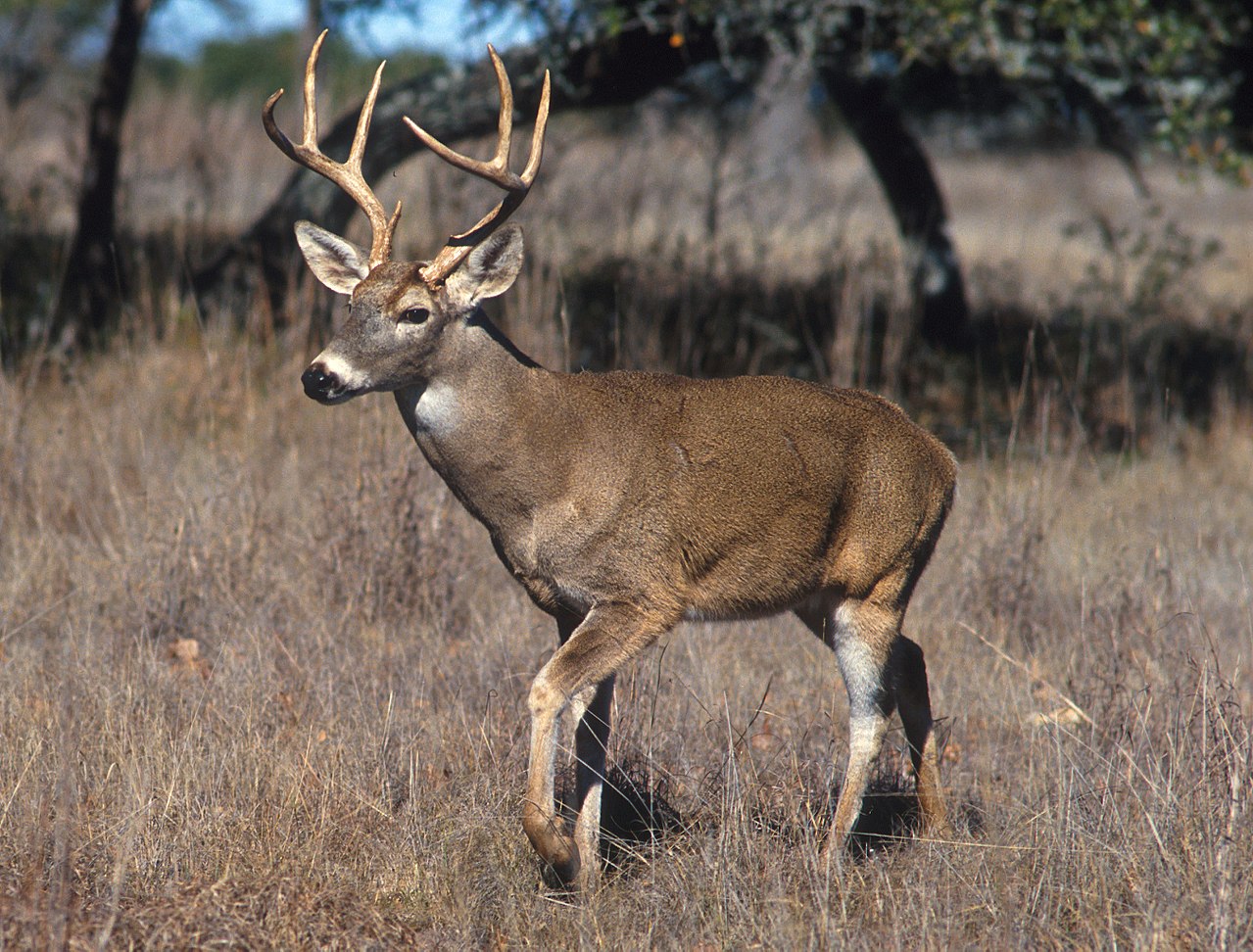


Physical characteristics
White-tailed deer show substantial variation in size, color and build across their broad range. Typical overall length is commonly reported around 160–220 cm and mass varies with sex, age and habitat; summary data often reference a wide weight range (weight and size). Seasonal coat changes are usual: a reddish brown summer coat becomes grayer and denser for winter. Sexual dimorphism is pronounced: males, called bucks, grow branched antlers each year that are shed and regrown seasonally and used in display and contests (antlers). Females (does) lack true antlers.
Behavior and diet
These deer are adaptable in habitat use and occur in forests, agricultural mosaics, scrub, riparian zones and suburban edges. Activity is primarily crepuscular, with peaks of movement at dawn and dusk. White-tailed deer are browsers and mixed feeders that consume leaves, twigs, buds, fruits, acorns and a wide variety of herbaceous plants and crops; basic dietary summaries are available (diet). When alarmed they often run quickly and elevate the tail to warn conspecifics; this visual cue is a well-known anti-predator behaviour.
Reproduction and life cycle
Breeding typically occurs seasonally in autumn during the rut, a period of heightened activity and male competition (rut). Males compete for access to receptive females and mating behaviours increase in visibility and intensity at this time (mating). Gestation lasts several months and most does give birth in spring or early summer to one to three spotted fawns, which are hidden by the mother for the first weeks of life. In the wild many individuals survive only a few years because of predation, disease and accidents, but on occasion deer live beyond a decade under favourable conditions.
Predators, disease and mortality
- Natural predators vary regionally and include wolves, coyotes, bears and mountain lions; humans are also major predators through hunting and vehicle collisions (predators).
- Disease and parasites can affect populations. In recent decades, concerns about prion disease known as chronic wasting disease, along with parasites and tick-borne issues, have influenced management in some areas; links to authoritative health and wildlife agencies provide current details.
Ecological role
As a widespread herbivore, the white-tailed deer influences plant community composition, forest regeneration and food webs. High local densities can suppress the regeneration of trees and understory plants, alter habitat for other wildlife and change nutrient dynamics. Deer also serve as prey for large carnivores where those predators persist, and they can disperse seeds and fungi.
Human relationships and management
White-tailed deer are important for hunting, wildlife observation and cultural traditions. However, they can cause conflicts through agricultural damage, garden and landscaping loss, and vehicle collisions. In suburban and exurban settings deer often reach high densities because of abundant cover and limited predation, increasing human–deer interactions. Management tools include regulated hunting, habitat modification, fencing, fertility control in some jurisdictions and coordinated measures to reduce collisions and disease transmission. Introduced populations in non-native regions have required tailored management because of ecological impacts.
For region-specific guidance consult wildlife agencies and local species accounts. Useful starting points include general species pages and range summaries (species pages, North America, South America) and information on introduced populations (Europe, New Zealand). For morphology and measurements see size and weight summaries (weight and size), and for behaviour, antler cycles and breeding consult behavioural references (male terminology, antlers, rut, mating). Diet and predator interactions are covered in ecological accounts (diet, predators).
Questions and answers
Q: What is the white-tailed deer?
A: The white-tailed deer is a type of deer found throughout most of North America, and some parts of South America.
Q: What is the weight range of the white-tailed deer?
A: The white-tailed deer's weight can range from 57 to 137 kilograms (125 to 301 pounds).
Q: Are male white-tailed deer known for anything specific?
A: Yes, male white-tailed deer have large antlers that fall off in the winter.
Q: How long does the white-tailed deer typically live?
A: The white-tailed deer lives between two and three years, but sometimes they can live for more than ten years.
Q: Does the white-tailed deer have any predators?
A: Yes, white-tailed deer have predators such as wolves, coyotes, bears, mountain lions, and humans.
Q: What is the feeding pattern of the white-tailed deer?
A: White-tailed deer mostly feed during the morning and evening and eat vegetation like tree leaves or smaller plants.
Q: What happens during the autumn for the white-tailed deer?
A: During autumn, the white-tailed deer engage in mating.
Related articles
Author
AlegsaOnline.com White-tailed deer (Odocoileus virginianus): appearance, ecology, and human interactions Leandro Alegsa
URL: https://en.alegsaonline.com/art/107859
Sources
- bucknell.edu : "Odocoileus virginianus"
- animaldiversity.ummz.umich.edu : "Odocoileus virginianus"