
Red brick university
A type of British civic university founded in industrial cities in the late 19th and early 20th centuries, noted for practical teaching, red-brick architecture and broader access to higher education.
Overview
"Red brick university" is an informal term applied to a group of civic universities established in the great industrial cities of England during the late 19th and early 20th centuries. These institutions grew out of municipal and industrial demand for advanced technical and professional training and differed in origin and mission from older collegiate universities.
Image gallery
10 Images



Origins and name
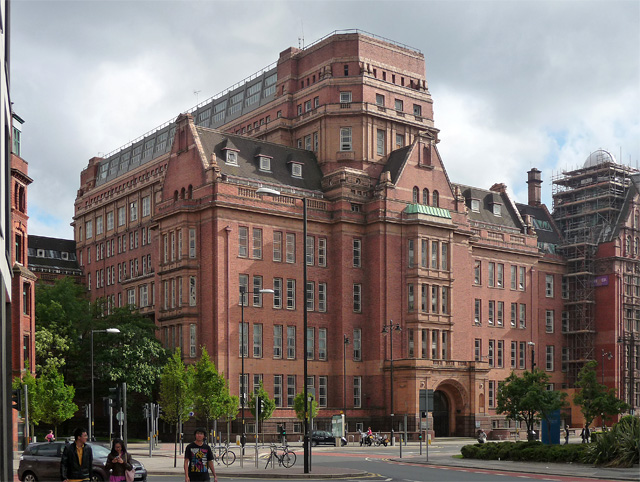
The label arose in the mid-20th century and alludes both to the distinctive Victorian red-brick architecture of many of these campuses and to their civic, urban roots. They were created to serve expanding industries in large industrial cities and to provide an alternative model of higher education that was less bound to religious tests and classical curricula.
Characteristics
- Practical, vocational emphasis: strong programs in applied sciences, technical subjects and professional training such as engineering and business.
- Medical and health faculties: many developed teaching hospitals and courses in medicine and allied professions.
- Civic foundations: founded or supported by municipalities, local industry and philanthropic bodies rather than by ancient colleges.
- Wider access: admitted students from more diverse social and religious backgrounds than some older universities.
Role and development
These universities played a central role in educating professionals needed by growing urban economies, promoting social mobility and advancing applied research. Over the 20th century many expanded curricula, increased research capacity and transformed into fully-fledged modern universities while retaining their civic identity.
Uses, importance and distinctions
Red brick universities helped shift the priorities of British higher education toward practical instruction and industry collaboration. They are often contrasted with older collegiate universities (with different governance and traditions) and with later post-war universities established after major expansion of higher education. The phrase is sometimes used loosely to describe a larger set of civic institutions; precise lists vary by source—see accounts of civic universities for different definitions.
Further reading and legacy
Today many former "red brick" institutions are major research universities with global links, yet the historical label continues to capture their origins in urban industry and practical education. For institutional histories and comparisons follow institutional web pages and broader surveys of British higher education (engineering and applied studies) and health training (medical education). Additional contextual resources on urban university development are available via studies of industrial cities and the wider category of English higher education institutions.
Related articles
Author
AlegsaOnline.com Red brick university Leandro Alegsa
URL: https://en.alegsaonline.com/art/81631