
Real Irish Republican Army (Real IRA)
Paramilitary group formed in the late 1990s after a split from the Provisional IRA, opposing the peace process; responsible for violent attacks including the 1998 Omagh bombing and later reduced activity.
The Real Irish Republican Army, commonly called the Real IRA, is a dissident Irish republican paramilitary organisation that emerged in the late 1990s. Its stated goal is the reunification of the island of Ireland under a single republic and the end of British jurisdiction in Northern Ireland, seeking the removal of the United Kingdom from the territory and the incorporation of Northern Ireland into the Republic of Ireland.
Image gallery
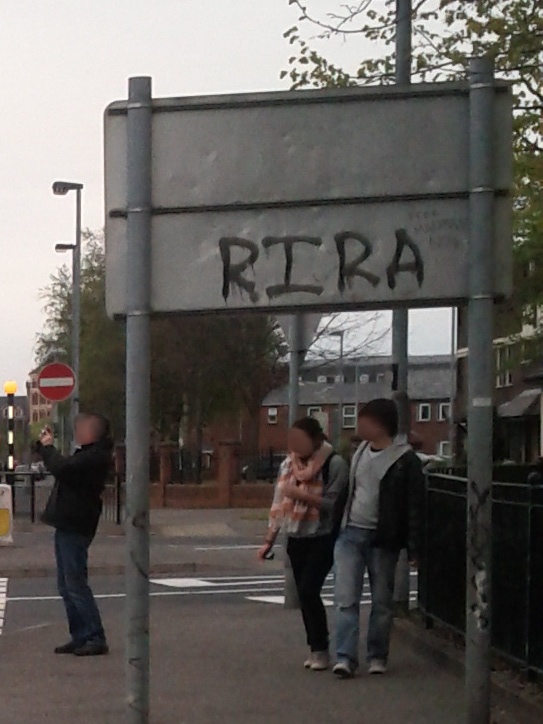
3 Images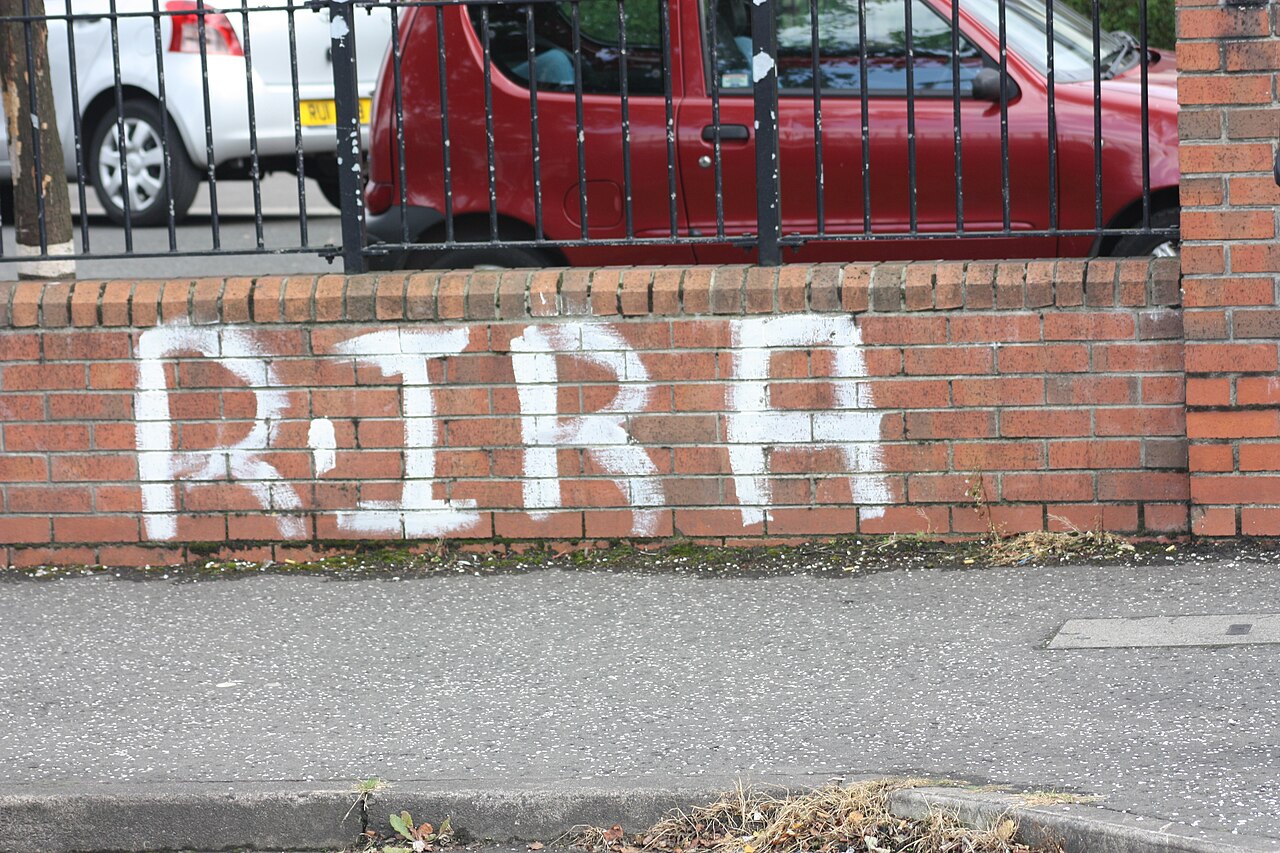
Origins and early development
The group formed when members who rejected the Provisional Irish Republican Army's ceasefires and the political approach of the late 1990s broke away from the Provisional IRA. Opponents of the 1998 peace settlement and of political compromise created the organisation in 1997 and began to plan independent operations. Tensions within republican activism over strategy and the Good Friday Agreement contributed to the split.
Notable attacks and patterns of activity
The Real IRA has been responsible for bombings and shootings in Northern Ireland and elsewhere in Great Britain. Its best-known atrocity is the Omagh bombing on 15 August 1998, an attack that killed 29 people and injured hundreds and which brought widespread condemnation at home and abroad; that incident is often cited when describing the group and its impact (Omagh bombing). Members have also targeted security forces, including incidents in which police officers were shot (police shootings), and have carried out attacks on the British mainland, with incidents reported in England and major cities such as London and Birmingham.
- Methods: clandestine cells, improvised explosive devices, shootings, and limited sabotage.
- Support and logistics: fundraising, arms acquisition and covert networks tied to sympathetic communities abroad and locally.
- Scale: smaller and less centrally organised than the Provisional IRA at its height, operating in cells to avoid detection.
Authorities in the United Kingdom and in other jurisdictions proscribed the organisation and treat membership and support as criminal and terrorist offences. Police investigations, prosecutions, and security measures increased after high-profile attacks, while political leaders and communities reinforced opposition to violence and continued the peace process.
Over time the Real IRA's capacity was diminished by arrests, intelligence operations and community rejection of violence. Some members and factions later joined or helped form newer dissident groupings; the landscape of republican dissidence has continued to evolve, but the Real IRA remains a reference point in discussions about post-ceasefire paramilitarism and the challenges of transitioning from armed struggle to politics.
Related articles
Author
AlegsaOnline.com Real Irish Republican Army (Real IRA) Leandro Alegsa
URL: https://en.alegsaonline.com/art/81472
Sources
- cfr.org : "IRA Splinter Groups (U.K., separatists)"
- edition.cnn.com : "Man cleared over Omagh bombing"
- news.bbc.co.uk : "Real IRA admits police shooting"
- news.bbc.co.uk : "Real IRA admits shooting officer"
- news.bbc.co.uk : "Two admit Real IRA bomb plot"
- findarticles.com : "Membership of Real IRA was a terrorism offence"