
Bacillus Calmette–Guérin (BCG) vaccine
BCG is a live attenuated vaccine derived from Mycobacterium bovis used to prevent severe forms of tuberculosis in children and as an intravesical therapy for certain bladder cancers.
Overview
Bacillus Calmette–Guérin, commonly abbreviated BCG, is a live attenuated vaccine originally derived from a bovine strain of mycobacteria. It is used worldwide to reduce the risk of severe forms of tuberculosis (TB), especially in infants and young children. The same organism, administered by a different route and formulation, is also an established therapy for certain non‑muscle invasive bladder cancer.
Image gallery
5 Images


Composition and biological action
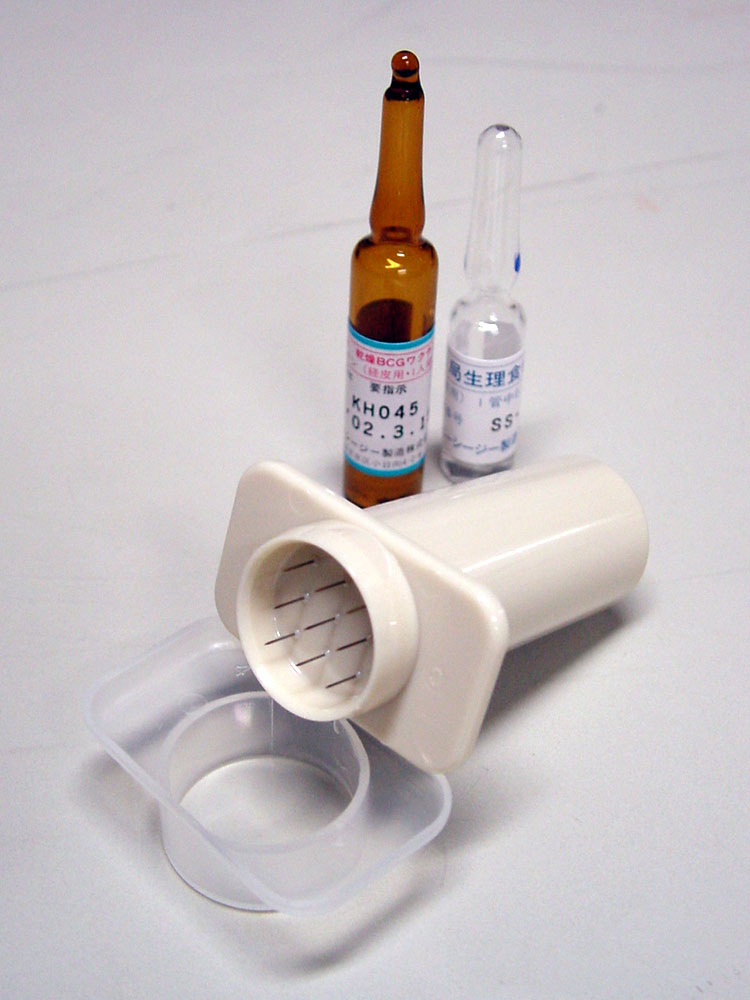
BCG contains an attenuated strain of Mycobacterium bovis that has been adapted to laboratory culture. When given intradermally as a vaccine, it stimulates the immune system to recognize mycobacterial antigens and to mount cellular immune responses that can limit dissemination of TB bacteria. The vaccine does not reliably prevent all pulmonary TB in adults, but it is effective at lowering the incidence of life‑threatening forms such as miliary TB and TB meningitis in young children.
History and development
BCG was developed by the French bacteriologists Albert Calmette and Camille Guérin in the early 20th century and first used in humans in the 1920s. Since then multiple daughter strains have been maintained in different laboratories, producing minor genetic and phenotypic differences between vaccine preparations used in different countries.
Uses and administration
BCG is most commonly given as a single intradermal dose to newborns or infants in countries with a high burden of tuberculosis. Public health programmes vary: some countries use universal neonatal vaccination, others use targeted vaccination for high‑risk groups. Separately, intravesical BCG is delivered directly into the bladder to provoke a local immune response that reduces recurrence of certain superficial bladder cancers; this clinical use is distinct from routine immunization with the vaccine preparations.
Safety, limitations and notable facts
Common reactions to BCG vaccination include a small local skin lesion that may heal with scarring. The vaccine is generally contraindicated in people with severe immunodeficiency and is used cautiously in pregnancy. Because protective effects against adult pulmonary TB vary by population and setting, BCG is one component of broader TB control measures, which include diagnosis, treatment of active disease, and public health interventions. For general information about the vaccine and its uses, see resources on the BCG vaccine.
- Key points: live attenuated mycobacterium, protects mainly against severe childhood TB.
- Alternative use: intravesical immunotherapy for non‑muscle invasive bladder cancer.
- Programmatic role: often given at birth in high TB burden countries; efficacy against adult pulmonary TB is variable.
Related articles
Author
AlegsaOnline.com Bacillus Calmette–Guérin (BCG) vaccine Leandro Alegsa
URL: https://en.alegsaonline.com/art/8088
Sources
- ncbi.nlm.nih.gov : PMID 1836081