
Bandage: purpose, types, history and proper use
A bandage is any strip of cloth or material used to secure dressings, control bleeding, protect wounds and support injured body parts. Covers types, history, uses and how it differs from a dressing.
A bandage is a length of cloth, gauze, adhesive or elastic material applied to the body to hold a dressing in place, limit movement, or exert pressure to control bleeding. In everyday speech the word is often used interchangeably with "dressing," but a dressing is technically the sterile material placed directly on a wound while a bandage is the material that covers or secures that dressing.
Image gallery
6 Images


Common forms and components
Bandages vary by form and function. Typical categories include:
- Roller bandages and gauze: long strips wound around a limb or trunk to hold a dressing.
- Adhesive strips: small sticky pads that combine a dressing pad with an adhesive backing for minor cuts.
- Elastic or compression bandages: stretchable fabrics used to support sprains and reduce swelling.
- Triangular or sling bandages: large triangles of cloth used for immobilization or makeshift slings.
Materials and characteristics
Materials range from natural cotton and muslin to synthetic, non‑woven fabrics and plastics. Some bandages are sterile and single‑use; others are reusable. Specialized types may be impregnated with antiseptics, padding, or waterproof coatings. For information about suitable materials see materials, and for guidance on controlling bleeding consult resources on bleeding.
History and development
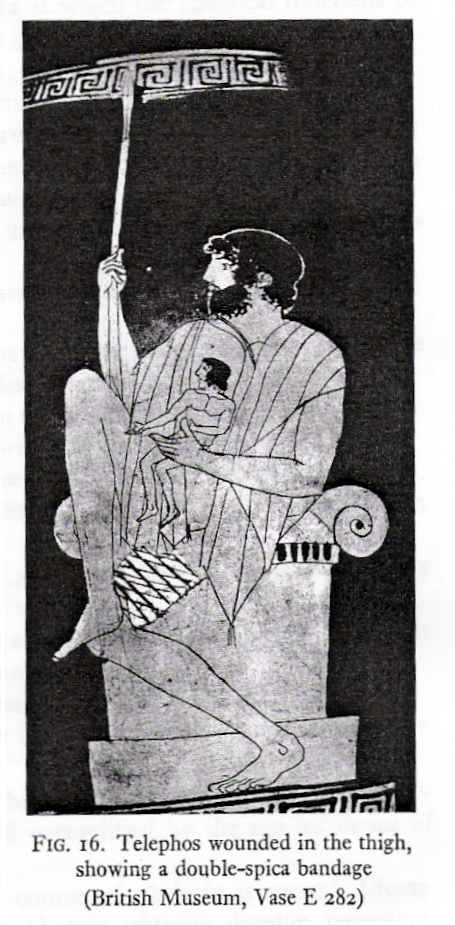
Humans have used strips of cloth to cover injuries for millennia. Ancient civilizations described early wound coverings and splints; over time techniques and materials evolved. The 19th and early 20th centuries introduced sterilization, factory-made gauze and—later—convenient adhesive bandages that made basic first aid more accessible.
Uses, care and safety
Bandages serve several roles: protecting wounds from contamination, absorbing exudate, applying pressure to limit bleeding, supporting injured joints or muscles, and securing medical devices. Proper use includes keeping dressings clean, changing them when soiled or wet, and not wrapping so tightly that circulation is impaired. Seek professional care for deep, persistent or heavily bleeding wounds and follow instructions for surgical or chronic wounds.
Distinctions and notable points
Remember the distinction between a bandage and a dressing: a dressing contacts the wound; a bandage secures the dressing. Modern first‑aid kits typically pair dressings with suitable bandages. For further reading on wound care and products, see wound dressing.
Related articles
Author
AlegsaOnline.com Bandage: purpose, types, history and proper use Leandro Alegsa
URL: https://en.alegsaonline.com/art/8680