
Radiated tortoise (Astrochelys radiata)
A large, long-lived tortoise from southern Madagascar, recognized by yellow star-like lines on a dark shell. Herbivorous and critically endangered due to habitat loss and illegal collection.
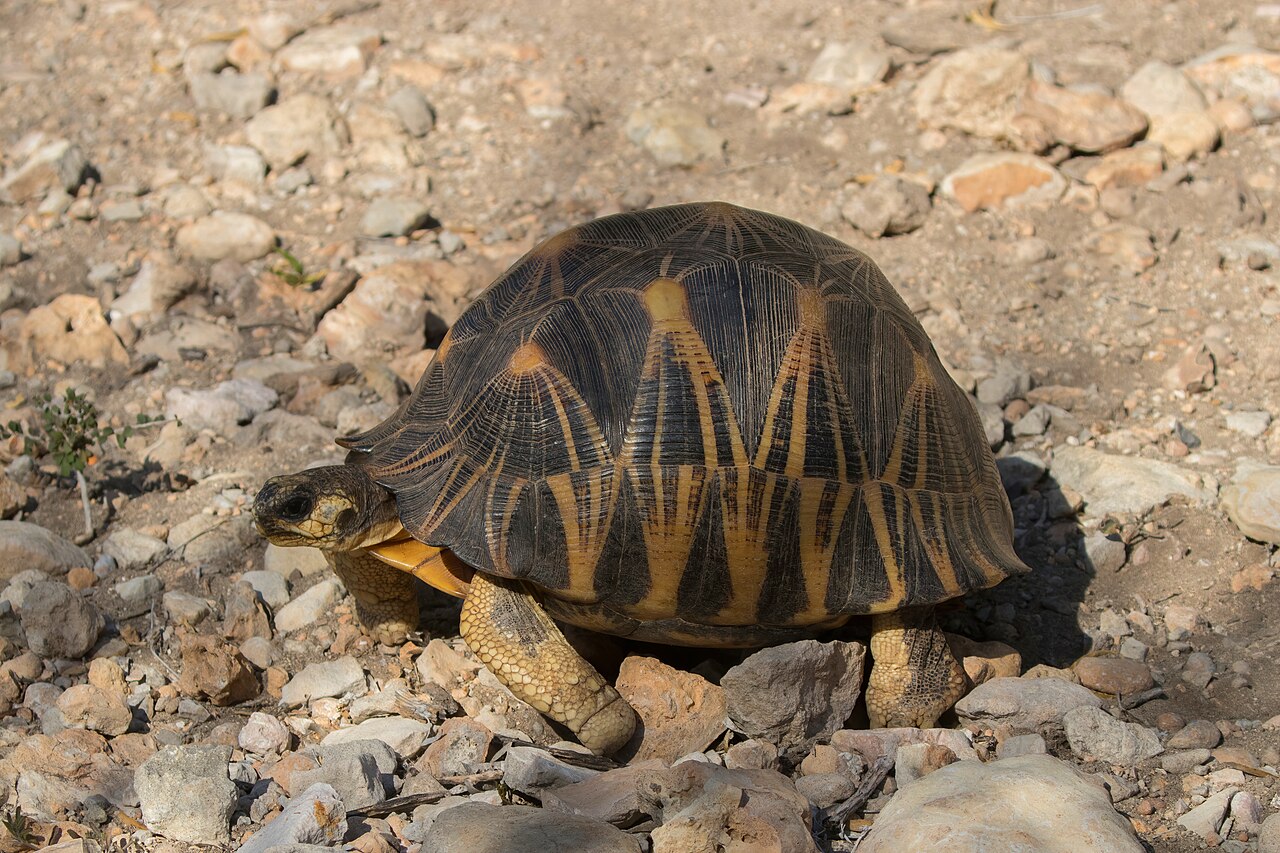
The radiated tortoise (Astrochelys radiata) is a distinctive land tortoise native to the dry southern regions of Madagascar. It is easily recognized by bright yellow or orange radiating lines across a high, domed dark carapace, a pattern that gives the species its common name. Radiated tortoises are terrestrial herbivores with slow metabolisms and remarkable longevity; individuals commonly live around 50 years in the wild and can reach about 100 years under human care.
Image gallery
8 Images




Characteristics
Physically, the radiated tortoise combines a rugged, bumpy shell with striking coloration. Key features include:
- a high, star-patterned carapace with yellow rays on a black or dark brown background;
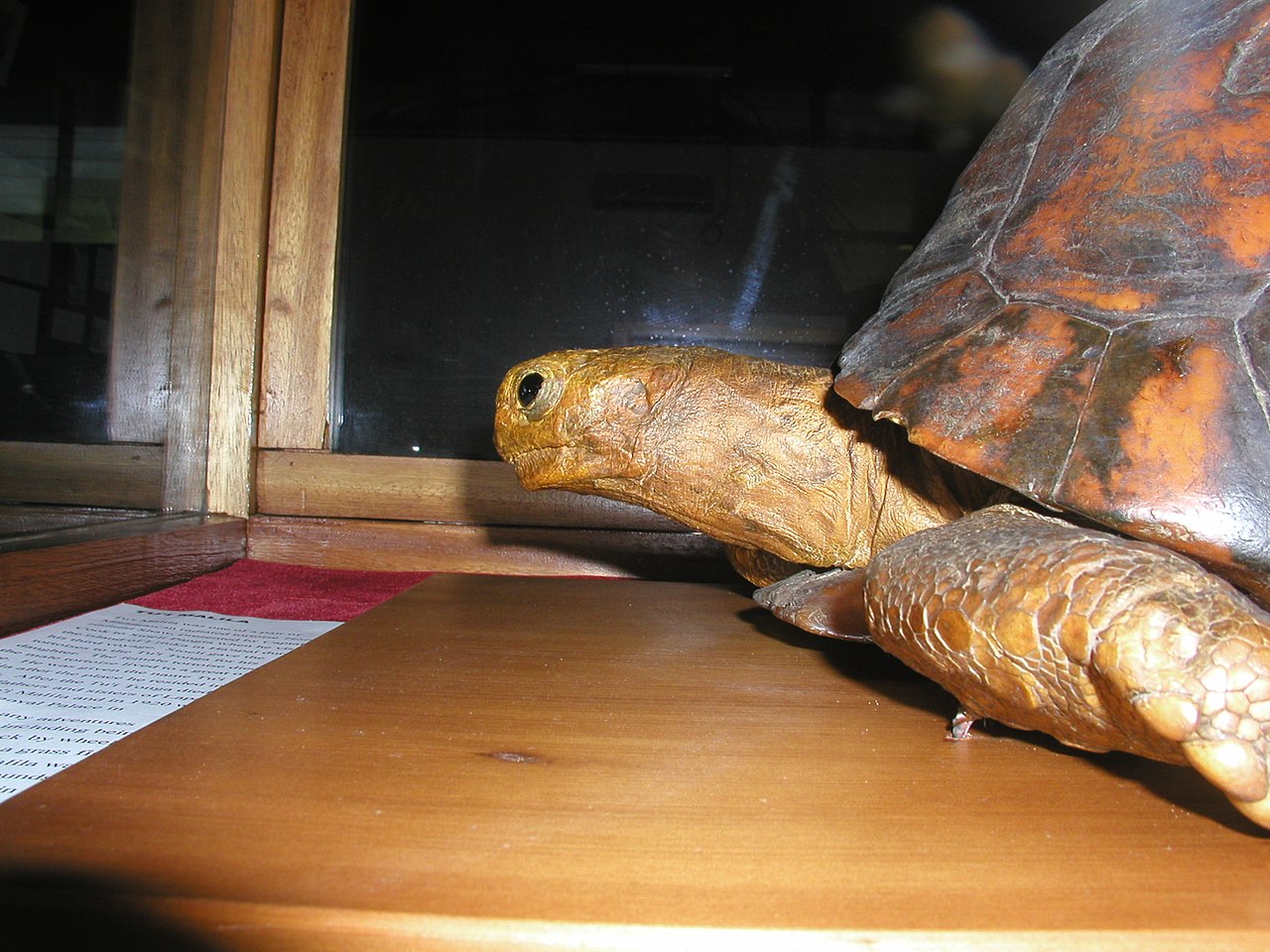
- a heavy, protective plastron (underside) and stout, elephantine legs adapted for walking across rocky and thorny ground;
- a herbivorous diet consisting mainly of grasses, succulents, fruits and other plant matter, with water intake adapted to arid conditions.
For more general context on tortoises and their biology see tortoise family resources.
Radiated tortoises occupy spiny forests, scrublands and thorny bush in southern and southwestern Madagascar. These habitats are seasonal and hot, with tortoises using shaded microhabitats, burrows or vegetation cover to avoid extreme heat. The species' distribution is limited to Madagascar, and its ecology is closely tied to the island's unique plants and seasonal rainfall patterns. For information on Madagascar's ecosystems and conservation, see Madagascar habitats.
Reproduction is slow compared with many reptiles: adults reach sexual maturity several years after hatching, and females lay a small number of eggs per clutch. Juvenile survival can be low because hatchlings are vulnerable to predation and habitat disturbance. Growth is gradual, and the species' long lifespan means population recovery from declines is slow.
Conservation and threats
The radiated tortoise is listed among the most threatened tortoise species. Major threats include:
- illegal collection for the international pet trade and local use,
- habitat loss and fragmentation due to agriculture, charcoal production and development,
- wildfires, invasive species and changing land use patterns that alter food availability.
Conservation responses include protected area management, captive-breeding and reintroduction programs, law enforcement to curb illegal trade, and community-based efforts to reduce habitat destruction. Because of the tortoise's ecological role as a seed disperser and its cultural importance in Madagascar, protecting remaining populations is a high priority for reptile conservationists.
Notable distinctions: the radiated tortoise's star-like shell pattern is one of the most visually striking among tortoises, and it is frequently cited in discussions of island endemism and the impacts of human activity on long-lived vertebrates. Unlike some widespread tortoise species, its entire native range is confined to a single island, making local threats particularly consequential for the species' survival.
Related articles
Author
AlegsaOnline.com Radiated tortoise (Astrochelys radiata) Leandro Alegsa
URL: https://en.alegsaonline.com/art/80738
Sources
- nationalzoo.si.edu : nationalzoo.si.edu/Animals/ReptilesAmphibians/Facts/FactSheets/Radiatedtortoise.cfm
- rosamondgiffordzoo.org : rosamondgiffordzoo.org