
Quirinus: Roman god of the civic community
Quirinus was an early Roman deity associated with the citizen body, civic order and the Quirinal Hill; later linked with Romulus and subject to religious syncretism in Augustan Rome.
Overview
Quirinus was an ancient deity in Roman religion regarded as a guardian of the Roman people in their civil capacity. In early layers of Roman belief he functioned as a patron of the citizen body and the community’s internal order, distinct from the purely martial or sovereign aspects embodied by Mars and Jupiter. The name survives in Latin terms such as Quirites (citizens) and in the Quirinal Hill, an important religious and political site in Rome.
Image gallery
3 Images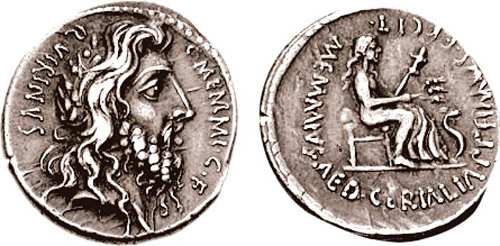


Characteristics and cult
Quirinus was represented less as a warrior and more as a civic power that united individuals into a political people. He had an official priest, the Flamen Quirinalis, one of the three major flamines alongside the priests of Jupiter and Mars. Ritual observances and ceremonies for Quirinus formed part of the Roman calendar and public religion.
Origins and development
Scholars link Quirinus to Italic and Sabine traditions; the figure probably predates Rome’s historical monarchy and was integrated into Roman practice as the city expanded. Over time myths and interpretations shifted: a prominent tradition identified Quirinus with the deified founder Romulus, while later Roman religious reform and imperial-era reinterpretations produced further syncretism.
Festival, functions and notable associations
- Feriae and public rites were held in his honor; these rites emphasized civic unity and the well-being of the Roman people.
- Quirinal Hill preserves his name and became a centre for temples and official institutions.
- The title Quirinus influenced Roman legal and political language—references to Quirites express the collective body of citizens.
In the Augustan period and later literary sources some identifications linked Quirinus with other divine figures; for example, forms such as Janus Quirinus reflect attempts to reconcile and reinterpret older deities within an evolving state religion. For general background on Roman religious practice see ancient Roman religion resources.
Legacy and distinction
Quirinus’ prominence declined as theological and political developments rearranged the Roman pantheon, yet his imprint remains in place names and institutional vocabulary. Modern traces include the Quirinal Hill and the Quirinal Palace, whose names echo the ancient cult even as their functions have changed. While some ancient writers equated him with Romulus, others maintained a more abstract civic role, and the exact character of Quirinus remains a subject of scholarly discussion rather than settled fact.
Related articles
Author
AlegsaOnline.com Quirinus: Roman god of the civic community Leandro Alegsa
URL: https://en.alegsaonline.com/art/80594