
Queensland lungfish (Neoceratodus forsteri)
A living fossil native to Queensland, Australia: a long-lived, air-breathing freshwater fish with ancient roots, unique anatomy, and cultural and scientific importance.
Overview
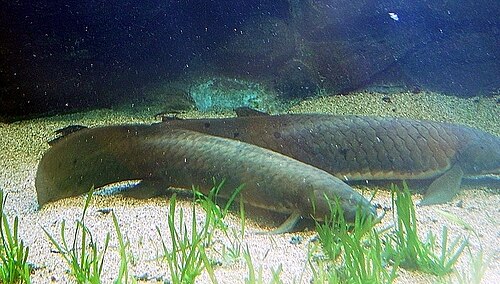
Image gallery
3 Images

Physical characteristics
The Queensland lungfish has a robust, elongated body covered with heavy, enamelled scales. Adults are commonly about 100 cm in length and around 20 kg in weight, though some individuals grow substantially larger. It retains both gills and a single functional lung, enabling it to breathe atmospheric air when water oxygen levels are low. Other notable features include lobed paired fins supported by bony elements and a broad, rounded snout. The species is long-lived and matures slowly, characteristics that affect its population dynamics.
Habitat and distribution
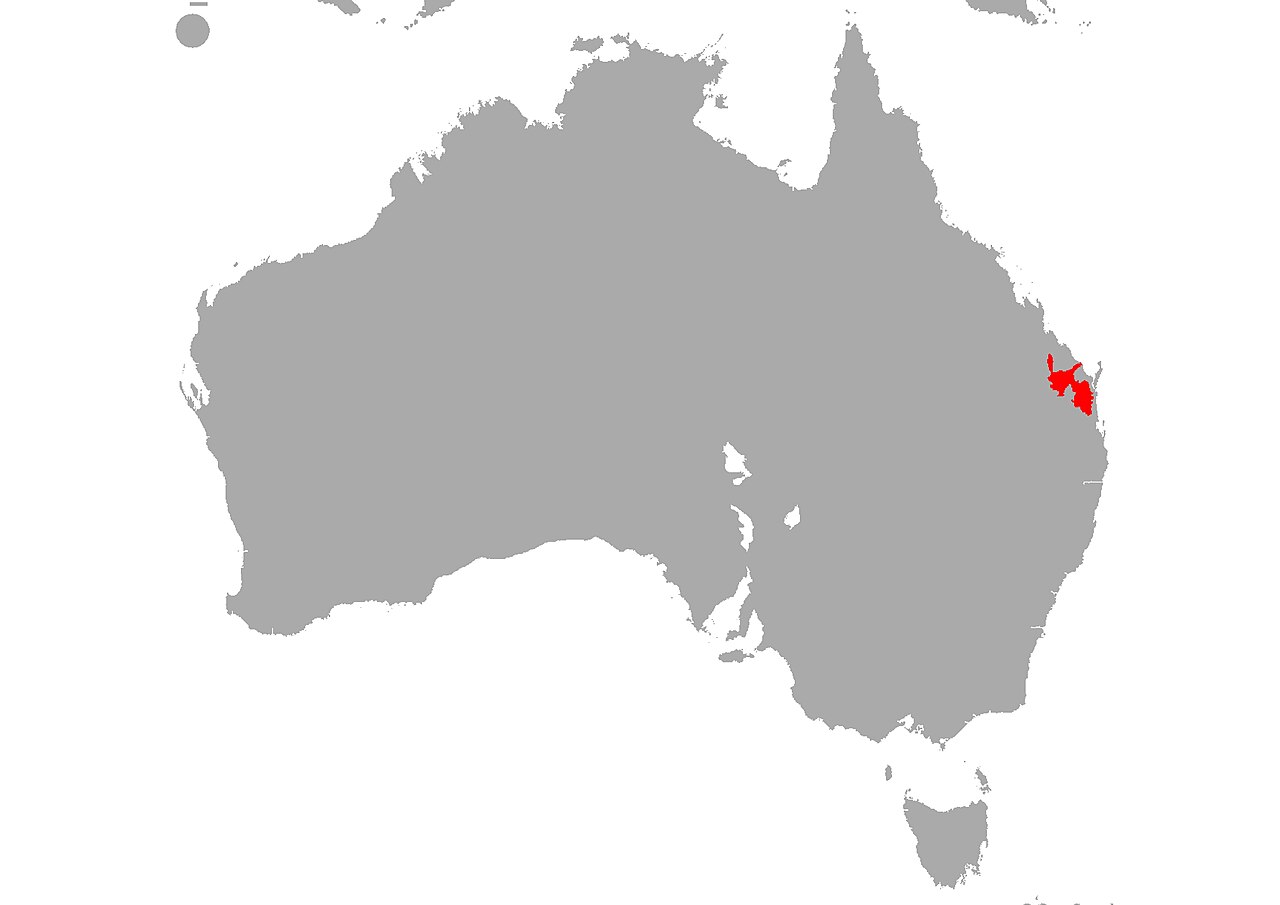
Native populations occur primarily in the Mary and Burnett River systems in Queensland. The lungfish tolerates still or slow-flowing conditions and is often found in deep pools, stretches of river with abundant submerged vegetation, and man-made reservoirs. It has been introduced to other local rivers and water bodies in southeastern Queensland. For more detail on regional waterways, consult Queensland river systems and note its presence in reservoirs and impoundments described at reservoir.
Evolutionary history and significance
Fossil relatives of lungfish date back hundreds of millions of years; fossils attributable to the same broader lineage are known from the Devonian period. The Queensland lungfish is therefore important to studies of vertebrate evolution because its anatomy preserves primitive features combined with adaptations that allowed survival through major environmental changes. Its retention of an air-breathing lung alongside gills provides insights into the transition of vertebrates from water to land in deep time.
Biology, reproduction and diet
Neoceratodus is an omnivorous species that feeds on a variety of aquatic plants, invertebrates and small fishes. Reproduction occurs in freshwater, with spawning linked to seasonal conditions; eggs are deposited in submerged vegetation or similar substrates and hatch into larvae that develop gills before relying increasingly on pulmonary respiration. The species’ slow growth and late maturation mean populations can be sensitive to habitat change.
Conservation and human interactions
The Queensland lungfish is legally protected in Australia and is a species of interest for conservation managers and researchers. While it is not regarded as broadly extinct or lost, its restricted native range, reliance on specific habitats and life-history traits mean it is monitored and managed to reduce risks from habitat alteration, water extraction and barriers to movement. For summaries of conservation assessments, see conservation sources. The lungfish also holds cultural value for local communities and is a subject of public education and scientific study.
Notable distinctions
- One of the few living lungfish species and the only lungfish naturally native to eastern Australia.
- Combines ancestral anatomy with adaptations for air breathing, making it a key species for evolutionary research.
- Protected under regional law and commonly kept in public aquaria for education and research.

Related articles
Author
AlegsaOnline.com Queensland lungfish (Neoceratodus forsteri) Leandro Alegsa
URL: https://en.alegsaonline.com/art/80481
Sources
- environment.gov.au : "Neoceratodus forsteri — Australian Lungfish, Queensland Lungfish"
- daf.qld.gov.au : "Lungfish – Fish species identification"