
Proboscis: elongated snouts and tubular feeding organs
An elongate projection at the front of the head—seen as an elephant's trunk, a tapir's snout, or the tubular mouthparts of insects and worms—used for feeding, sensing and manipulation.
Overview
A proboscis is an extended projection from the front of an animal's head or face, often specialized for feeding, sensing, or manipulating objects. The term covers two broad categories: in vertebrates it usually denotes an elongated nose or snout; in invertebrates it refers to tubular, often retractable, mouthparts adapted for sucking, piercing or imbibing liquids. For a concise definition see proboscis.
Image gallery
10 Images


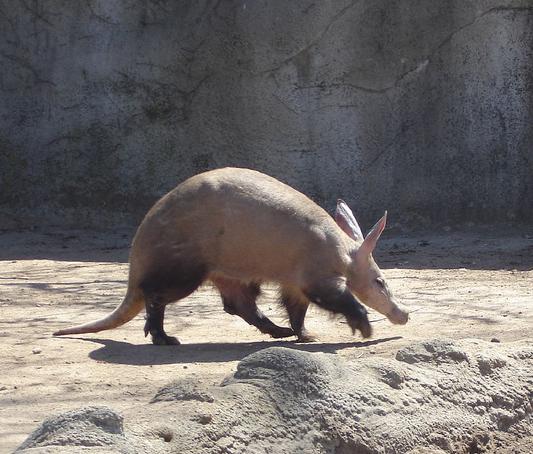


Characteristics and structure
Vertebrate proboscides range from flexible trunks to short fleshy snouts. They may contain muscle, cartilage and sensory tissue and often combine breathing, smelling and grasping functions. In invertebrates a proboscis is typically composed of specialized mouthpart elements—such as the coiled siphon of many butterflies or the stylet bundle of mosquitoes—arranged to form a feeding tube. Some proboscises are eversible, turning outward to reach prey or nectar and retracting afterward.
Examples and uses
- Elephants: a versatile muscular trunk used for respiration, olfaction, manipulation and social behaviors.
- Tapirs and some mammals: shorter, flexible snouts that help browse vegetation.
- Lepidoptera (butterflies and moths): a long, coiled proboscis formed by maxillary parts for sipping nectar.
- Mosquitoes and some flies: piercing-sucking proboscises delivering saliva and withdrawing fluids.
- Sea snails and worms: extendable proboscises used to capture prey or graze.
Origin, evolution and naming
The word has roots in classical languages and appears in scientific names (for example, Proboscidea, the mammal order that includes elephants). Proboscises have evolved independently in many animal groups, reflecting convergent solutions to feeding and sensory demands rather than common ancestry.
Distinctions and notable facts
Proboscis is not synonymous with every forward-pointing face structure. A rostrum often denotes a beak-like projection, and a snout is a more general term for a projecting nose or jaw. Proboscises are notable for combining multiple functions—feeding, touch and smell—in a single organ and for their variety of mechanical designs across taxa. Their form and mobility are major factors in an animal's ecological niche and behavior.
For further reading, follow the brief definition link above or consult zoological texts that describe mouthpart anatomy in specific groups.
Related articles
Author
AlegsaOnline.com Proboscis: elongated snouts and tubular feeding organs Leandro Alegsa
URL: https://en.alegsaonline.com/art/79318