
Maharaja: title, history and cultural legacy
Maharaja (Sanskrit for 'great king') is a royal title used across South Asia. This article explains its origins, usage, historical development, roles, and legacy, including the female form Maharani.
The term Maharaja comes from Sanskrit and literally means "great king" or "high king". It has been adopted into many South Asian languages and used historically to denote rulers of high status. The female counterpart is Maharani, a term applied either to a reigning queen or to the consort of a Maharaja. The word and its social role have evolved over centuries, shifting in scope from imperial sovereigns to princely rulers and ceremonial figures.
Image gallery
10 Images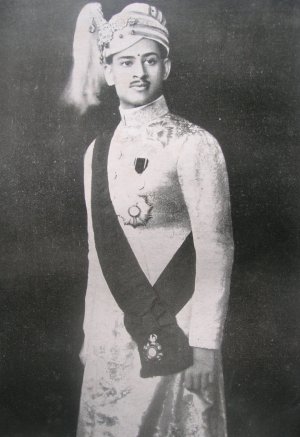


Origins and meaning
In classical usage the name derives from Sanskrit roots meaning "great" (maha) and "king" (raja). The title passed into regional tongues and is commonly found in modern Punjabi, Bengali, Hindi and Gujarati. Historically, being called a Maharaja implied a level of sovereignty or supremacy above ordinary kings, although what that meant in practice varied by period and region.
Typical roles and characteristics
Across different eras, Maharajas played several overlapping roles. These generally included military leadership, administration of territories, patronage of religion and the arts, and representation of political continuity. Their courts often supported scholars, architects and temple-building. A short list of typical attributes:
- Supreme local authority or suzerain in a multi-tiered polity
- Commander of armed forces or chief protector of the realm
- Patron of religion, culture and public works
- Holder of ceremonial and dynastic prestige within a ruling family
Historical development
In ancient and classical South Asia, grand imperial rulers were sometimes styled as Maharajas; for example, imperial dynasties such as the Maurya Empire and the Gupta Empire produced monarchs whose authority spanned large areas. Over time the title spread more widely: during the medieval and early modern periods, many regional chiefs and sovereigns adopted it, and by the colonial era it was used by rulers of widely varying power and territory.
Maharajas under British rule and after
Under British administration in South Asia, hundreds of semi-autonomous principalities retained indigenous rulers. These polities are often collectively referred to as princely states; the colonial period recognized many native titles and ranks. Some rulers used different vernacular titles such as Thakur or Raja depending on local custom and religion, and Muslim rulers sometimes held titles like Nawab as alternatives. During the 20th century, the relationship between these princes and the colonial government was formalized through treaties and ceremonial privileges.
End of official recognition and modern legacy
Following independence movements and state reorganization in South Asia, the political powers of hereditary rulers were progressively removed. In India, the special financial allowances and formal recognition of princely titles were withdrawn in 1971 during the administration of Indira Gandhi, when the government abolished the official status and stipends associated with princely titles (privy purses and titles). Despite this, many former royal families continue to use historic styles socially, operate heritage properties, and participate in cultural life.
Notable distinctions and cultural impact
The label Maharaja has persisted in literature, film, architecture and tourism as shorthand for premodern royalty, grand palaces and courtly splendor. While its literal political authority has largely disappeared, the term remains significant in historical studies and popular imagination. For further reading on language, courts and the material culture of royal households, see sources tied to traditional texts and regional histories via Sanskrit studies and modern overviews (Bengali, Hindi, Punjabi, Gujarati). Additional context on colonial arrangements and princely rules appears in accounts of British India and the administration of princely states.
For concise reference points: the title began as a marker of large-scale sovereignty, expanded into broader aristocratic use, was formalized differently under colonial rule, and was eventually stripped of official status while remaining a potent cultural symbol.
Questions and answers
Q: What does the word Mahārāja mean?
A: The word Mahārāja means "great king" or "high king" in Sanskrit.
Q: Which languages have borrowed the word Maharaja?
A: Many languages including Punjabi, Bengali, Hindi, and Gujarati have borrowed the word Maharaja.
Q: Who is a Maharani?
A: A Maharani is a female ruler, which means "great queen". She can be the wife of a Maharaja or a ruler herself.
Q: What were some titles given to rulers of princely states in British India?
A: Some titles given to rulers of princely states in British India were Thakur (if the ruler were Hindu) or Nawab (if he was Muslim). There were many other titles as well.
Q: Who had the title of Raja in Muslim rulers?
A: Many Muslim rulers also had the title of Raja, one of the most famous being the Raja of Rajouri who was a Muslim raja.
Q: Were only rulers of large empires Maharajas?
A: No, originally only rulers of large empires such as the ancient Maurya Empire and Gupta Empire were Maharajas but in later centuries even rulers of small kingdoms used the title.
Q: When did the Indian government abolish the titles and money for all Indian rulers?
A: The Indian government abolished the titles and money for all Indian rulers in 1971 under the leadership of Indira Gandhi. However, some people still claim such titles.
Author
AlegsaOnline.com Maharaja: title, history and cultural legacy Leandro Alegsa
URL: https://en.alegsaonline.com/art/60704