
Raja: title, history, and cultural use in South and Southeast Asia
Raja is a Sanskrit word meaning 'king' used historically and today as a royal title, personal name, and surname across South Asia and Southeast Asia, with varied local forms and social roles.
Overview
Raja (Sanskrit: rājā) is a classical term for a king or chieftain in South Asia that has been borrowed into many regional languages. The word originates in Sanskrit — Sanskrit — and appears in early Vedic literature such as the Rigveda. It functioned both as a formal title for sovereigns and as a general term for rulers or leaders in the historical societies of South Asia and Southeast Asia.
Image gallery
2 Images
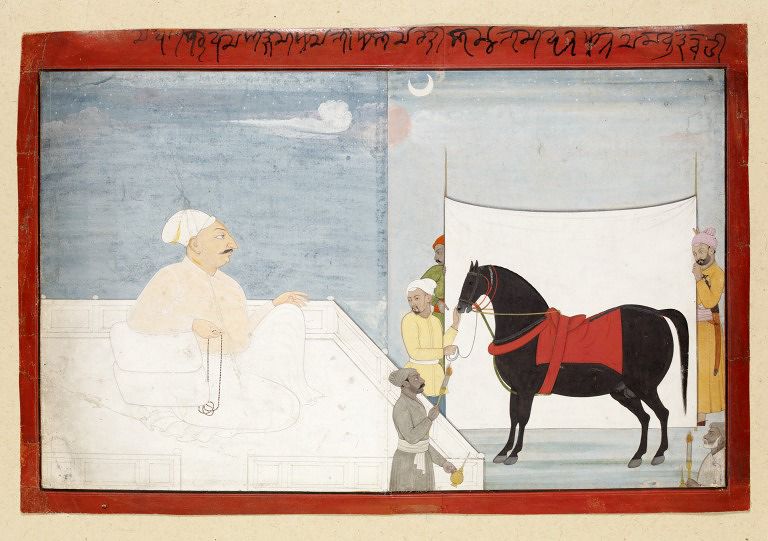
Etymology and related forms
The stem rāj‑ is associated with rule and governance and is widely treated as cognate with other Indo-European words for ruling (for example with Latin forms derived from rex). Over centuries it produced many local variants and compound titles: the elevated maharaja (great king), feminine forms such as rani, and regional alternatives like rana or rao. These forms are now embedded across languages from the Indian subcontinent to Malay and Indonesian speech.
History and social usage
In the long political history of the Indian subcontinent, rajas were local rulers of kingdoms, principalities and tribal polities before and during the medieval era. Under later imperial and colonial arrangements some rajas retained hereditary control of princely states; in other contexts the title became honorific. The word and its prestige also spread to Southeast Asian polities where indigenous dynasties adopted or adapted the term into local royal nomenclature.
Modern use, names and communities
Raja is both a personal name and a family name in contemporary South Asia. It is borne by people of different religions and communities: Hindus, Sikhs and Muslims in India (India), Muslims and others in Pakistan, and by Bengali speakers. In parts of Pakistan some traditional Rajput groups and related clans continue to use Raja as a hereditary title. The form also exists as a given name among Pakistani families (Pakistani usage) and across diasporas.
Variants and notable distinctions
- Maharaja — literally 'great king', often used by larger princely dynasties.
- Rani — female equivalent, commonly used for queens or queen-consorts.
- Raja / Rajah — spelling differences in English reflect colonial-era transliterations.
- Regional adaption — Malay, Indonesian and several Southeast Asian languages use local forms derived from raja.
The word retains cultural resonance beyond formal rule: it appears in literature, place names, personal names and ceremonial language, testifying to its long-standing role in the political and social vocabulary of South and Southeast Asia. For further reading see general treatments of South Asian titles and the history of regional monarchies (Sanskrit, South Asia, Indian subcontinent, Southeast Asia, Rigveda, Pakistan, Rajput, clans, Pakistani, India).
Questions and answers
Q: What does the Sanskrit word "Raja" mean?
A: "Raja" means "king" in Sanskrit.
Q: Where is the title "Raja" commonly used for monarchs?
A: The title "Raja" is commonly used for monarchs in South Asia and Southeast Asia.
Q: Does the title "Raja" have a long history in the Indian subcontinent?
A: Yes, the title "Raja" has a long history in the Indian subcontinent and is found in the Rigveda.
Q: Who else can use "Raja" as a name besides monarchs in South Asia?
A: Non-royal people in South Asia can also use "Raja" as a name.
Q: Do Muslim Rajput clans still use "Raja" as hereditary titles in Pakistan?
A: Yes, many Muslim Rajput clans still use "Raja" as hereditary titles in Pakistan.
Q: Besides Muslims in Pakistan, who else can use "Raja" as a name or title?
A: "Raja" can be used as a name or title by Indian Hindus, Sikhs, and Muslims, as well as Bengali Muslims.
Q: What is the difference between using "Raja" as a name versus as a title?
A: Using "Raja" as a name is for individuals who are not royal, while using "Raja" as a title is for monarchs or those with hereditary nobility.
Author
AlegsaOnline.com Raja: title, history, and cultural use in South and Southeast Asia Leandro Alegsa
URL: https://en.alegsaonline.com/art/80946