
Prime Minister of Cambodia: Role, Selection, and Contemporary Context
The prime minister is Cambodia’s head of government, chairs the Cabinet, must be a member of parliament, and is appointed by the monarch. This article explains duties, selection, history, and recent developments.
The Prime Minister of Cambodia serves as the head of government and leader of the executive branch of the Kingdom of Cambodia. Constitutionally distinct from the monarch, the prime minister oversees the work of the Cabinet (Council of Ministers), coordinates public administration, and represents the government in domestic and international affairs. The office has existed in different forms throughout Cambodia’s modern history and is central to the country’s political system.
Image gallery
8 Images


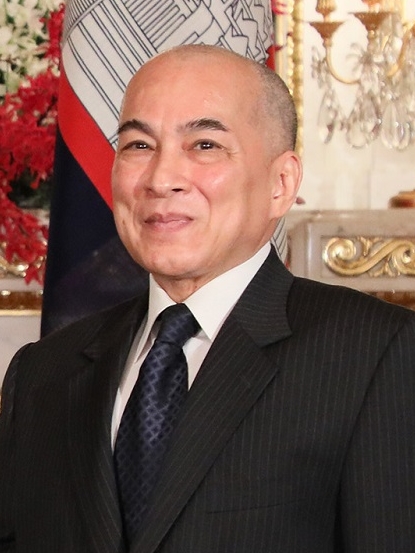


Functions and responsibilities
Key responsibilities commonly associated with the office include:
- Chairing Cabinet meetings and setting executive policy priorities.
- Nominating and supervising ministers, and directing the implementation of government programs.
- Presenting laws, budgets and government plans to the National Assembly for approval.
- Representing Cambodia at international forums and negotiating on behalf of the government.
- Ensuring coordination among ministries and public agencies, and maintaining internal security and public order in coordination with relevant institutions.
Selection, tenure and legal requirements
Under the current constitutional framework, the prime minister must be a member of the National Assembly and is formally appointed by the King after parliamentary elections and the Assembly’s selection of a candidate. The office typically aligns with the five‑year legislative term, although there are no fixed term‑limit provisions that bar reappointment. The prime minister is politically accountable to the National Assembly and subject to legislative oversight.
Historical background
Cambodia’s institution of prime minister has evolved through periods of monarchy, colonial rule, republican experiments, civil conflict and communist rule, and the restoration of the constitutional monarchy in the 1990s. The modern office, as defined in the 1993 constitution, reflects a parliamentary system in which the leading party or coalition in the National Assembly forms the government. The late Hun Sen was one of the longest-serving prime ministers in Cambodia’s modern era (1985–2023); in 2023 a new prime minister took office, marking a notable transition in national leadership.
Political role and distinctions
The prime minister differs from the monarch, who is the ceremonial head of state. In practice, the prime minister is the principal policymaker and day‑to‑day head of government, analogous to prime ministers in other parliamentary systems. The office can be influential in setting legislative agendas, shaping economic and foreign policy, and directing state administration. Political dynamics such as party discipline, coalition arrangements and parliamentary majorities shape how power is exercised from the premiership.
Further reading and references
For official titles and language forms see the Khmer and French renderings of the office: Khmer form and French form. Additional institutional information is available from government and parliamentary sources: head of government overview, about Cambodia, National Assembly, and profiles of individual officeholders such as recent prime ministers.
Understanding the prime minister’s role benefits from attention to Cambodia’s constitutional text, parliamentary practice and the historical context of post‑colonial and post‑conflict state formation. These elements together shape how the office functions today and how it may evolve in the future.
Related articles
Author
AlegsaOnline.com Prime Minister of Cambodia: Role, Selection, and Contemporary Context Leandro Alegsa
URL: https://en.alegsaonline.com/art/79050
Sources
- thecambodiaherald.com : "Cambodian Prime Minister gets less than USD 1,000 per month" · web.archive.org
- cambodiadaily.com : "CNRP Reveals Kem Sokha's Monthly Salary"
- khmertimeskh.com : "36 Cambodian Prime Ministers since 1945"