
Prime Minister of Fiji
The Prime Minister is Fiji's head of government, usually the leader of the parliamentary majority, appointed by the President. This article explains the office, powers, history and notable developments.
The Prime Minister of the Republic of Fiji is the country's principal political leader and head of government. In Fiji's parliamentary system the prime minister is normally the leader of the party or coalition commanding a majority in the House of Representatives (or Parliament) and is usually a sitting member of that body. The President formally appoints the prime minister and accepts resignation or dismissal under the constitution.
The office is grounded in Fiji's constitutional framework and conventions. The prime minister's tenure depends on maintaining parliamentary confidence rather than a fixed personal term; when support in the legislature is lost the prime minister customarily resigns or seeks a dissolution of parliament. The position sits within a separation of roles: the president is the head of state, while the prime minister leads the executive branch and day-to-day government.
Image gallery
7 Images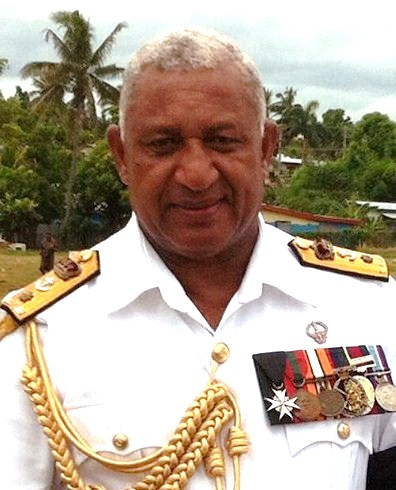




Responsibilities
- Forming and leading the Cabinet and setting government policy priorities.
- Directing the administration of government departments and overseeing implementation of laws.
- Advising the President on appointments, international representation, and matters of national importance.
- Representing Fiji in diplomatic and regional forums and coordinating defence and security policy in concert with the Cabinet.
Historically the office has evolved through periods of political instability and constitutional change. Since independence in 1970 Fiji has experienced several coups that reshaped politics and governance. Following a 2006 military takeover, Commander Frank Bainimarama assumed control and was appointed interim prime minister in 2007; his role and the office have since operated under revised constitutional arrangements intended to restore civilian rule.
Notable features of the prime ministership include its centrality to coalition-building, its sensitivity to Fiji's multiethnic society, and its role in preserving democratic norms after crises. The office combines political leadership with executive authority but remains accountable to Parliament and subject to constitutional limits and judicial review.
For a concise official description and list of recent officeholders, see government and parliamentary resources on the office of the prime minister of Fiji. These sources provide up-to-date information about incumbency, constitutional provisions, and the functions of the role within Fiji's political system.
Related articles
Author
AlegsaOnline.com Prime Minister of Fiji Leandro Alegsa
URL: https://en.alegsaonline.com/art/79058
Sources
- parliament.gov.fj : "PARLIAMENTARY REMUNERATIONS DECREE 2014 (DECREE NO. 29 OF 2014)"
- fijitimes.com : "Military now in charge in Fiji"
- abc.net.au : "Fiji's Bainimarama steps down as PM"
- fiji.gov.fj : "Commodore Bainimarama sworn in as Prime Minister"