
Primary central nervous system lymphoma
A rare type of extranodal non-Hodgkin lymphoma confined to the brain, eyes, leptomeninges or spinal cord; diagnosis, features, treatment, and notable distinctions.
Overview
Primary central nervous system lymphoma (PCNSL) is a form of extranodal lymphoma that arises within the central nervous system — most commonly the brain, the leptomeninges, the spinal cord and the eyes. Unlike systemic lymphomas that spread to the brain, PCNSL is defined by its initial and usually exclusive involvement of intracranial or intraocular structures.
Image gallery
2 Images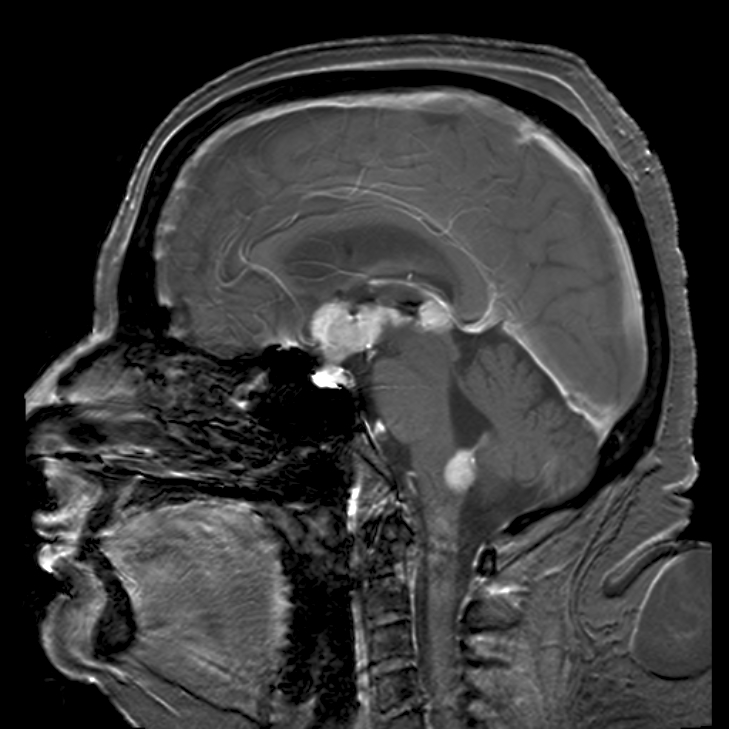

Characteristics and presentation
The majority of PCNSL cases are high‑grade B‑cell lymphomas on histology. Patients often present with focal neurological deficits, changes in cognition or behavior, headaches, seizures or visual symptoms when the eye is involved. Symptoms reflect the lesion location rather than a generalized cancer syndrome, and onset can be subacute.
Diagnosis and staging
MRI with contrast is the preferred imaging test and typically shows one or more enhancing lesions, often deep in the brain or periventricular. Definitive diagnosis requires tissue sampling, most commonly stereotactic brain biopsy. Cerebrospinal fluid analysis and ocular examination can detect tumor cells in some cases. Corticosteroids may markedly reduce lesion size and can obscure pathology, so withholding them until after biopsy is recommended when clinically safe.
Treatment and prognosis
Treatment centers on high‑dose methotrexate–based chemotherapy, sometimes combined with other agents such as rituximab or cytarabine. Whole‑brain radiotherapy can control disease but is associated with delayed neurotoxicity, especially in older adults, so its use is individualized. Patients with ocular involvement may receive intravitreal chemotherapy. Outcomes vary: modern regimens have improved survival, but prognosis depends on age, performance status and immune function.
Epidemiology, risk factors and history
PCNSL is uncommon. It occurs more often in people with weakened immune systems — for example those with organ transplants or human immunodeficiency virus/AIDS — and some immune‑suppressed cases are linked to Epstein–Barr virus. Recognition as a distinct clinical entity and advances in high‑dose methotrexate therapy have shaped modern management.
Distinctions and notable facts
- PCNSL is distinct from secondary CNS involvement by systemic lymphoma; management and prognosis differ.
- Biopsy is essential because radiologic appearance overlaps with other brain lesions such as glioma, metastasis or infection.
- When possible, avoid empiric steroids before tissue diagnosis since they can mask histology.
For additional background on lymphoma, the central nervous system, and associations with immunocompromise see general summaries at lymphoma resources, CNS overviews and information on AIDS.
Related articles
Author
AlegsaOnline.com Primary central nervous system lymphoma Leandro Alegsa
URL: https://en.alegsaonline.com/art/79021