
Preamplifier: function, types, history, and role in audio systems
A preamplifier boosts weak audio signals to line level for processing or distribution. Covers functions, common types (mic, phono, instrument), history (tubes to transistors), and practical considerations.
A preamplifier, commonly called a preamp, is an electronic stage that increases the amplitude of low‑level audio signals so they can be processed, recorded, or routed to other equipment. Unlike a power amplifier, a preamplifier does not provide the high current or voltage needed to directly drive loudspeakers; its chief job is to raise microphone or pickup signals to line level and to control tone and gain with minimal added noise. For a contrast to power stages see power amplifier and typical loudspeaker connections at speaker output.
Image gallery
3 Images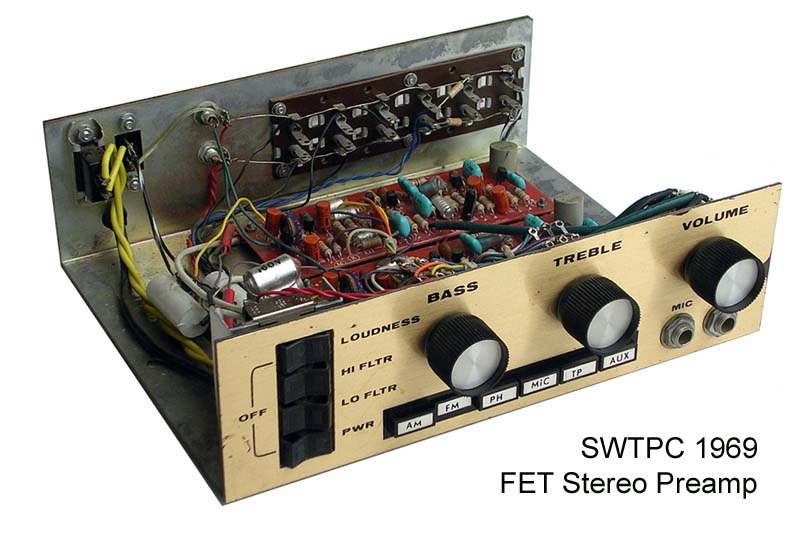


Core characteristics
Key performance attributes of a preamplifier include gain, noise floor, frequency response, input impedance and output impedance. A good preamp provides sufficient clean gain without introducing distortion, and matches the impedance of the source device (for example, a microphone or phono cartridge). Balanced inputs and outputs help reduce hum and interference in professional settings, while unbalanced connections are common in consumer gear.
Common types and uses
Preamplifiers appear in many forms and are tailored to specific sources. Typical varieties include:
- Microphone preamps – amplify mic‑level signals and may provide phantom power and variable gain.
- Phono preamps – apply gain and the RIAA equalization curve to signals from turntables so they match line level.
- Instrument preamps/DI boxes – adapt high‑impedance guitar or bass pickups to line or mic inputs.
- Line preamps and control preamps – offer volume control, tone shaping and input selection in hi‑fi and studio consoles.
Examples of where preamps are essential include recording studios, live sound rigs, broadcast chains and home audio systems. Their design affects the sonic character, so some engineers choose specific preamps for their tonal qualities.
History and technology
Early preamplifiers were built with vacuum tubes, which are often remembered for a warm harmonic character; see vintage tube designs at vacuum tube references. Since the 1960s many preamps have used transistor and later solid‑state integrated circuits for lower cost, smaller size and improved reliability, reflecting the transition documented around 1960s and the rise of semiconductor components such as transistors. Modern designs range from simple passive devices to complex hybrid circuits that combine tubes and solid‑state stages.
Practical considerations and distinctions
When integrating a preamp into a signal chain, engineers practice gain staging to avoid clipping and to preserve dynamic range. Important distinctions include mic‑level versus line‑level sources and active versus passive preamps: passive preamps do not add gain but can change tonal balance and impedance. In many consumer devices, preamps are built into mixers, audio interfaces and receivers, while standalone preamplifiers are used where higher quality or specific coloration is desired.
Notable facts
Preamps can be as influential on the final sound as microphones or speakers because they determine noise floor and early-stage coloration. For microphone placement and selection consult general microphone guides at microphone resources. For comparisons between preamp models and integrated systems, see overview and buying guides at equipment guides and product pages at audio product references.
Related articles
Author
AlegsaOnline.com Preamplifier: function, types, history, and role in audio systems Leandro Alegsa
URL: https://en.alegsaonline.com/art/78664