
Transistor: Semiconductor device for amplification and switching
A transistor is a semiconductor device used to amplify electrical signals or act as a switch. It underpins modern electronics, from discrete power parts to billions of transistors inside integrated circuits.
A transistor is a small electronic device that controls electric current flow and can function as an amplifier or a switch. Built from semiconductor materials such as silicon or germanium, a transistor manipulates current through internal junctions or insulated gates to produce gain, isolation, or digital logic states. See a basic definition at electronic component.
Image gallery
10 Images


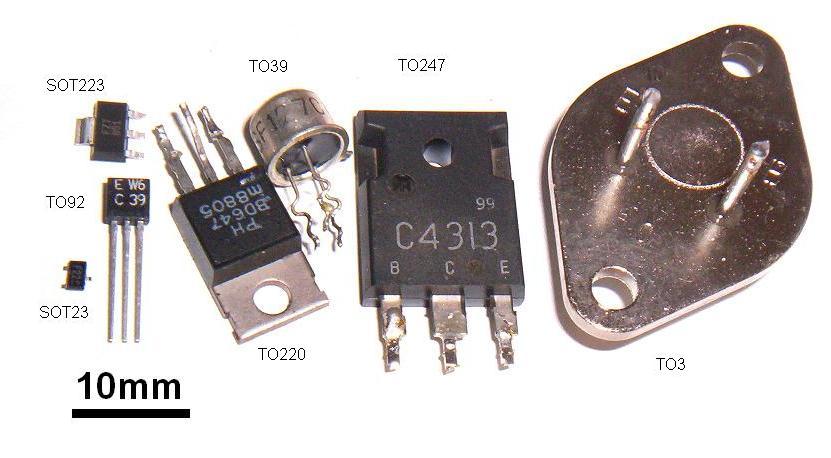


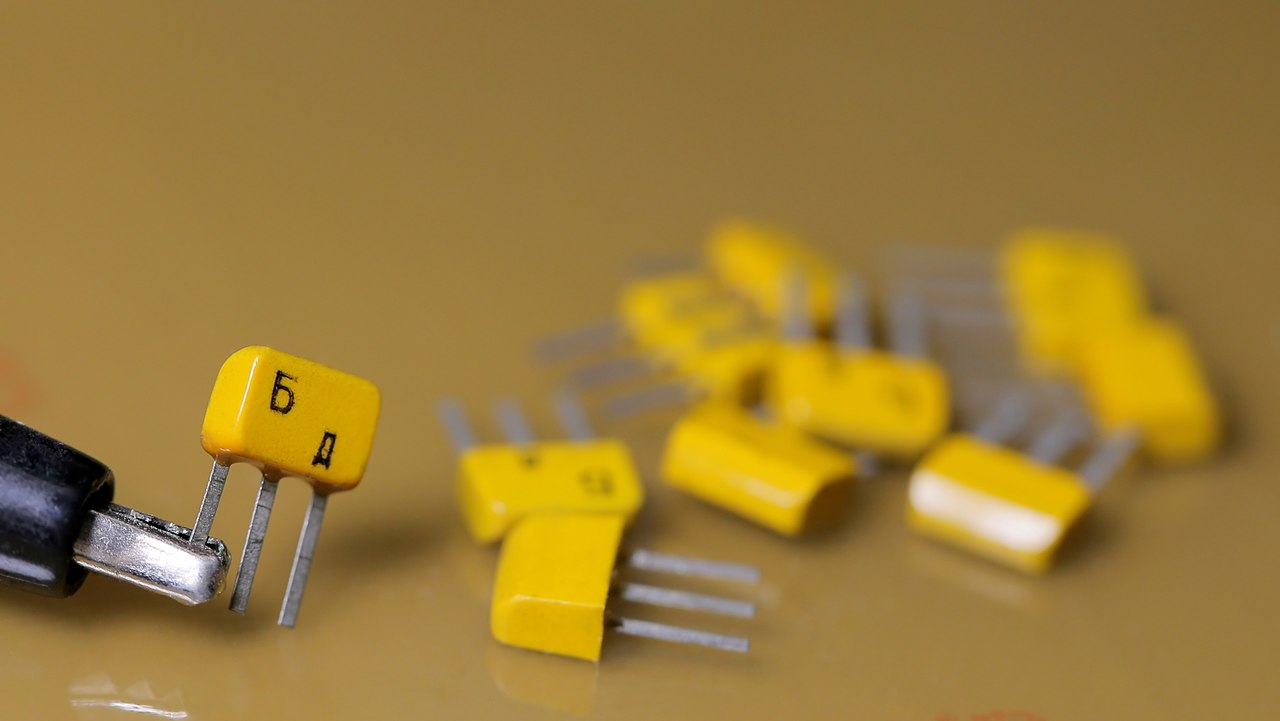


Basic principles and common types
At its core a transistor uses semiconductor regions and junctions to control carriers (electrons and holes). Two major families dominate modern electronics:
- Bipolar junction transistors (BJT) rely on current injection across emitter–base–collector junctions and are valued for linear amplification and analog circuits.
- Field-effect transistors (FET), including MOSFETs, control current by an electric field applied to a gate; they are the foundation of digital logic and low-power switching.
Each type exhibits characteristic parameters—gain, threshold voltage, on-resistance, switching speed and power dissipation—that determine suitability for tasks such as audio amplification or high-frequency switching. For further context on amplification, consult amplifier material.
History and development
The transistor replaced bulkier, less efficient vacuum tubes (triodes) and made possible the miniaturization of electronics. Invented and developed in the mid-20th century, the transistor quickly overtook tubes because it used less power, produced less heat and had a far longer expected life. The transition from discrete transistors to many devices fabricated together led to the rise of the integrated circuit; integrated designs and fabrication techniques are covered in resources like integrated circuits.
Uses and examples
Transistors appear in virtually every electronic system. Typical applications include:
- Analog amplification for audio, radio and instrumentation.
- Digital switching inside processors and memory, where MOSFETs dominate modern microprocessors; see general digital device notes at microprocessors.
- Power switching and motor control using specially packaged high-power transistors.
- Signal conditioning, buffering and RF stages in communication equipment.
Designers select devices by considering power ratings, frequency response and package type; discrete parts exist primarily where high power or specific thermal handling is required, while most consumer electronics use many transistors embedded in chips.
Important distinctions and facts
Notable contrasts include BJT versus FET operation (current-driven vs voltage-driven) and analog versus digital optimization. Modern digital circuits overwhelmingly employ MOSFETs because they can be scaled to extremely small sizes and fabricated in huge numbers on a single silicon wafer—this scaling enabled modern computing advances. For background on MOS technology see MOSFETs. The transistor’s switching role is summarized in introductory switch discussions at switch.
Semiconductor material science underpins transistor behavior; more on semiconductors is available via semiconductor references. Transistors appear in everyday devices such as radios, phones, and televisions and are essential to handheld and embedded systems (electronic devices). For historical comparison to earlier vacuum devices, see material on triode. Practical lessons and tutorials often show how to use a transistor as a simple amplifier or switch in laboratory circuits and hobby projects (amplifier, switch).
Questions and answers
Q: What is a transistor?
A: A transistor is an electronic component that can be used as part of an amplifier, or as a switch, and is made of a semiconductor material.
Q: How are transistors used in electronic devices?
A: Transistors are found in most electronic devices and can be used for a variety of different things including amplifiers and digital switches for computer microprocessors.
Q: What was the major advancement of the transistor over the triode tube?
A: The transistor was a major advancement after the triode tube, with using much less electricity, and lasting many years longer, to switch or amplify another electronic current.
Q: What are MOSFETs?
A: MOSFETs are digital switches that are mostly used in digital work.
Q: Why are some transistors individually packaged?
A: Some transistors are individually packaged mainly to handle high power.
Q: Where are most transistors found?
A: Most transistors are inside integrated circuits.
Q: Can transistors be used for both amplification and switching?
A: Yes, transistors can be used as part of an amplifier, or as a switch.
Related articles
Author
AlegsaOnline.com Transistor: Semiconductor device for amplification and switching Leandro Alegsa
URL: https://en.alegsaonline.com/art/101159
Sources
- hyperphysics.phy-astr.gsu.edu : "The Junction Transistor"
- mysite.du.edu : "transisting"
- sccs.swarthmore.edu : "Bipolar Transistors"
- thalia.spec.gmu.edu : "What are transistors made of?"
- dspace.mit.edu : "Fabrication and electrical characterization of transistors made from carbon nanotubes and graphene"
- nobelprize.org : "The Transistor-History"
- sjsu.edu : "History of the Transistor"
- cs.bu.edu : "From transistor to gates!"