
Potassium bromate (KBrO3): properties, uses, and safety
Potassium bromate (KBrO3) is a white crystalline oxidizing salt used in laboratories and formerly as a flour improver; it poses health and environmental risks and is restricted in many countries.
Potassium bromate is an inorganic chemical compound with the formula KBrO3. In solid form it appears as a white crystalline powder and is an ionic salt composed of potassium cations and bromate anions. Its oxidizing behavior and reactivity with organic materials make it useful in some chemical processes but also a substance of concern for health and the environment.
Image gallery
1 Image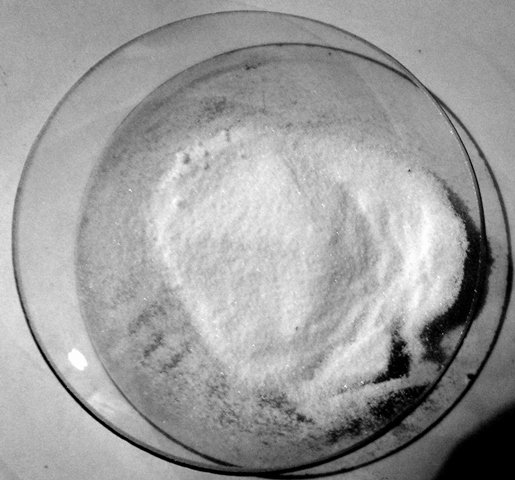
Properties and structure
As an ionic oxidizer, potassium bromate contains the potassium ion (K+) paired with the bromate ion (BrO3−). It dissolves in water to give a strongly oxidizing solution and can convert to bromide under reducing conditions. Because it supplies oxygen in reactions, it is classed as an oxidizing agent and should be kept away from combustible materials.
Production and typical reactions
Industrially and in laboratories it is produced by oxidizing bromide salts, including by electrochemical methods. In chemical reactions it acts as an oxidant in organic synthesis and analytical chemistry. Under appropriate conditions it is reduced to bromide; in the presence of organics or reducing agents it can produce oxidation products that require controlled handling.
Uses, history and regulation
Potassium bromate has had several applications: as an oxidizing reagent in laboratories and manufacturing, and historically as a dough improver in bread-making to strengthen gluten and increase loaf volume. Concerns about residual bromate in finished foods prompted many countries to ban or restrict its use in food production; alternatives and processing controls have largely replaced it in baking where regulation is strict.
Safety, handling and notable facts
Potassium bromate is hazardous: it can be toxic if ingested and is regarded as a possible human carcinogen, so exposures are limited and controlled. Safe handling requires protective equipment, proper storage, and avoidance of release to the environment. Disposal should follow local hazardous-waste regulations and analytical testing can detect trace residues in food and materials. For background information and regulatory summaries see further resources.
- Key uses: oxidizing reagent, former flour improver, industrial chemistry.
- Major concerns: toxicity, carcinogenic potential, environmental persistence.
- Alternatives: other oxidants or dough conditioners with lower health risks.
Related articles
Author
AlegsaOnline.com Potassium bromate (KBrO3): properties, uses, and safety Leandro Alegsa
URL: https://en.alegsaonline.com/art/78409