
Potassium fluoride
Potassium fluoride (KF) is an ionic inorganic salt composed of potassium and fluoride ions. It is a water-soluble white crystalline solid used as a fluoride source in chemistry and industry, handled with care.
Potassium fluoride is an inorganic ionic compound with the formula KF. In solid form it appears as a white crystalline material composed of potassium cations and fluoride anions; see entries on the potassium ion and the fluoride ion for basic ion properties. KF dissolves in water to give fluoride-containing solutions and adopts a rock‑salt–type crystal lattice in the solid state.
Image gallery
1 Image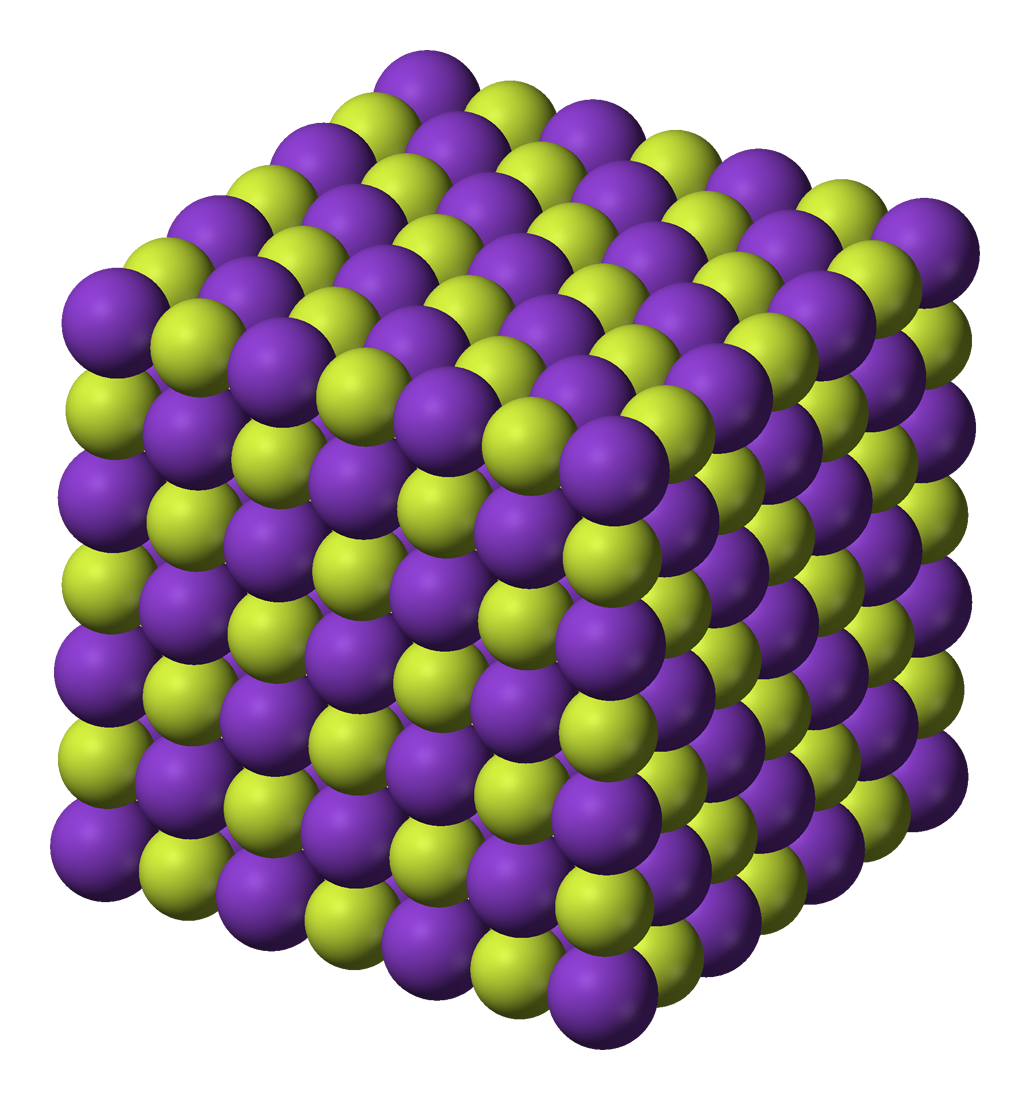
Characteristics and structure
As an alkali metal fluoride, KF is typically colorless and crystalline. It is ionic, which makes it electrically conductive when molten or dissolved. The solid lattice is based on alternating K+ and F− ions. Compared with organic fluoride reagents, simple inorganic fluorides like KF are less soluble in many organic solvents and often require additives or phase-transfer catalysts to be useful in nonaqueous reactions.
Production and chemical behaviour
Potassium fluoride is commonly prepared by neutralizing hydrofluoric acid with potassium-containing bases, or by treating potassium carbonate with a suitable fluorine donor. In solution it behaves as a source of fluoride ion; the reactivity of that fluoride depends on concentration, solvent, and counterion. Acidification of fluoride solutions can generate hydrogen fluoride, a highly corrosive and toxic gas, so reactions that release HF require caution.
Uses and applications
- Chemical synthesis: KF is employed as a fluoride source in laboratory and industrial chemistry, especially for desilylation or nucleophilic fluorination when paired with appropriate catalysts.
- Materials: it finds use in some glass and ceramic processes, fluxes, and specialty inorganic preparations.
- Analytical and preparative roles: aqueous KF provides fluoride for certain assays and for conversion between fluoride salts.
Safety and handling
Fluoride salts can be toxic in sufficient quantities and flakes or dust should not be inhaled. Solid KF is hygroscopic and should be stored dry; gloves, eye protection and appropriate ventilation are recommended. Because fluoride can form hydrofluoric acid on contact with acids, facilities should be prepared to manage HF exposure and consult detailed safety data sheets (safety resources).
Distinctions among alkali fluorides (for example KF versus NaF or CsF) arise from differences in solubility and basicity, which affect their behaviour in synthesis. In organic chemistry, soluble fluoride reagents such as tetrabutylammonium fluoride are often preferred when KF alone is insufficient, but KF remains a valuable, inexpensive fluoride source when used under suitable conditions.
Related articles
Author
AlegsaOnline.com Potassium fluoride Leandro Alegsa
URL: https://en.alegsaonline.com/art/78416