
Axiom (logic and mathematics)
A concise reference on axioms: fundamental statements accepted without proof that form the starting points for logical systems, mathematical theories, and some scientific formulations.
Overview
An axiom is a basic concept in logic and formal inquiry: a statement taken to be true without further proof. In many contexts it is also called a postulate, for example the familiar parallel postulate of Euclidean geometry. Axioms serve as starting points from which other statements are derived by rules of inference rather than by empirical demonstration.
Image gallery
1 Image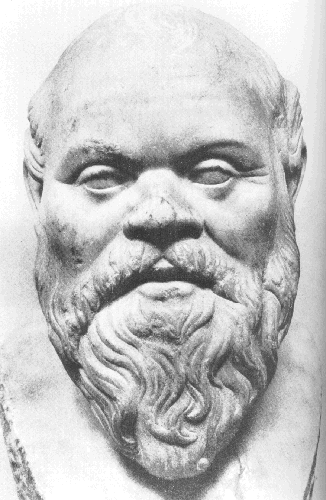
Characteristics and types
Axioms function as the foundational assumptions or premises of a deductive system. In pure mathematics they are chosen to define an abstract structure and to permit the derivation of theorems. Some axioms are intended to capture regularities of the physical world — they resemble physical laws such as Newton's laws — and others are purely formal declarations about abstract objects. Logical axioms (or logical laws) include principles like noncontradiction; mathematical axiom systems include familiar collections such as the Peano axioms for arithmetic or the Zermelo–Fraenkel axioms for set theory.
Historical development and methodology
The idea of declaring self-evident starting propositions goes back to ancient geometry, where Euclid arranged basic claims to build a large body of results. Over centuries mathematicians and philosophers refined the method: some axiom lists aim for obviousness, others for maximal generality or convenience for proofs. In modern practice an axiom may be any basic proposition selected to define a theory; its acceptance does not depend on whether it is empirically verifiable, but on the fruitfulness and coherence of the theory that follows.
Uses, examples and significance
Axioms are used to derive theorems and to clarify which properties are assumed rather than proved. Examples include Euclid's axioms in geometry, the axioms for arithmetic, and the axioms of probability theory. Choosing different axioms can produce distinct but internally consistent theories; the replacement of Euclid's parallel postulate by alternatives led to hyperbolic and elliptic geometries. Debates about particular axioms — notably the Axiom of Choice in set theory — show how acceptance or rejection can affect what can be proved.
Distinctions and notable facts
- Independence: An axiom is independent of others if it cannot be proved from them, and independence results often clarify what assumptions are essential.
- Consistency: A system of axioms is consistent if it does not lead to contradiction; consistency is a central concern when building formal theories.
- Completeness and limits: Attempts to axiomatize all of mathematics motivated major 20th-century projects; results like Gödel's incompleteness theorems showed limits on what axiomatic systems can achieve.
In summary, axioms are explicit starting assumptions that shape a theory's scope and power. Their selection is both a philosophical and practical choice: different axioms illuminate different aspects of mathematics, logic, and the sciences, and a clear axiom system helps separate what is assumed from what is demonstrated.
Related articles
Author
AlegsaOnline.com Axiom (logic and mathematics) Leandro Alegsa
URL: https://en.alegsaonline.com/art/7834