
Port silt loam — Oklahoma's state soil
Port silt loam is a silt-dominant soil series known as Oklahoma's state soil, formed on Permian red-bed rocks, notable for its reddish hue and importance for grassland and agriculture.
Port silt loam is a common soil series in parts of central and western Oklahoma and is officially recognized as the state soil. It is characterized by a fine, silt-dominant texture in the surface horizon that gives it a smooth feel and moderate fertility. The soil commonly supports native prairie grasses and crops adapted to the regional climate.
Image gallery
1 Image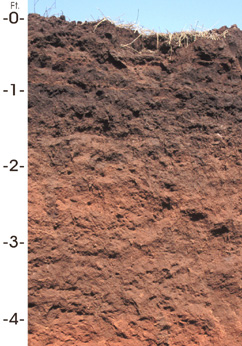
Origin and color
The distinctive reddish color of Port silt loam comes from weathering of red sandstones, siltstones, and shales deposited during the Permian geologic era. Iron oxides formed during weathering stain the particles, producing shades from pinkish to deep red. These parent materials and long-term chemical alteration determine many of the soil's physical and chemical properties. For more context about the state's designation see state soil information.
Characteristics and profile
- Surface texture: typically silt loam with a soft, granular structure.
- Color: various red hues due to iron oxides.
- Subsoil: often contains loamy to silty layers derived from the same red-bed rocks.
- Drainage and fertility: generally moderate; suitable for many dryland crops and grazing when managed properly.
Soil classification resources and technical descriptions help distinguish Port silt loam from other Oklahoma soils; a technical overview is available at classification resources. Understanding the horizons and texture is important for land planning and conservation.
Uses and importance
Port silt loam is important for regional agriculture, rangeland, and wildlife habitat. Its moderate water-holding capacity and nutrient status support small-grain cereals, forage grasses, and other crops common to the area when supplemented and managed. Conservation practices such as reduced tillage, cover cropping, and erosion control maintain productivity and limit loss of the fine silt particles.
As a representative soil of the Permian-aged red-bed landscapes, Port silt loam illustrates how geology, climate, and vegetation interact to produce distinct soils. For background on the Permian era and the rocks that formed these soils see Permian geology.
Related articles
Author
AlegsaOnline.com Port silt loam — Oklahoma's state soil Leandro Alegsa
URL: https://en.alegsaonline.com/art/78229