
Portland limestone (Portland stone)
A pale, oolitic limestone deposited in the Late Jurassic around the Isle of Portland, England, widely used as a durable building and dimension stone and notable for its chert bands and fossils.
Overview
Portland limestone, commonly called Portland stone in the building trade, is a pale, fine‑grained oolitic limestone formed in shallow marine conditions during the latest stage of the Upper Jurassic. It was first described from the Isle of Portland in Dorset but equivalent deposits extend beyond the island into nearby parts of southern England and across the English Channel into France. The name also lends itself to the term "Portlandian," used in stratigraphy for rocks of roughly this age.
Image gallery
10 Images





Characteristics and strata
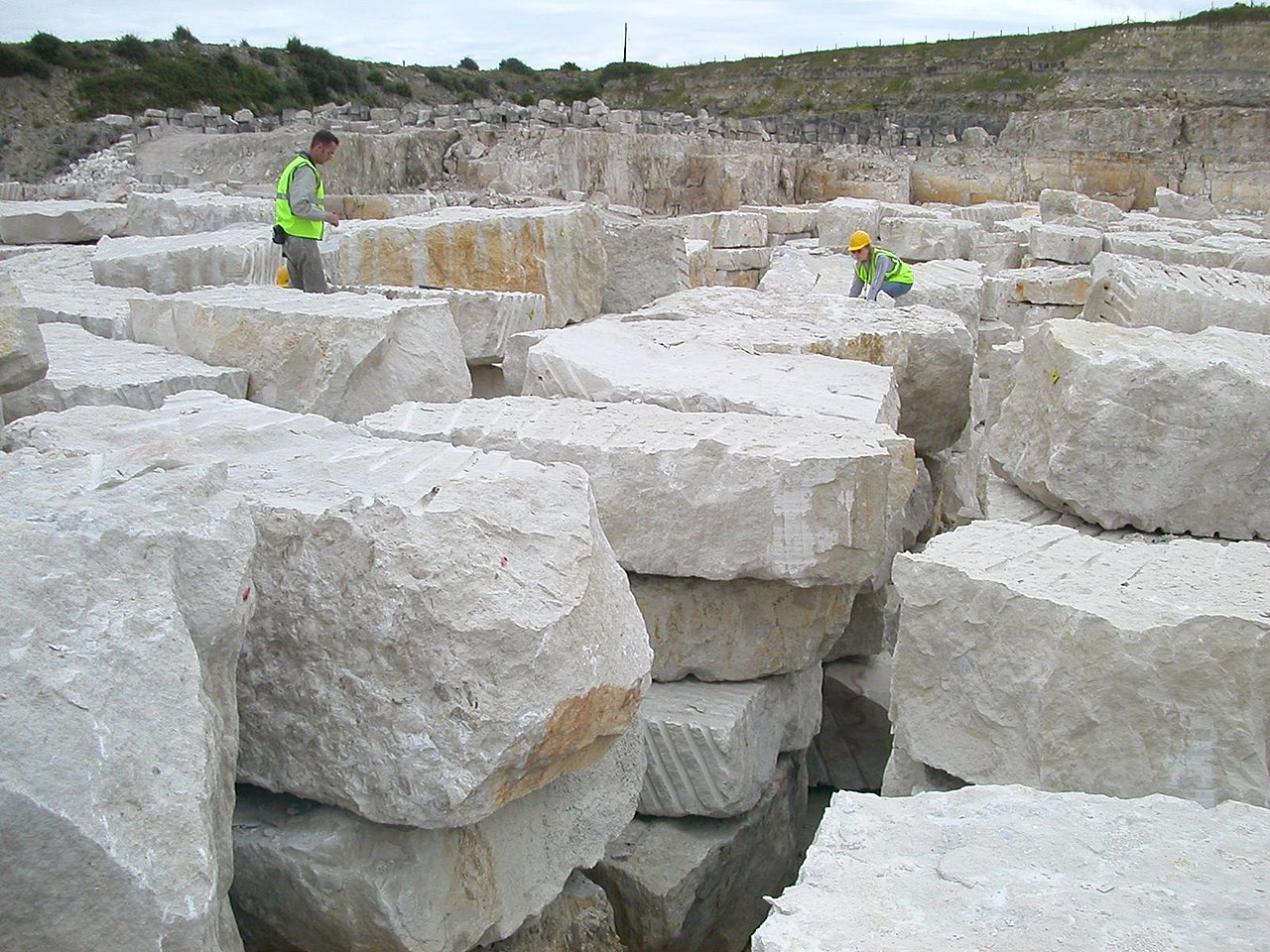
Portland limestone is typically white to cream or light grey and consists of rounded carbonate grains (ooliths) bound in a lime matrix. Beds of limestone are commonly interbedded with harder nodules and layers of chert, producing a distinctive banded appearance in natural outcrops. These bedding patterns and the overall sequence are described in regional stratigraphic accounts (stratigraphy). The rock often contains marine fossils such as bivalves and other shelly remains, which attest to its shallow sea origin.
Geological origin and development
The limestone formed when carbonate sands and mollusc shells accumulated on a shallow continental shelf toward the end of the Jurassic period. Periodic changes in sea level and sediment supply produced the repetitive beds and occasional siliceous layers. Over millions of years these sediments were compacted and cemented into the relatively uniform blocks valued by stonemasons and architects.
Uses and notable examples
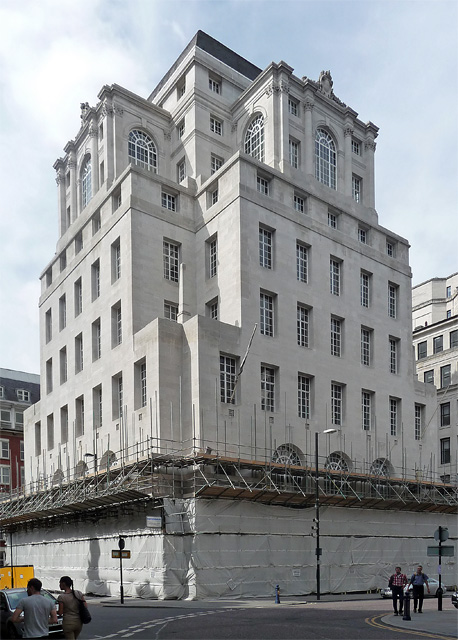
Because of its strength, workability and attractive pale color, Portland limestone has been quarried extensively as a dimension stone. It has been used for monumental and civic architecture across Britain and elsewhere: famous examples include St Paul’s Cathedral and facades in central London, where the stone’s weathering qualities and finish are prized. The material is also used for restoration work, carved detail, paving and sculpture. Quarrying and finishing practice are part of an established local industry centered on traditional extraction and cutting techniques.
Properties, conservation and distinctions
- Durability: resistant to crushing and reasonably weather‑resistant for façades and monuments.
- Appearance: homogeneous pale tone that can age to a warmer hue.
- Workability: fine grain makes it suitable for precise carving and dressings.
In geological and commercial contexts the terms "Portland limestone" and "Portland stone" are often used interchangeably; however, geologists may refer more specifically to the formation or stratigraphic unit. For readers seeking technical or conservation guidance, further resources are available on general limestone properties and the Upper Jurassic interval (Upper Jurassic). For stratigraphic detail and local quarry information see regional summaries (stratigraphic surveys) or conservation notes on chert‑bearing limestones (chert) and local quarry histories (Dorset, Isle of Portland, France).
Questions and answers
Q: What is Portland limestone?
A: Portland limestone is a type of limestone that was deposited during the latest stage of the Upper Jurassic period.
Q: Where was Portland limestone first found?
A: Portland limestone was first found on the Isle of Portland, Dorset.
Q: Is Portland limestone limited to a small area?
A: No, it occurs over a wider area, including France.
Q: What are the colors of the beds of limestone in Portland limestone?
A: The beds of limestone in Portland limestone are white-gray.
Q: What is the composition of the layers in Portland limestone?
A: The layers in Portland limestone are beds of white-grey limestone separated by beds of chert.
Q: When was Portland limestone deposited?
A: Portland limestone was deposited during the latest stage of the Upper Jurassic period.
Q: How is Portland limestone different from other types of limestone?
A: Portland limestone is unique in its deposition period and location, and its distinctive layers of white-grey limestone separated by beds of chert.
Related articles
Author
AlegsaOnline.com Portland limestone (Portland stone) Leandro Alegsa
URL: https://en.alegsaonline.com/art/78279
Sources
- soton.ac.uk : Soton.ac.uk