
Plague of Justinian (6th-century pandemic)
Sixth-century pandemic centered in the Byzantine Empire (541–542), caused by Yersinia pestis; recurring waves followed for centuries and it had major demographic, economic, and political effects.
Overview
The Plague of Justinian refers to a widespread outbreak of bubonic plague that began in 541–542 CE during the reign of the Byzantine emperor Justinian I. Contemporary and later chroniclers describe rapid mortality in Constantinople and other Mediterranean ports. Modern investigators identify the responsible organism as Yersinia pestis, the bacterium associated with plague; genetic evidence from human remains supports this identification. For more general context on how pandemics are studied see pandemic research.
Image gallery
4 Images


Causes and characteristics
The disease displayed the classic signs associated with bubonic plague: swollen lymph nodes (buboes), fever, chills and sometimes respiratory symptoms when the infection spread to the lungs. Transmission likely involved flea bites from infected rodents and person-to-person spread in crowded urban conditions. The medical and biological aspects are discussed in broader plague literature bubonic plague overview. The initial years are usually given as 541–542 in historical summaries chronology sources.
Spread and recurrence
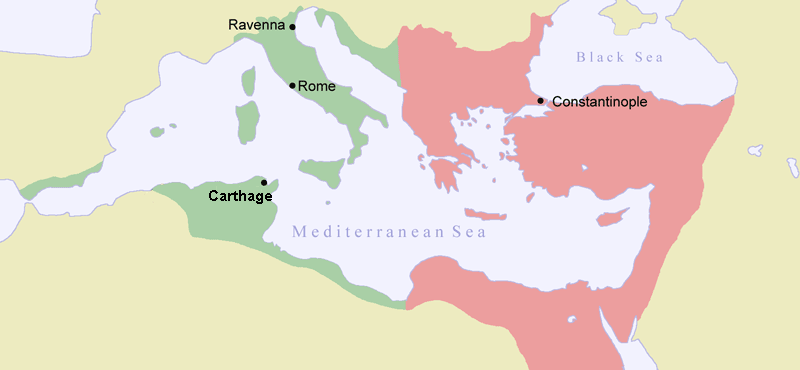
The outbreak began in the Eastern Mediterranean and radiated along trade routes, affecting the Byzantine Empire and adjacent regions. Constantinople suffered particularly high mortality, and outbreaks recurred in waves for decades afterward. Historians and archaeologists examine contemporary accounts and burial sites to reconstruct its geography and timing Byzantine contexts. Scholarly discussion about sources and interpretation is ongoing historical methods.
Consequences and significance
The human and social effects were profound: urban populations fell, labor shortages altered economies, tax revenues dropped, and social institutions were stressed. Estimates of total deaths vary widely; older summaries suggested very large global tolls while recent scholarship urges caution and presents a range of numbers rather than a single figure demographic estimates. Some historians argue that the demographic stress weakened Byzantine defenses and administration and may have eased conditions for contemporary military and political changes, including the rapid expansion of early Muslim polities in the following century regional consequences.
Evidence, comparison and legacy
Archaeological digs and ancient DNA analyses have confirmed Y. pestis in remains from affected sites, strengthening the link between the sixth-century outbreaks and later medieval plagues. Scholars compare the Plague of Justinian to the Black Death of the 14th century to understand differences in scale, recurrence, and long-term impact; the Black Death remains the more catastrophic single event in European memory, but both reshaped societies comparative studies.
Notable facts
- Recurring waves: after the initial crisis, outbreaks returned intermittently for centuries, influencing population recovery.
- Multipronged impacts: demographic loss, economic disruption, and shifts in military and political balance.
- Interdisciplinary study: historians, archaeologists and geneticists collaborate to refine the timeline and consequences.
The Plague of Justinian remains a key case for understanding how epidemic disease can intersect with trade, war, governance and climate to produce lasting historical change.
Further reading and source collections can be located through specialist bibliographies and databases pandemic research, plague studies bubonic plague overview, historical chronologies chronology sources, Byzantine studies Byzantine contexts, historiography historical methods, demographic analyses demographic estimates, regional consequence studies regional consequences and comparative plague literature comparative studies.
Questions and answers
Q: What was the Plague of Justinian?
A: The Plague of Justinian was a pandemic caused by bubonic plague.
Q: When did the Plague of Justinian happen?
A: The Plague of Justinian happened during the years of 541 to 542 in the Byzantine Empire.
Q: Was the Plague of Justinian the first pandemic recorded in history?
A: Yes, the Plague of Justinian was the first pandemic recorded in history.
Q: How many people did the Plague of Justinian kill across the world?
A: Historians estimate that the Plague of Justinian killed as many as 100 million people across the world.
Q: How long did the Plague of Justinian last?
A: The Plague of Justinian returned every twelve years until 770, when it stopped for about 500 years.
Q: How many people in Europe did the Plague of Justinian kill between 541 and 700?
A: Between 541 and 700, the Plague of Justinian killed about half of the people in Europe.
Q: What was the social and cultural impact of the Plague of Justinian compared to?
A: The social and cultural impact of the Plague of Justinian is comparable to that of the Black Death.
Related articles
Author
AlegsaOnline.com Plague of Justinian (6th-century pandemic) Leandro Alegsa
URL: https://en.alegsaonline.com/art/77206
Sources
- evolpub.com : evolpub.com/CRE/CREseries.html