
Pipette: laboratory instruments for measuring and transferring liquids
A pipette is a laboratory tool for accurately measuring and transferring defined liquid volumes. Types range from simple droppers to precision adjustable micropipettes used in research and clinical labs.
Pipettes are tools used in laboratories and clinical settings to pick up, transport and dispense measured amounts of liquid. They range from simple, single-piece droppers to complex, adjustable instruments designed to deliver microlitre-scale volumes precisely. Materials commonly include glass for traditional, reusable models and various plastics for inexpensive or disposable pipettes.
Image gallery
10 Images




Basic characteristics and parts
Most pipettes consist of a narrow tube with an open end and a means of creating suction or pressure to draw fluid into and release it. A traditional glass device often referred to as a glass pipette is filled by creating a vacuum with a rubber bulb or pipette pump. Disposable plastic variants, sometimes called dropper or teat pipettes, are filled by squeezing a flexible bulb.
Common types
- Volumetric pipettes: calibrated to deliver a single, precise volume.
- Graduated or serological pipettes: marked with volume graduations for variable dispensing.
- Pasteur and teat pipettes: simple droppers for approximate transfer and dispensing.
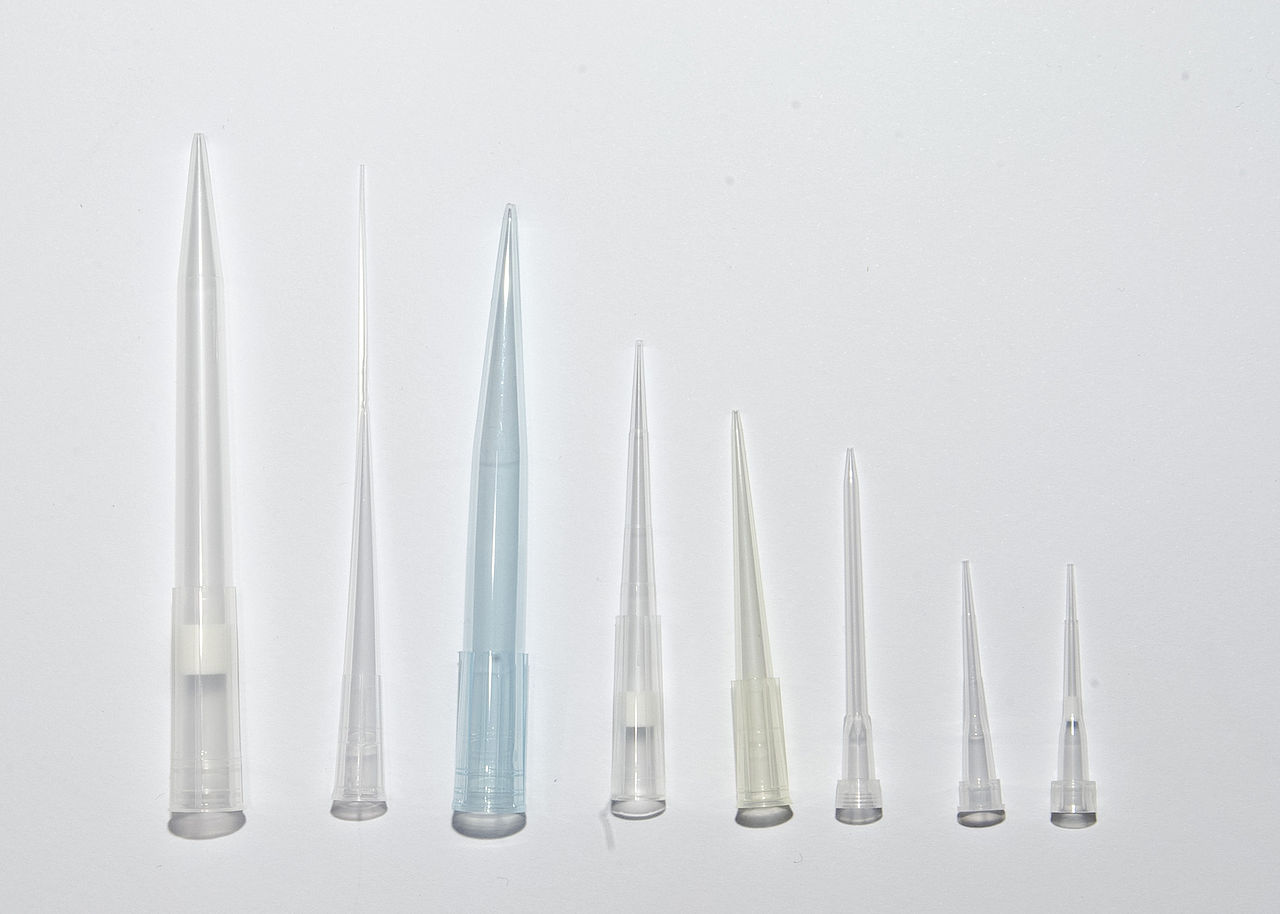
- Micropipettes: precision instruments for small or fractional millilitre volumes; typically used with disposable tips and adjustable settings. See micropipette for more on those.
History and development
Pipetting evolved alongside glassblowing and the development of quantitative chemistry. Early laboratory pipettes were simple glass tubes; as experimental needs demanded higher accuracy and throughput, manufacturers introduced calibrated volumetric pipettes and later mechanical aids such as piston-driven micropipettes in the mid‑20th century. Modern designs emphasize accuracy, repeatability and ergonomics.
Uses, technique, and important distinctions
Pipettes are essential in analytical chemistry, biology, medicine and manufacturing wherever measured liquid transfer is required. Proper technique—such as pre‑wetting tips, consistent plunger speed and correct angle—affects accuracy. Many labs follow calibration and maintenance schedules to ensure volume fidelity. For disposable convenience and lower contamination risk, plastic tips and single‑use pipettes are common. For tasks that require knowledge of specific delivered volumes rather than approximate drops, choose a calibrated instrument; for rough transfers, a teat or Pasteur pipette may suffice. For an overview of volume concepts and selection criteria, consult resources on measuring specific volumes.
Related articles
Author
AlegsaOnline.com Pipette: laboratory instruments for measuring and transferring liquids Leandro Alegsa
URL: https://en.alegsaonline.com/art/77054