
Piperaceae (pepper family): overview, traits, uses and diversity
Piperaceae is a mostly tropical family of flowering plants that includes black pepper and many ornamental Peperomia species; it is characterized by aromatic leaves and inconspicuous spike inflorescences.
The Piperaceae, commonly called the pepper family, is a widespread group of mostly tropical flowering plants. The family contains roughly 3,600 accepted species arranged in five genera, with the great majority concentrated in two large genera: Piper (around 2,000 species) and Peperomia (about 1,600 species). Members of this family range from erect shrubs and woody vines to small succulent or epiphytic herbs. For further reading see the pepper family.
Image gallery
3 Images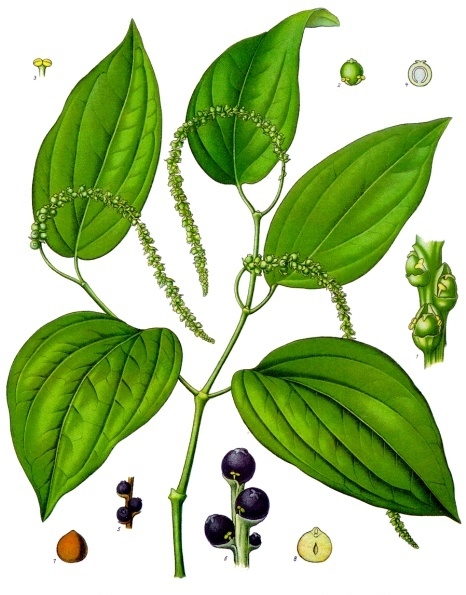


Key characteristics
Piperaceae species are notable for their aromatic tissues and typically simple leaves. Distinguishing features include:
- Leaves: simple, entire or slightly toothed, usually alternate and often aromatic when crushed.
- Stems and habit: herbs, shrubs, or lianas; many Peperomia are compact succulents or epiphytes, while many Piper species are woody or scandent.
- Flowers: very small, often inconspicuous, arranged densely on spikes or racemes; flowers usually lack a conspicuous perianth.
- Fruits: small, often berry- or drupe-like structures that are typically dispersed by animals.
Distribution and ecology
Piperaceae are primarily tropical and subtropical, with greatest diversity in South and Central America and Southeast Asia. They occur in a variety of habitats but are especially common in moist, shaded forest understories. Flowers and fruits attract a range of insects and frugivorous birds, making many species important components of forest ecology and seed dispersal networks.
Uses and economic importance
Several Piperaceae species have long-standing human uses. The best known is Piper nigrum (black pepper), a globally traded spice valued for its pungent alkaloid piperine. Piper methysticum (kava) produces sedative and social-beverage preparations in parts of the Pacific. Many Peperomia species are popular as low-maintenance ornamental houseplants, prized for their leaf shapes and textures. Traditional medicine and local crafts use various species for aromatic oils, poultices, or flavoring.
Taxonomy, history and notable distinctions
Piperaceae belongs to the order Piperales within the magnoliid clade of flowering plants. The family has an ancient botanical history and has been recognized by herbalists and traders for millennia, especially for pepper's role in global commerce. Taxonomically, Piper and Peperomia differ in habit and anatomy: Piper species are often larger and can be vines or shrubs, while Peperomia are frequently succulent, compact, and epiphytic. Conservation concerns affect some species, as habitat loss threatens specialized forest endemics.
Overall, Piperaceae combines ecological importance, cultural and economic value, and horticultural appeal, making it a notable and diverse family within tropical plant communities.
Related articles
Author
AlegsaOnline.com Piperaceae (pepper family): overview, traits, uses and diversity Leandro Alegsa
URL: https://en.alegsaonline.com/art/77050