
Plant community
A plant community is an assemblage of plant species interacting and coexisting in a definable area; its composition, structure, and dynamics inform ecology, conservation, and land management.
A plant community is a recurring grouping of plant species that coexist in a particular place and form a recognizably uniform patch of vegetation. These assemblages are shaped by environmental conditions (climate, soil, water), species interactions (competition, facilitation), disturbance regimes (fire, grazing, flooding) and time since disturbance. Boundaries between communities can be distinct or gradual, and the same landscape can contain many different plant communities at varying scales.
Image gallery
1 Image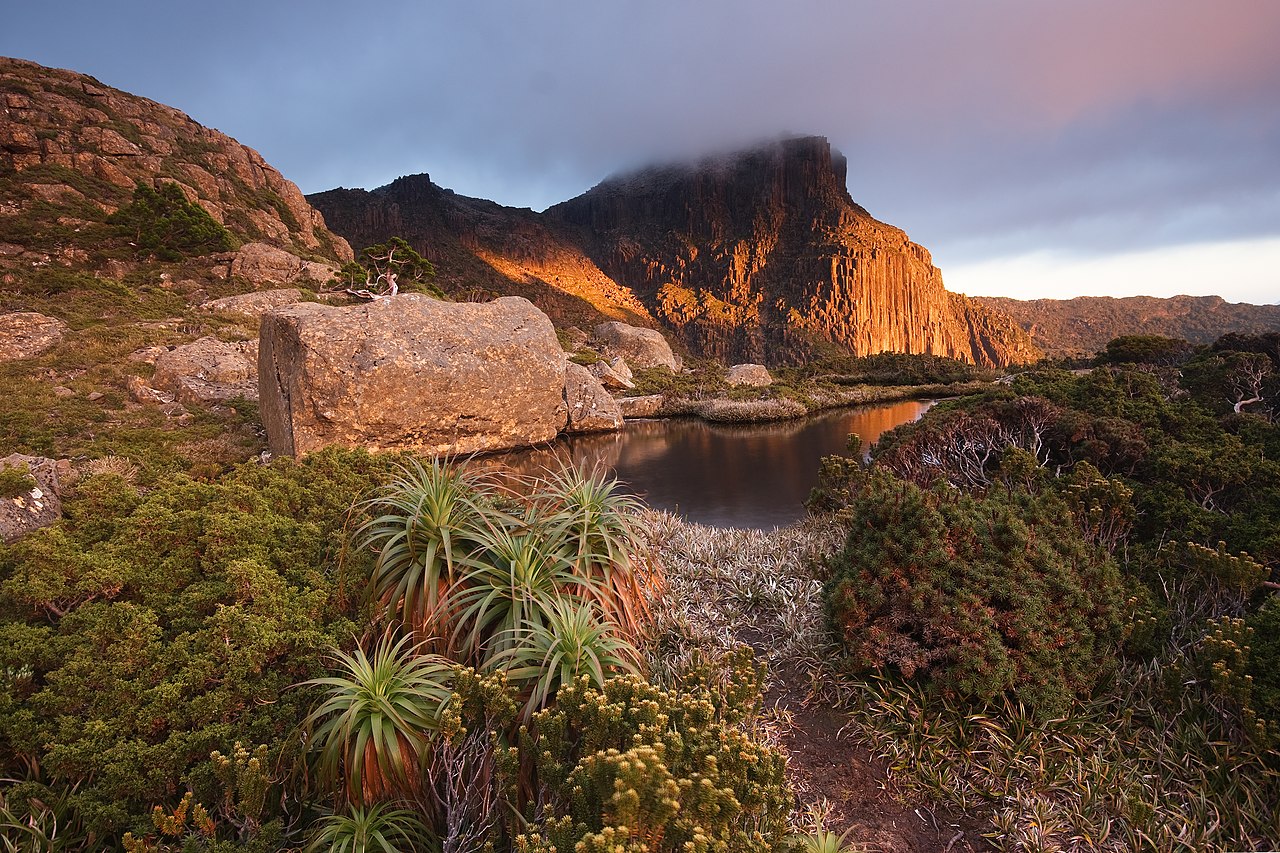
Key characteristics
Plant communities are typically described by:
- Species composition: which species are present and their relative abundance.
- Structure: vertical layering and physical arrangement (trees, shrubs, herb layer).
- Dominance: one or a few species may define the community.
- Dynamics: successional stage, rates of turnover and response to disturbance.
- Spatial pattern: patchiness, edge effects and connectivity.
History and concepts
The idea of grouping plants into communities has long foundations in ecology and vegetation science. Early debates contrasted the view of communities as integrated, superorganism-like units with an opposing view that communities are loose assemblages of individual species responding independently to environmental gradients. Modern ecology recognizes components of both perspectives: communities show emergent properties yet also reflect individual species’ ecological tolerances.
Uses and importance
Understanding plant communities is central to many applied fields. Vegetation mapping and classification inform land-use planning and conservation prioritization. In restoration ecology, identifying reference communities helps set restoration targets. Plant communities serve as biological indicators of soil health, hydrology and climate conditions, and they underpin habitat quality for animals and other organisms.
Examples and distinctions
Common examples include grassland communities, woodland understory communities, saltmarsh stands and alpine meadows. It is important to distinguish a plant community from related concepts: vegetation broadly refers to all plant cover, while an ecosystem includes both the biological community and abiotic processes (nutrient cycles, energy flow). Classification systems and field surveys often use plots, species lists and cover estimates to define and compare communities; for methods and regional schemes see further resources.
Because boundaries can be fuzzy and communities change over time, modern studies emphasize gradient analysis, long-term monitoring and the role of disturbances and human activity in shaping plant community composition and resilience.
Related articles
Author
AlegsaOnline.com Plant community Leandro Alegsa
URL: https://en.alegsaonline.com/art/77283