
Aztec mythology: gods, cosmology, rituals, and cultural role
A concise overview of Aztec mythology: its cosmology of five suns, principal deities, ritual practices including sacrifice, historical context, and cultural legacy.
Aztec mythology refers to the religious stories, gods, and worldviews of the Nahua peoples whose political center was the Aztec empire in central Mexico. It informed public ceremonies, civic life and artistic expression, and drew on earlier Mesoamerican traditions while developing distinctive Nahua elements. For background on the people and state that preserved these myths see Aztec civilization, and for influences from earlier cultures see the role of the Toltec and Maya traditions.
Image gallery
7 Images
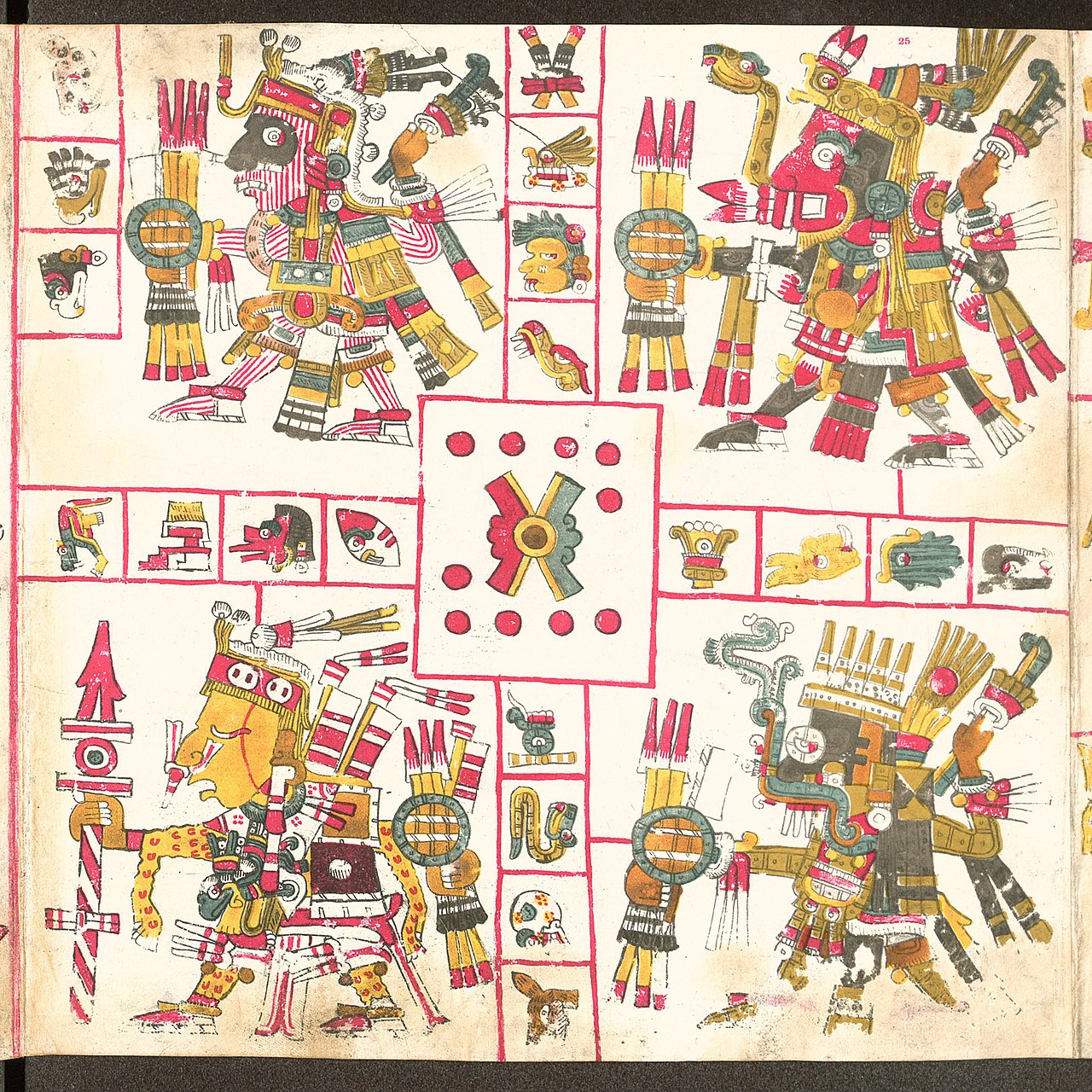


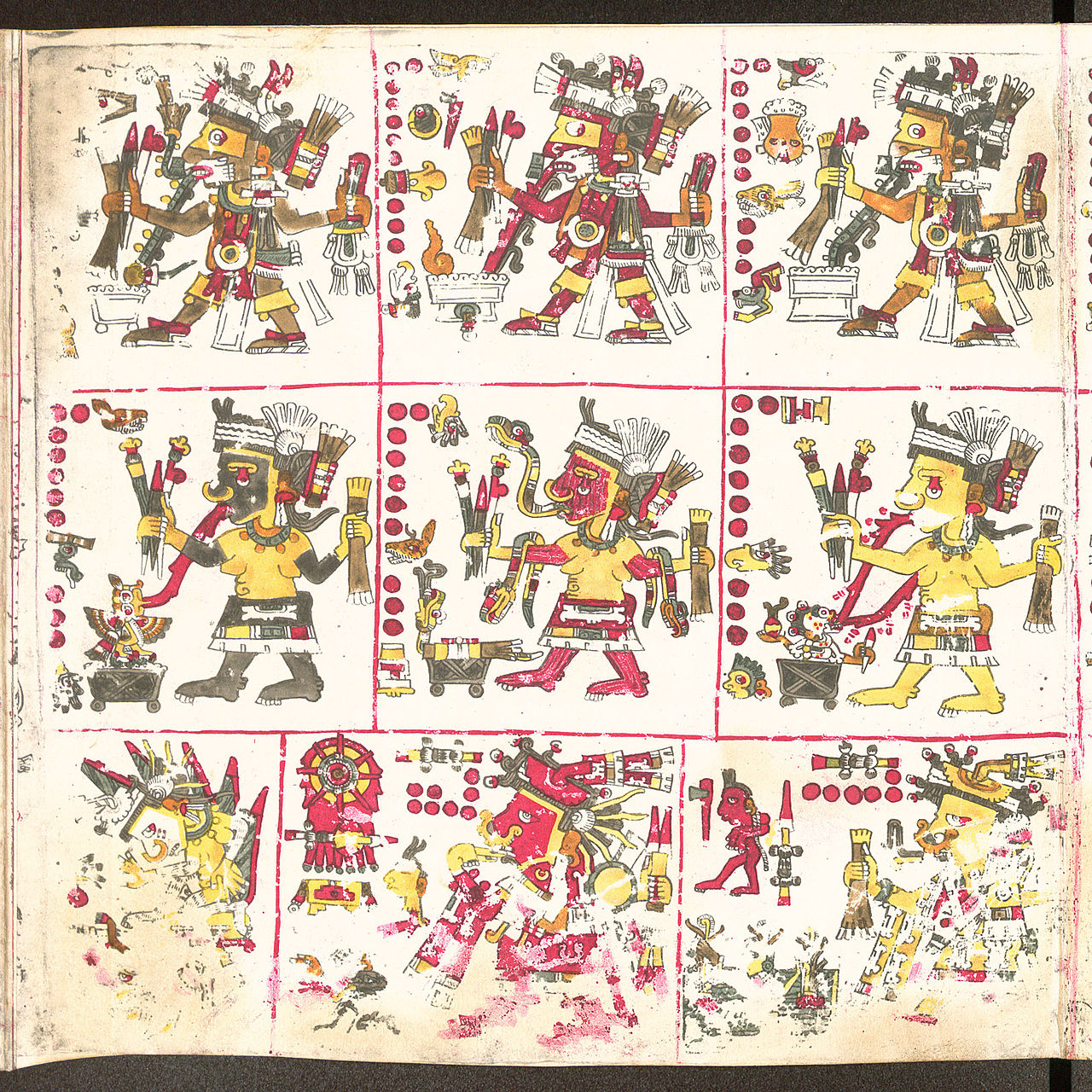


Cosmology and the five suns
A central feature of Aztec myth is a cyclical cosmology in which the universe has passed through successive ages or "suns." Each previous age ended in a catastrophe and was repopulated or remade by the gods. Common versions describe four earlier suns—often remembered as ages destroyed by jaguars, by violent winds, by a rain of fire, and by a great flood—and the present age, the fifth sun, which the Aztecs feared would end in great earthquakes. This cosmology appears throughout their ritual calendar and monuments and is part of a broader Mesoamerican conception of periodic creation and destruction; for summaries of these ideas see works on Aztec cosmology and myth.
Principal deities and cosmic roles
The Aztec pantheon was large and often regional, but a few deities played central roles in state religion. Huitzilopochtli was the patron of the Mexica (the Aztec ruling group) and associated with war and the sun; Huitzilopochtli was honored with major rituals at central temples. Tezcatlipoca was a powerful, ambivalent deity connected with fate, rulership and the night sky; he appears widely in stories about moral tests and fortune (Tezcatlipoca). Quetzalcoatl, the feathered serpent, represented wind, learning, and crafts and influenced intellectual and priestly traditions. Other important gods included Tlaloc (rain and fertility), Mictlantecuhtli (death), and Xochiquetzal, a goddess of beauty and love (Xochiquetzal).
Rituals, sacrifice and the calendar
Ritual practice was integral to Aztec religion. Offerings ranged from food and incense to elaborate public ceremonies. Human sacrifice has a prominent place in many accounts: victims could be captives, tribute persons, or volunteers, and sacrifices were framed as exchanges meant to sustain cosmic cycles and nourish gods. Spanish chroniclers emphasized these practices, but archaeological evidence and native codices also show a complex mix of offerings and rites. The Aztecs organized religious life using two calendars—the 365-day solar cycle and the 260-day ritual cycle—which structured festivals and priestly duties.
Temples, art and symbolism
Religious architecture and visual culture encoded mythic themes. The great temple complex of Tenochtitlan, the Templo Mayor, housed shrines to both the rain god and the war-sun god and served as a stage for public rites. Sculpture, feather-work, feathered headdresses, painted codices and ritual regalia all reflect mythic narratives and divine attributes. Symbolic objects often emphasized certain body parts in ritual contexts; for example, the heart and head appear repeatedly as loci of sacrificial and honorific meaning, and some sources also note the symbolic importance of the liver in certain rites.
History, transmission and legacy
The Aztec empire rose in the 14th and 15th centuries and maintained its religion until the Spanish conquest brought rapid political change and missionary efforts. Much of what is known comes from codices, archaeology, and colonial-era chronicles written by indigenous and Spanish authors; these sources must be read critically because of bias and cultural disruption. Aztec myths continue to influence modern Mexican cultural identity, academic study, and popular representations of Mesoamerican pasts. For further reading on primary sources and archaeology consult overviews of the empire's chronology and monuments such as discussions of the 14th–16th century period (14th century) and archaeological summaries (jaguars, flood, earthquake as mythic imagery).
Further notes and resources
- Comparative Mesoamerican religion shows shared themes across the Aztec, Maya and earlier central Mexican traditions; see studies on interregional exchange and the influence of the Toltec and other cultures.
- Primary indigenous sources and colonial accounts describe customs such as human sacrifice, but modern interpretation balances these narratives with archaeological and ethnographic evidence.
- For names and attributes of gods consult dedicated entries on Huitzilopochtli, Tezcatlipoca and Xochiquetzal.
Questions and answers
Q: What is Aztec mythology?
A: Aztec mythology is the mythology of the Aztec civilization in Mexico.
Q: What was the basis of the Aztec society?
A: Aztecs based their society on the concepts from their mythology, which helped them flourish.
Q: Which civilizations did the Aztecs borrow ideas from?
A: The Aztecs borrowed ideas from the Toltec and Mayans civilizations to create their advanced culture.
Q: How long did the Aztec empire last?
A: The Aztec empire lasted from the 14th century until the Spanish took over.
Q: How did the Aztecs believe the universe functioned?
A: The Aztecs believed the universe had four phases or suns, and that gods ended each sun with a great catastrophe before creating a new world.
Q: What were the three most powerful body parts in Aztec mythology?
A: The Aztecs believed the head, the heart, and the liver were the three most powerful body parts in their religion.
Q: Which gods and goddesses were worshipped in Aztec mythology?
A: Some of the gods and goddesses worshipped in Aztec mythology are Huitzilopochtli, Tezcatlipoca, and Xochiquetzal.
Related articles
Author
AlegsaOnline.com Aztec mythology: gods, cosmology, rituals, and cultural role Leandro Alegsa
URL: https://en.alegsaonline.com/art/7957