
Peterborough, Ontario
Peterborough is a mid-sized city in Ontario, Canada, situated on the Otonabee River; known for its industrial roots, Trent–Severn Waterway landmarks, universities, and cultural institutions.
Peterborough is a city in the province of Ontario, Canada, located on the banks of the Otonabee River. It grew from a small settlement into an industrial and cultural centre for central-eastern Ontario. The name Peterborough was adopted in the early 19th century in connection with an organized emigration scheme; the locality began as a settlement called Scott's Plains after settler Adam Scott. For contemporary and historical reference see Peterborough and the provincial context at Ontario.
Image gallery
10 Images
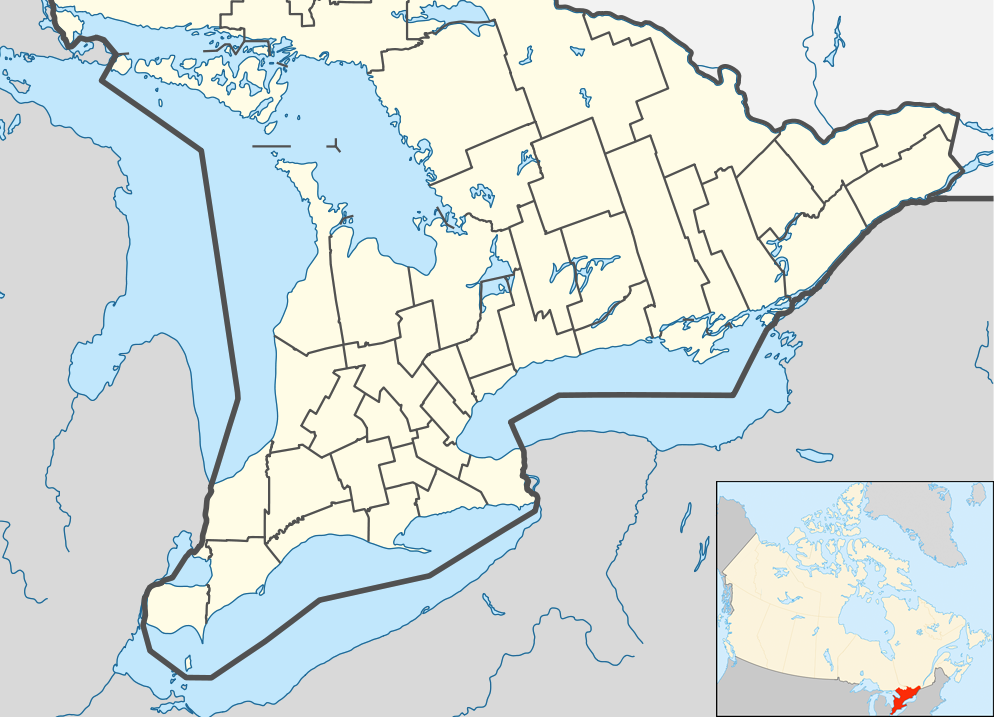





Overview and setting
Peterborough occupies a strategic location along waterways that were important for early settlement and later for transportation and industry. The Otonabee River and the connected Trent–Severn Waterway shaped the town’s early economy and remain prominent features of the landscape. The city has a mix of urban neighbourhoods, riverfront areas, and surrounding rural townships. For regional orientation, readers may consult sources related to the province and nearby population centres like Toronto.
History and development
The community began when Adam Scott built a sawmill and gristmill on the west shore of the Otonabee River and the area became known as Scott's Plains. In 1822, the British Parliament approved an experimental emigration plan that brought poor Irish families to Upper Canada; that program was administered by Peter Robinson and the settlement’s name was changed to Peterborough in his honour. Peterborough was incorporated as a town in 1850, reporting a population in the low thousands, and later achieved city status on July 1, 1905. The city continued to grow through 19th- and 20th-century industrialization and improved transport links.
Economy, institutions, and landmarks
Traditionally, Peterborough’s economy relied on mills, manufacturing and rail-linked industry; over time it has diversified to include education, services, technology, and tourism. Notable institutions include post-secondary campuses and cultural sites such as the Canadian Canoe Museum and the historic Peterborough Lift Lock, a prominent engineering landmark on the Trent–Severn Waterway. Local education and research contribute to the city’s identity and workforce development. For general civic information consult municipal or provincial resources at local pages.
Culture, recreation, and significance
The city supports a lively arts scene, festivals, and outdoor recreation tied to its rivers and lakes. Visitors and residents enjoy boating, hiking, community events and museums. Peterborough’s heritage is visible in preserved industrial architecture, heritage districts, and public works connected to the waterways. The community balances heritage conservation with contemporary cultural programming and economic renewal.
Notable facts and distinctions
- The Peterborough Lift Lock is one of the highest hydraulic lift locks in the world and a local landmark.
- Settlement patterns were influenced by early mills and an organized emigration scheme run by Peter Robinson.
- The city moved from a 19th-century town to formal city status in the early 20th century and has continued to evolve economically.
The administrative leadership and population figures have changed over time; the source material for this article noted a mayor named Bob Kilger and a 2006 population figure, but readers should consult up-to-date municipal records or census releases for current officeholders and demographics. For more information on regional history and services, see provincial and municipal resources at regional links.
Related articles
Author
AlegsaOnline.com Peterborough, Ontario Leandro Alegsa
URL: https://en.alegsaonline.com/art/76174
Sources
- peterboroughmuseumandarchives.ca : "Peterborough Museum & Archives, A History of Peterborough's Canoe Industry"