
Pectinina (bivalve suborder)
Pectinina is a suborder of marine bivalves in the order Ostreoida that includes scallop-like and jingle-shell families. It groups Pectinoidea and Anomioidea; important ecologically and commercially as filter feeders.
Overview
Pectinina is a suborder of marine bivalve mollusks placed within the broader bivalve classification and historically treated as part of the order Ostreoida. It unites two principal superfamilies, the Pectinoidea and the Anomioidea, which include familiar forms such as scallops and jingle or saddle shells. Members of Pectinina are filter-feeding mollusks found in a wide range of shallow to deep marine habitats.
Image gallery
2 Images
Characteristics
Species placed in Pectinina share a suite of shell and soft-part features that have been used for identification. Typical traits include a varied shell shape from nearly circular to irregular, a mantle and gill structure adapted for suspension feeding, and byssal or free-swimming lifestyles in different lineages. Many pectinins possess radial ribbing or ornamentation on the shell and a hinge region with reduced or specialized teeth.
- Pectinoidea: often laterally compressed, can swim or rest on the substrate; many have well-developed ribs and auricles.
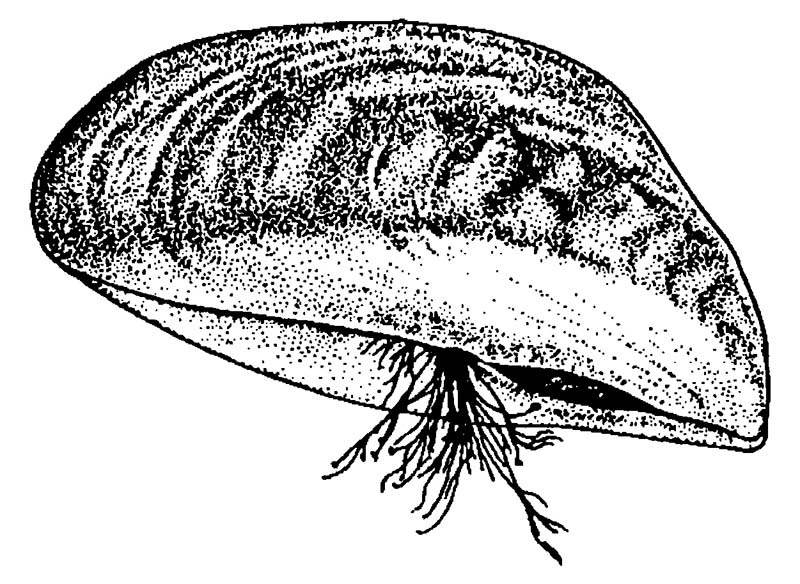
- Anomioidea: frequently irregular, some cement to hard substrates and may show a limpet-like or saddle-shaped shell.
Taxonomy and history
The grouping of Pectinina reflects centuries of taxonomic work based on shell morphology and anatomy. Traditional classifications emphasized visible shell characters, while modern approaches incorporate anatomical and molecular data that have refined relationships among bivalves. As with many mollusk groups, the boundaries and rank of Pectinina have been adjusted over time as new evidence emerged.
Ecology and uses
Members of this suborder are important ecosystem engineers: as suspension feeders they help clarify water and recycle nutrients. Some species, notably within the Pectinoidea, are economically significant as seafood and are cultivated or harvested in fisheries. Shells from anomioids and pectinoids have been used historically for ornament, craft, and, in some regions, as components in local trade.
Distinctions and notable facts
Pectinina contrasts with other bivalve groups by combining families that include both free-swimming and sessile life histories. Its two superfamilies illustrate the evolutionary versatility of bivalves: Pectinoidea exemplify rapid locomotion among bivalves, while Anomioidea demonstrate adaptations to permanent attachment. For further taxonomic context and updates see specialized databases and monographs on bivalve systematics.
Related articles
Author
AlegsaOnline.com Pectinina (bivalve suborder) Leandro Alegsa
URL: https://en.alegsaonline.com/art/75395