
Peppered moth evolution: industrial melanism, genetics, and scientific significance
How the peppered moth (Biston betularia) shifted from light to dark forms during industrialization, the genetics and experiments behind that change, and why it remains a key example of natural selection.
The peppered moth (Biston betularia) provides one of the best‑known case studies of rapid evolutionary change in response to human activity. In many parts of Britain and elsewhere the species exists in contrasting color forms: a light, speckled morph historically common on lichen‑covered trunks, and darker melanic forms that became frequent where soot darkened tree bark. These shifts in abundance illustrate how variation in appearance, when heritable, can affect survival under changing environmental conditions. For general context see evolution resources and species summaries at moth references.
Image gallery
6 Images

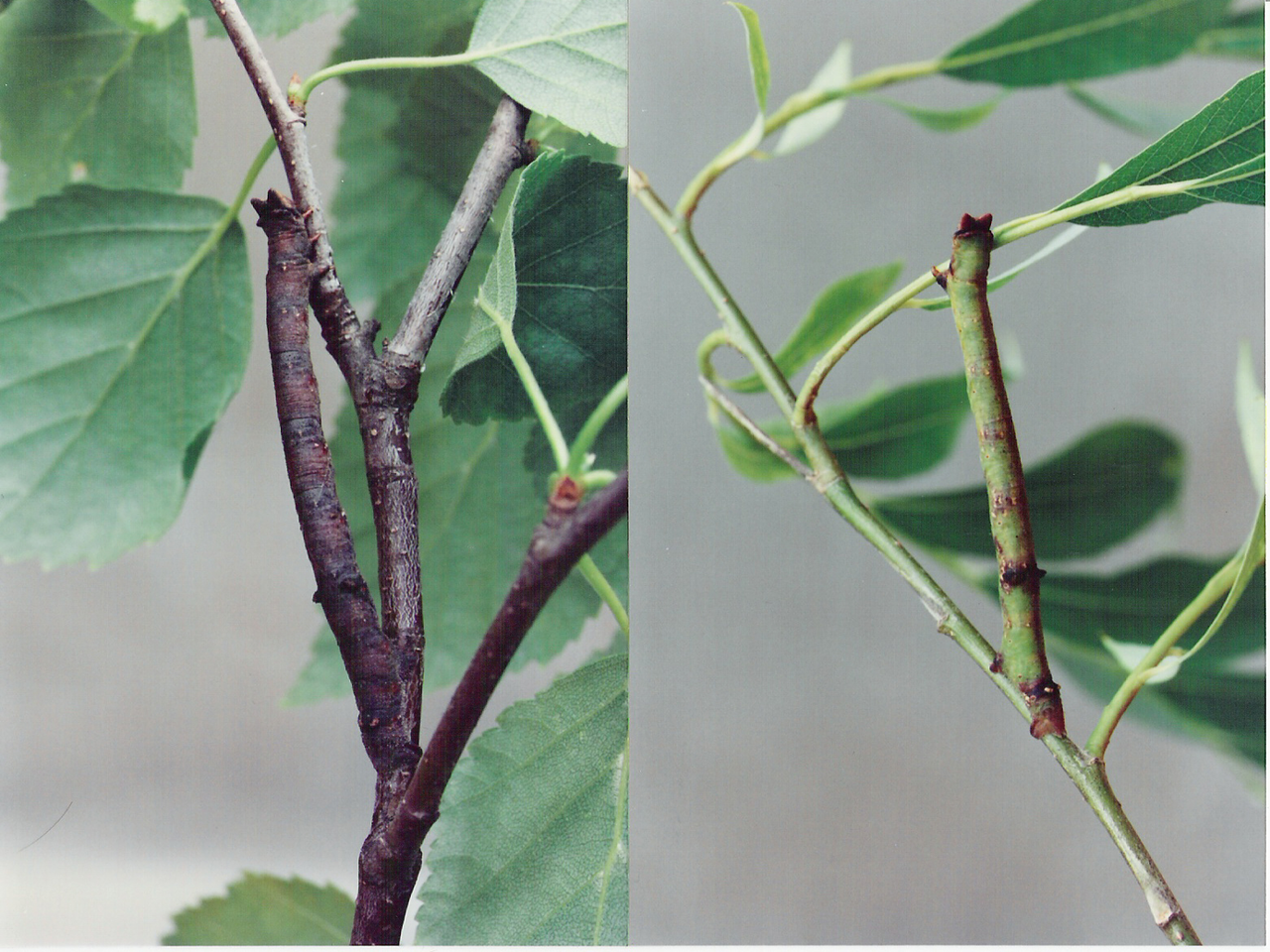


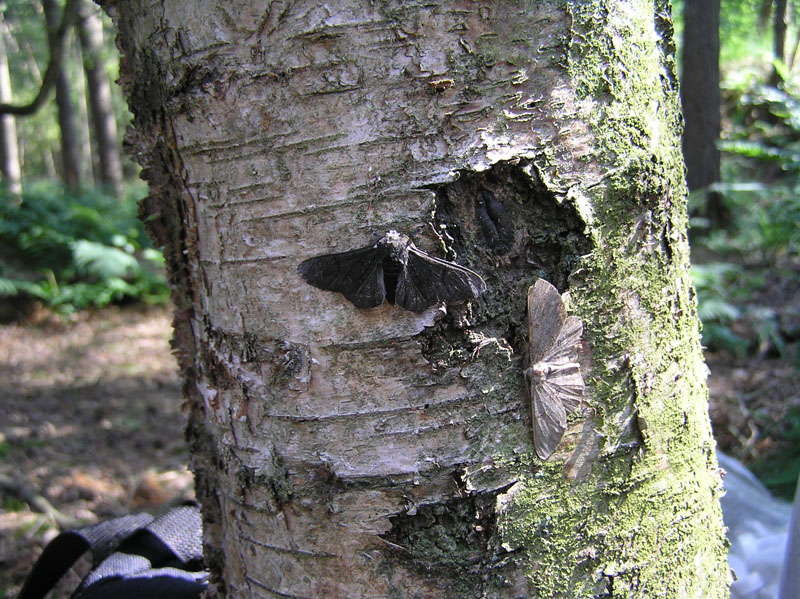
Appearance, polymorphism and heredity
Adult peppered moths rest on tree trunks by day and are cryptically patterned. The typical light form (often called typica) has pale, speckled wings that blend with lichen; the melanic form (commonly called carbonaria) is much darker and less speckled. Between these extremes there are several intermediate appearances. The color differences are inherited: genetic variants control melanin production and wing patterning, and these variants can spread or decline in populations when they confer differential survival. Recent genetic work has pointed to changes near regulatory genes involved in wing patterning — researchers have linked melanism to mutations affecting genes such as cortex and to structural changes in the genome — but the ecological mechanism that drove frequency shifts remains predation and camouflage. For accessible genetics summaries see genetics overview and molecular studies.
Industrial melanism and historical change
During the 19th and early 20th centuries, soot from coal burning and other pollutants reduced lichen cover and darkened tree bark in industrial regions. In those places, dark moths became more common because birds and other visual predators were more likely to spot and remove the paler individuals on dark backgrounds. This phenomenon — the rise of darker colored forms in polluted habitats — is known as industrial melanism. After air quality improved in the later 20th century and lichens recovered, populations often reverted toward lighter forms, demonstrating a reversible, environment‑dependent pattern of selection. For timelines and historical accounts consult industrial history and conservation summaries at environmental change reports.
Experiments, debate and scientific importance
Field and laboratory studies have tested the camouflage‑and‑predation explanation. Pioneering mark‑release‑recapture and predation experiments in the mid‑20th century provided direct evidence that differential bird predation could account for the observed frequency changes. These experiments became part of biology teaching because they offer a clear link between environmental change and selection on visible traits. The work prompted discussion about experimental design and interpretation, and subsequent research addressed earlier criticisms while reinforcing the central conclusion that natural selection acting on color variants explains much of the pattern. For summaries of the experimental literature see experimental studies and critical reviews at review articles.
Broader significance, examples and notable facts
- Industrial melanism is not unique to the peppered moth; similar color shifts have been recorded in other insects and organisms exposed to pollution.
- The peppered moth case is used as a classroom example because it links observable phenotypic variation, heritability, environmental change and differential survival.
- Modern molecular tools have added a genetic dimension to the story, showing how single genetic changes or mobile DNA elements can have large phenotypic effects.
- Controversies over early methods led to more rigorous follow‑up studies, which strengthened the overall interpretation of selection by predation.
Today the peppered moth remains an instructive example in evolutionary biology: a simple, well‑documented instance of how human‑driven environmental change can alter the selective landscape and change which heritable traits are favored. For further reading and educational material, see accessible portals at teaching resources and more detailed research summaries at scholarly summaries.
Questions and answers
Q: What is the evolution of the peppered moth?
A: The evolution of the peppered moth refers to how the moth's appearance changed in response to pollution during the Industrial Revolution in England.
Q: Why were almost all of the moths light coloured?
A: Almost all of the peppered moths were light coloured at first because it gave them camouflage against the light-coloured trees and lichens where they rested during the day.
Q: What happened to the trees during the Industrial Revolution in England?
A: During the Industrial Revolution in England, the trees became blackened by soot.
Q: What happened to the light-coloured moths, or typica, during the Industrial Revolution?
A: During the Industrial Revolution, most of the light-coloured moths became rare because the lichens died out and the trees became blackened by soot.
Q: What happened to the dark-coloured moths, or carbonaria, during the Industrial Revolution?
A: During the Industrial Revolution, the dark-coloured moths flourished because they were better camouflaged and therefore survived better.
Q: What is industrial melanism?
A: Industrial melanism refers to the genetic darkening of species in response to pollutants.
Q: What has happened to light-coloured peppered moths since the Industrial Revolution?
A: Since the Industrial Revolution, light-coloured peppered moths have again become common with an improved environment.
Related articles
Author
AlegsaOnline.com Peppered moth evolution: industrial melanism, genetics, and scientific significance Leandro Alegsa
URL: https://en.alegsaonline.com/art/75711
Sources
- millerandlevine.com : The Peppered Moth: an update · web.archive.org
- gen.cam.ac.uk : "The Peppered Moth: the proof of darwinian evolution"
- gen.cam.ac.uk : powerpoint presentation as pdf
- news.independent.co.uk : "Moth study backs classic 'test case' for Darwin's theory"
- doi.org : 10.1111/j.1365-2311.1977.tb00886.x
- talkorigins.org : talkorigins.org/faqs/wells/images/grantfile.jpg
- doi.org : 10.1086/378925
- pubmed.ncbi.nlm.nih.gov : 14737825
- talkreason.org : Moonshine: why the Peppered Moth remains an icon of evolution
- library.adelaide.edu.au : PDF 1.8 MB
- pandasthumb.org : "Selective bird predation on the peppered moth: the last experiment of Michael Majerus"
- whyevolutionistrue.wordpress.com : "The peppered moth story is solid"
- plosone.org : "A reversible color polyphenism in American Peppered Moth (Biston betularia cognataria) caterpillars"
- doi.org : 10.1371/journal.pone.0003142