
Australopithecus afarensis — an early bipedal hominin
Australopithecus afarensis was an East African hominin from about 3.9–2.9 million years ago, known for bipedal adaptations, notable fossils such as Lucy and the Laetoli footprints, and its importance to human origins.
Australopithecus afarensis is an extinct hominid known from East African sites dated between about 3.9 and 2.9 million years ago. Fossils attributed to this species come from a number of localities in the Rift Valley and surrounding areas, forming a key part of the fossil record that documents early hominin diversity. A. afarensis typically had a relatively small brain compared with later members of the genus Homo, a projecting face and dentition that show a mixture of primitive and more derived features.
Image gallery
10 Images


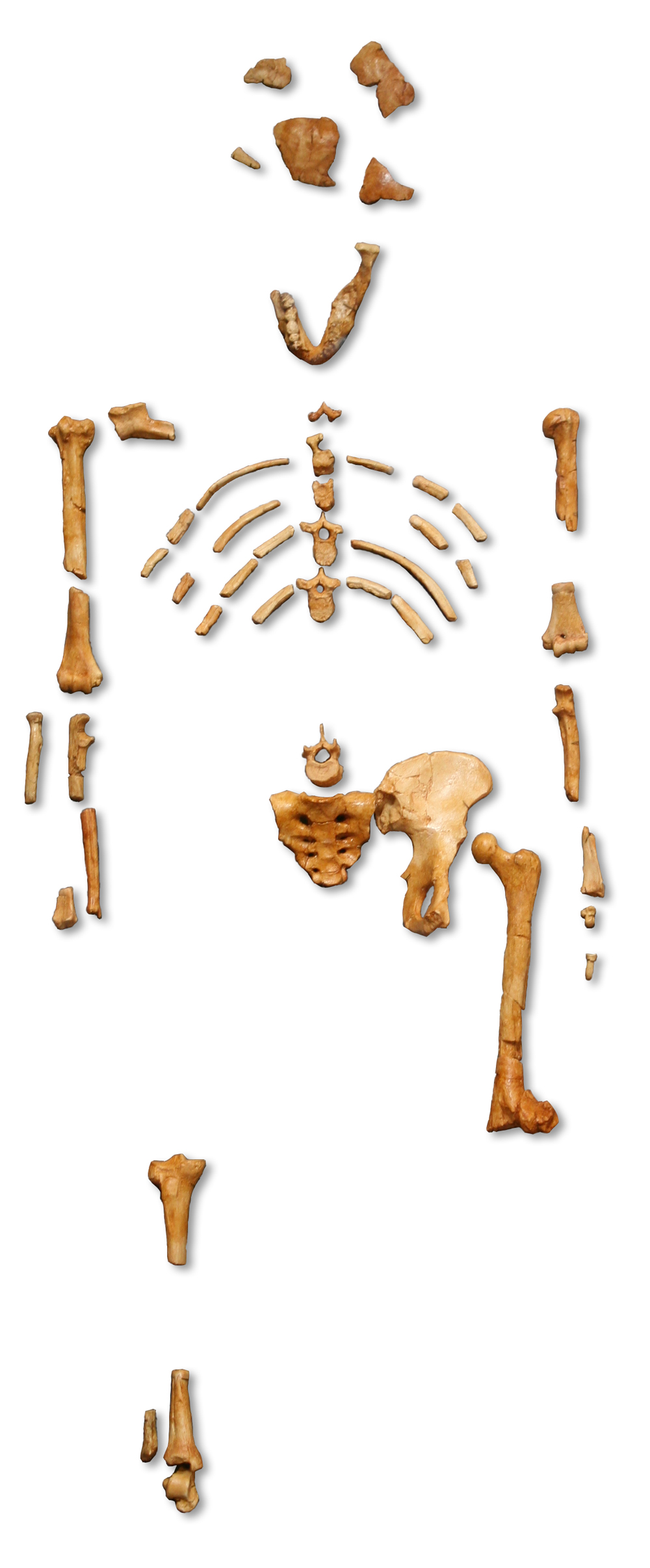


Physical characteristics
- Locomotion: pelvic and leg bones indicate habitual bipedal walking, though long arms and curved finger bones suggest retained climbing ability.
- Size and build: generally slender but with pronounced sexual dimorphism — males were larger than females.
- Skull and teeth: a prognathic face, relatively large jaws and teeth compared to modern humans; brain size closer to that of great apes than to later hominins.
Discovery and notable fossils
Some of the best-known specimens include the partial adult skeleton nicknamed Lucy, uncovered by Donald Johanson and colleagues in Ethiopia, and a set of preserved footprints at Laetoli, Tanzania. The Laetoli trackway records clear bipedal footprints that many researchers attribute to A. afarensis and which provide direct behavioral evidence for upright walking. During the field celebrations after Lucy's discovery, members of the team famously played the song "Lucy in the Sky with Diamonds".
Evolutionary significance
A. afarensis occupies an important position in discussions of human origins. Some analysts consider it more closely related to the ancestral line that led to the genus Homo than other australopiths, while others see the picture as more complex. References to early Homo and modern humans are often made in the same context: the lineage that produced early Homo eventually includes the modern human species, Homo sapiens, but direct ancestry remains debated.
Importance and open questions
Australopithecus afarensis is important because it documents a combination of tree-climbing and efficient bipedalism that likely shaped later human anatomy. Researchers continue to investigate its diet, social structure, degree of tool use, and exact relationship to later hominins. New finds and improved dating methods keep refining the species' timeline and ecological context, so some details remain actively studied rather than settled facts.
Notable finds (summary)
- Lucy — partial adult skeleton that illustrates bipedal adaptations (Lucy).
- Laetoli footprints — preserved trackway showing upright walking.
- Additional skeletal material from multiple East African sites that reveals variation and life history.
Related articles
Author
AlegsaOnline.com Australopithecus afarensis — an early bipedal hominin Leandro Alegsa
URL: https://en.alegsaonline.com/art/7523