
Paul Baum: German Post‑Impressionist Landscape Painter (1859–1932)
Paul Baum (1859–1932) was a German painter whose art moved from Impressionist light studies to a structured Post‑Impressionist approach; he is best known for landscapes from Flanders and the Netherlands and for teaching.
Overview
Paul Baum (22 September 1859 – 15 May 1932) was a German artist whose career bridged late 19th‑century Impressionism and early 20th‑century Post‑Impressionism. He is chiefly remembered for atmospheric landscape paintings and for helping to introduce newer approaches to color and composition into German landscape art. His work often interprets northern European scenery, especially sites in Flanders and the Netherlands.
Image gallery
6 Images




Style and characteristics
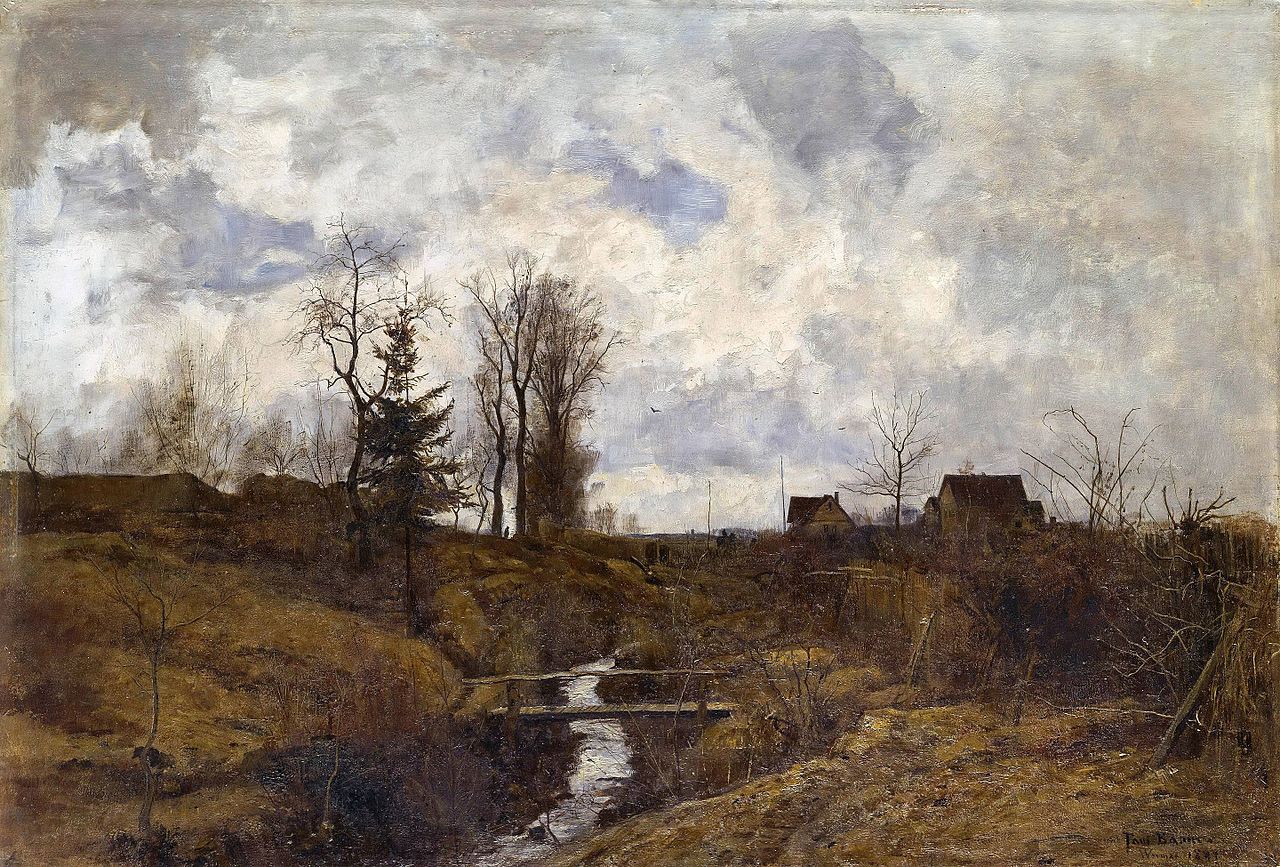
Baum began by adopting techniques associated with Impressionism, such as attention to light, fleeting atmospheric effects and the practice of painting en plein air. Over time his approach incorporated elements typical of Post‑Impressionism: a stronger concern for formal structure, a more purposeful application of color and a tendency to simplify shapes for compositional clarity. His brushwork ranges from loose, luminous passages to more deliberate, rhythmical strokes that define form and distance.
Development and career
Throughout his life Baum traveled and painted in a variety of northern landscapes, returning repeatedly to coastal and lowland scenes that suited his interest in sky, water and seasonal light. He worked as a teacher at several art schools and influenced a generation of students by combining observational practice with an emphasis on formal order. As his ideas matured he sought balance between fleeting visual impressions and a lasting, organized structure in the picture plane.
Subjects, examples and importance
Landscapes dominate Baum's output: marshes, riverbanks, towns and coastal plains appear frequently. These subjects allowed him to explore variations of light and weather across relatively flat geographies, and to contrast reflective water surfaces with broad skies. While specific works are found in public and private collections, his broader importance lies in transmitting Post‑Impressionist concerns—color relationships and compositional unity—into German landscape traditions.
Legacy and distinctions
- Bridge between movements: He is often described as an artist who moved from Impressionism toward Post‑Impressionism, combining sensory observation with compositional discipline.
- Regional focus: His repeated depiction of Flanders and the Netherlands gave his work a recognizable geographic identity and atmosphere.
- Influence as teacher: Through his academic posts he helped disseminate newer pictorial ideas to younger painters.
Today Baum is regarded as a significant figure in German landscape painting of his era. His work is studied for the way it negotiates the ephemeral effects of light with the enduring needs of design and structure—an approach that helped shape landscape painting in Germany during the transition to modern art.
Related articles
Author
AlegsaOnline.com Paul Baum: German Post‑Impressionist Landscape Painter (1859–1932) Leandro Alegsa
URL: https://en.alegsaonline.com/art/75104